National Women’s Business Council Releases its Annual Report

NWBC
The National Women’s Business Council has released its Annual Report, “10 Million Strong – The Tipping Point for Women’s Entrepreneurship,“ and the number of women looking to be entrepreneurs is at an all time high. Women ‘s entrepreneurship has gone from being a trend to a huge growth factor to the economy of this country. According to the report, women-led businesses are predicted to increase by more than 50% over the next five years – women are launching roughly 1,200 new businesses per day.


Better resources and opportunities have created an opening for women to grow their brands and build larger networks to support their products and businesses, crowdfunding being one of the best resources. Though women are still far behind men in financing their businesses, they are receiving more funds today than ever before.


In 2016 the Council is looking to keep the growth momentum going and will continue to research and support women business owners. Click here to view the full report online.

Shop Small This Holiday Season and Through the Year

Shop Small Graphic - Get Connected CP Newsletter - 10-30-14We hope you all were able to participate in Small Business Saturday on November 28th, and support your local small businesses by doing some holiday shopping.

Small Business Saturday was founded with a simple goal, to help small businesses by providing what they need most — more customers — and with a simple purpose — when small business thrive, communities thrive.  Since 2011 Women Impacting Public Policy (WIPP) has been proud to lead the Small Business Saturday Coalition, and this year’s results tell an amazing success story:

  • According to the Small Business Saturday Consumer Insights Survey, total spending among U.S. consumers who were aware of Small Business Saturday reached $16.2 billion at independent retailers and restaurants on the day, an increase of 14 percent from $14.3 billion in 2014. 
  • Among those who shopped on Small Business Saturday, 31 percent attended a community event on the day and 81 percent encouraged family and friends to support their local small businesses.
  • There were 85 million social media engagements in support of Small Business Saturday.

WIPP’s work with the Coalition provides the foundation for Small Business Saturday.  Our efforts resulted in the following:

  • Engaging over 425 organizations and community groups in supporting and amplifying the message;
  • In rallying over 275 Congressional and Administration officials — including President Obama;
  • In helping coordinate over 4,100 community events;
  • Over 80 city economic development offices;
  • 551 Mayoral offices in issuing proclamations;
  • The U.S. Senate unanimously passed a resolution designating November 28th, 2015 as Small Business Saturday; and
  • 14 Public Service Announcements encouraging the public to “Shop Small” were recorded by government officials across the nation.

Please take a moment to watch and share the 2015 Small Business Saturday video shot with WIPP’s San Francisco office team: https://youtu.be/3W-8dsb-LuM

We could not be more proud of WIPP’s role in leading the Small Business Saturday Coalition and the hard work of WIPP’s team in their dedicated effort to make the day a success.  A special thank you goes to our partners, members and friends for their support of Small Business Saturday and local business.

As we enter December and 2016, we encourage everyone to Shop Small this holiday season and into the coming year.  In addition, we ask that you seek out other women-owned firms to partner with and do business with in the year ahead.  So add to your new year’s resolutions that this year you will make an extra effort to seek out other women-owned small business because “when women support each other, incredible things can happen.”

Small and Medium-Sized Companies in the Focus of Exporting News

Small and medium-sized exporting companies had several reasons for good spirit in the last couple of weeks – especially Trans-Pacific Partnership and Export-Import Bank supporters.

The final agreement on Trans-Pacific Partnership (TPP) got a substantial coverage across the news, as it is the largest regional trade accord in history. As covered a few weeks ago, it encompasses USA together with 11 Pacific Rim nations and addresses many complex issues – from reducing tariffs and quotas, to imposing rigorous environmental, labor and intellectual property standards on partners, easing cross-border data flows, establishing an investor-state dispute settlement mechanism, to free trade in services, and imposing competitive neutrality on state-operated businesses.

There is one particularly important area, which deserves a separate attention – focus of TPP on small and medium-sized enterprises (SMEs).

Last week, National Small Business Association hosted a webinar where Andrew Quin, Deputy Assistant U.S. Trade Representative for Southeast Asia and the Pacific, among other described new chapter of the TPP deal focused on SMEs. The chapter aims to tide together all different elements that benefit SMEs and he highlighted 2 major areas:

  1. Creation of dedicated website for SME exporters by every member country. The websites should pull out all provisions which are particularly relevant to SMEs such as customs, taxation or intellectual property protection topics to make it better understandable and easier to follow in day-to-day exporting trade deals.
  1. Creation of SME committee to continue consultations with SMEs and collect feedback on what works, if benefits are being generated, and on how to continue maximizing benefits to SMEs. The committee will consist of government representatives, however promises to take inputs from SMEs on private sector provisions.

All of the above claims to suggest that TPP is more beneficial to SMEs than any previous trade agreement. Mr. Quin also reassured that TPP will not have any impact on Minority-Owned Small Businesses set aside programs (including the one WOSB program for women).

Another topic that came out after few weeks is the reauthorization of Export-Import Bank (EXIM). As Mr. Quin stated, it is a separate initiative but important piece to allow a full benefit of TPP. EXIM is providing loans, guarantees, and insurance to U.S. exporters and has made SMEs exports the top category supported last year (source) when $10.7 billion of total $27.5 billion worth of U.S. exports went to U.S. small businesses.

EXIM

Many SMEs publicly supported EXIM reauthorization, and they all have now a hope that it might be successful after all. A rare procedural move brought EXIM to the House floor and got a surprising support in the 313-118 vote to renew, including from 127 Republicans.

However, now the supporters will have to secure passage in the Senate but they seem to have a chance through its attachment to another vehicle, such as legislation to renew highway funding (source).

Overall, current news seem to suggest that it is a good time to be an exporter and according to the latest annual report Profile of U.S. Importing and Exporting Companies released by Census Bureau, many SMEs have already realized that as they accounted for 98 percent of the number of U.S. exporters in 2013 and $471 billion in known value of goods exports.

Women Business Centers Get A Boost

Annual Mtg 2014 - #7Early this month, the Senate Committee on Small Business and Entrepreneurship unanimously approved the Women’s Small Business Ownership Act of 2015, which reauthorizes the Women’s Business Center (WBC) program. Senators Maria Cantwell (D-WA), Chair David Vitter (R-LA) and Senator Jeanne Shaheen (D-NH) sponsored this landmark legislation and the bill  passed on a bipartisan, unanimous vote – a rare occurrence in Congress as of late.

Women entrepreneurs receive business training and counseling from more than 100 Women Business Centers (WBCs) throughout the country. Because of this bill, the WBC program will now be authorized $21.75M through FY2020, adding more Centers and providing additional support to existing Centers. WBCs can now receive grants up to $250,000, nearly double the previous maximum of $150,000. Funds above the $250,000 level will be made available to Centers that meet goals and wish to establish new projects. These updated funding levels will encourage growth in established Centers and allow WBCs to provide additional support to women entrepreneurs. The Act also requires important updates to the Women Business Center program.

Women’s Business Centers provide an invaluable resource for women entrepreneurs. Ten million women-owned businesses contribute to the nation’s economy by generating $1.6 trillion in revenue and employing nearly 9 million Americans. WBCs are an important partner for these 10 million women-owned businesses and this legislation will enhance their capabilities and build on their successes.

Learn more: http://awbc.org/news/

Find your Women Business Center: http://1.usa.gov/1MpMFWJ

Want Global Economic Growth? Hire a Woman

By Jennifer Bisceglie, WIPP Board Member & WIPP International President

According to the World Bank, the past four years have seen tepid economic growth, with global GDP growing at under 3% annually. While 2.5% growth is far better than the rate of -2.1% that was seen at the low point of the 2009 recession, it doesn’t begin to meet the rates of over 4% that was seen during the mid 1990s and 2000s. Economists have been saying for some time that we are looking at the new economic “normal”. But does that have to be the last word?

IMG_6573[1]Few weeks ago I traveled to São Paulo, Brazil and Ankara, Turkey where I had the opportunity to represent WIPP and WIPP International and our members in critical discussions about global economic development. At both events, leaders from governments, NGOs and the business world took the stage to reiterate the need for gender inclusive growth policies.

In São Paulo, the International Trade Center’s (ITC) Women and Trade Programme hosted the annual Women Vendors Exhibition and Forum (WVEF), which seeks to increase the participation of women owned businesses in global supply chains. According to the ITC, women globally own almost 10 million small and medium-sized enterprises (SMEs) which account for almost 80% of jobs around the world. It is well known that supporting an environment that encourages entrepreneurship spurs job growth.

At the event, ITC Executive Director Arancha González called on world leaders, governments, and the business community to develop economic and procurement policies that will create one million more women entrepreneurs by 2020. The call to action will impact local and global markets by stimulating job creation at record levels.

In Ankara, the G20 launched the Women-20 (W20), an engagement group focused on promoting gender-inclusive economic growth. The group’s mandate is to advance recent G20 commitments on: women’s full economic and social participation (Los Cabos Leaders’ Declaration, 2012); women’s financial inclusion and education (St Petersburg Leaders’ Declaration, 2013); and gap reduction in participation rates between men and women in G20 countries by 25 percent by 2025, taking into account national circumstances (Brisbane Leaders’ Declaration, 2014).

Turkish Prime Minister Ahmet Davutoğlu made an impassioned speech about the potential of the W20 to positively impact the global economy. Today, in the G20, male economic participation is 86%, but only 56% for women. He added that for every 1% rise in female participation, it is estimated the global economy will grow an additional $80 billion and a 10% rise would increase the global GDP by an amount equivalent to Turkey’s annual GDP today.

International Monetary Fund (IMF) Managing Director Christine Lagarde highlighted that data compiled by the World Bank indicates 90% of countries still have laws that discriminate against women. She admitted that the IMF in the past has not had a strong focus on women, but the impact to women and the potential of women in the economy is now considered in every IMF country visit. She added that words are important, but to echo Prime Minister Davutoğlu, it is what gets implemented and the outcomes that are achieved, which really matter.

The important takeaway from these meetings is not that gender inclusive growth policies are the moral or right thing to do, but that they are the smart economic thing to do. Increasing women’s participation in the global economy has the potential to add to the global GDP the economic equivalent of a new China or India. In a time when no one is quite happy with the “new normal” economy, isn’t this the smart thing to do for everyone, both men and women?
Celebrating National Women’s Small Business Month

10mil

by AnnaKate Moeller, WIPP Programs Manager

This October we are particularly excited to celebrate National Women’s Small Business Month because of the release of the results of the 2012 Survey of Business Owners (SBO) and the SBA issuing the final rule on Sole Source Authority. It has been a big year for women in business to say the least.

The theme for this year’s National Small Business Month is “10 Million Strong” recognizing the 2012 SBO results of the nearly 10 million women-owned businesses currently in the United States. This is a 27.5% increase from 2007 survey results, showing that women-owned businesses are growing and in turn boosting the economy.

We also have cause to celebrate as the Small Business Administration issued the final rule improving access to federal contracting opportunities for women-owned small businesses with Sole Source Authority. This rule is expected to be effective and available for use by federal agencies on October 14, 2015.

As we celebrate 10 Million Strong this October, WIPP will be highlighting women business owners on our boards, throughout our member base and networks. Please check out our twitter, Facebook and blog throughout the month to hear the stories of these female leaders.

ChallengeHER 2015 Update … Fall Edition

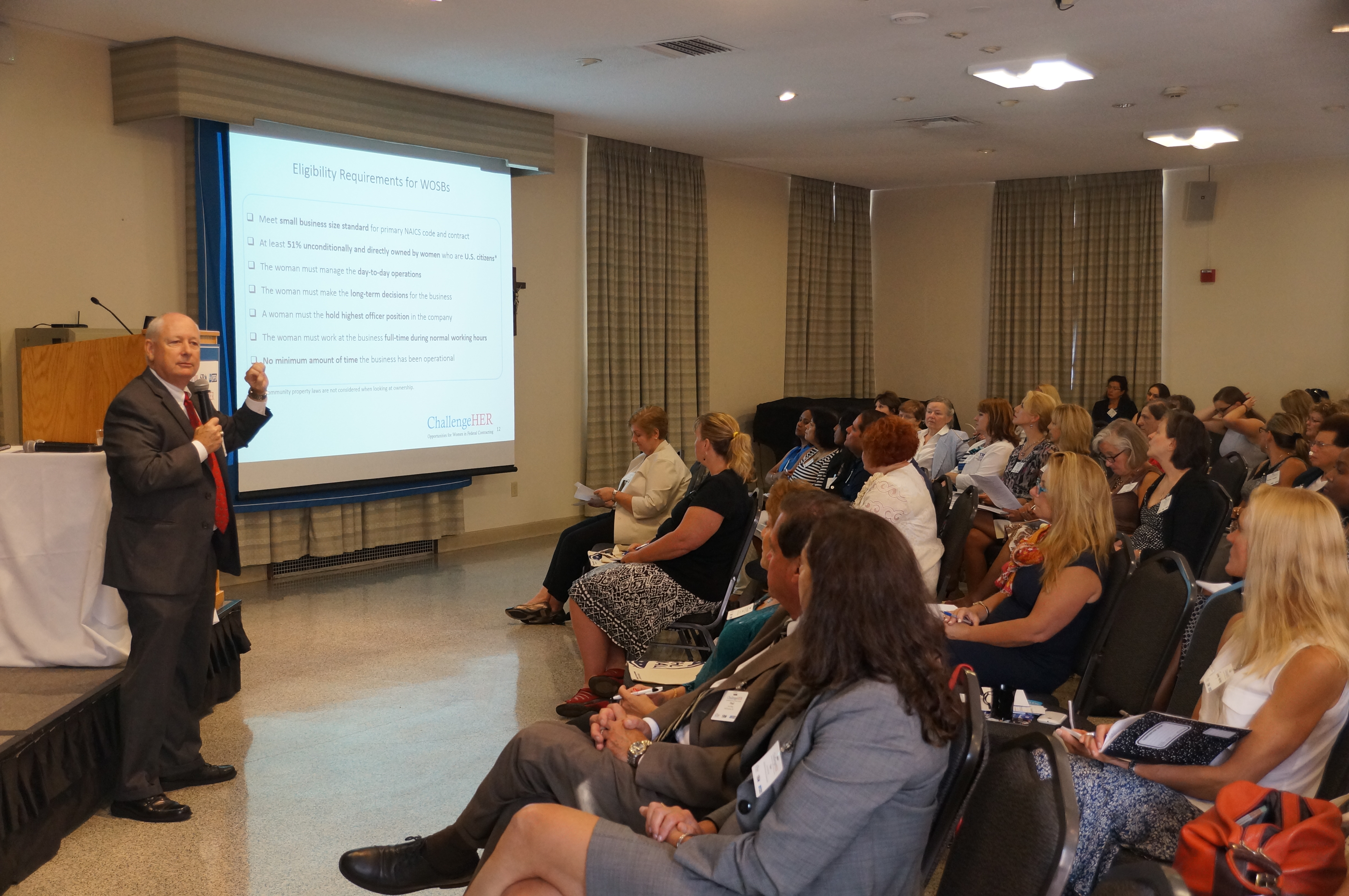
A substantial part of Women Impacting Public Policy’s (WIPP) Federal Procurement Programming lies undoubtedly with ChallengeHER. ChallengeHER is an educational program, which provides women business owners with the guidance to better compete for federal contracts under the Women-Owned Small Business (WOSB) Federal Contract Program.

CH-Transparent

In order to provide as much impact as possible and to get women business owners together with federal buyers, ChallengeHER events are being held in several cities and states throughout 2015. As the year is progressing toward the fall season, several events have already been held (e.g. Washington D.C., New York, Dallas, Atlanta, New Hampshire), but many more are still scheduled until the end of the year. And what can participants expect?

ChallengeHER provides women around the United States with the most important, standardized knowledge and guidance in the federal marketplace and an opportunity to:

  • Learn about the WOSB set aside program and how to market their business using this set aside.
  • Learn from experiences and best practices of successful WOSBs working as federal contractors.
  • Find out from federal buyers how to do business with their agency in Federal Buyer’s Panel.
  • Participate in one-on-one matchmaking sessions with federal buyers at most events.
  • Learn about the new Sole Source Authority rule! More information on SBA’s announcement integrating a sole source component into the WOSB procurement program starting October 14, 2015, can be found here.
  • Network with peer mentors and other WOSB and Economically Disadvantaged Women-Owned Small Business (EDWOSB) firms.

Some of the participants’ feedback:

BlogPost“I am glad I was able to attend ChallengeHER. The speakers were great and very informative.” – Attendee from New Hampshire event

“ChallengeHER provided me with pathway to applying for federal contracts and becoming a successful women business owner.” – Attendee from Atlanta event

“I truly appreciate the information shared. It provoked me to think differently about how I was running mBlogPosty business. I was so inspired I even recorded the speech.” – Attendee from Atlanta event

“As well as strong individual speakers, it was particularly helpful to have “panels” that provided different perspectives at once.” – Attendee from NYC event

Registration for upcoming events is available for:

More events to come will be held in Central New Jersey, Baltimore, Kansas City, and Orlando in Florida throughout November and early December 2015.

ChallengeHER aims not only to provide one time learning experience but also to build a standing long-term knowledge and support base for its participants. Therefore additional resources are available for attendees both before and after the event:

  1. To prepare and get ready for discussions and topics covered during the event by listening the following courses:
  2. To follow up on gained knowledge and sort out where to go from there, by following 10 Quick Steps for guidance to successful federal contracting.

For those of you, who are not familiar with the program, here is some basic information:

ChallengeHER, an initiative from the U. S. Small Business Administration (SBA), WIPP, and American Express OPEN (OPEN), is designed to strengthen and promote the Women-Owned Small Business (WOSB) Federal Contract Program. ChallengeHER offers women business owners important information to established and new businesses on working with the federal government. Further, these events enable more women business owners to take advantage of contracting opportunities so they can boost their businesses and help propel the success of the WOSB Procurement Program.

For more information on upcoming events and news visit our website and connect with us online on Twitter, Facebook or LinkedIn.

Millennials in the Workplace – What Are Your Thoughts?

Millennials are the largest workforce group since they surpassed Generation X this year and the U.S. Bureau of Labor Statistics preMillennialsdicts they will make up 75% of employees by 2030. Therefore it is no surprise that many reports and articles have been dedicated to the topic of how to get along with and manage this generation at work.

From hiring practices to benefit packages and work-life balance, expectations of this generation are widely different to the ones of Baby Boomers or Generation X.

Towan Isom is a President and CEO of Isom Global Strategies where millennials make up more than 50% of all employees in her company. Since she started the company 15 years ago in her basement, she has accumulated extensive experience and knowledge working with different generations of workers. She shares her insights and often speaks on how to be successful with this intergenerational workforce and on managing millennial employees.

In the end of September, Towan will speak at a conference on Millennials in the workplace, and she offers a unique opportunity to make your insights to be heard. By responding to the quick survey your professional opinion on working with millennials will be shared with her audience and presented in a case study afterwards. The conference will be also recorded and available on Isom Global Strategies website few weeks after the event.

Towan will also share outcomes and her professional views with us here in a guest blog after the conference.

Meet the World’s Youngest Self-Made Female Billionaire: Elizabeth Holmes.

by Annie Wilson, InternEH

According to Forbes, Elizabeth Holmes has been named the world’s youngest self-made female billionaire with a net worth of $4.5 billion. Earlier this month she was named as Time Magazine’s List of 100 most influential people. Her billion dollar idea?: a revolutionary way to make blood testing accessible for anybody. Holmes’ company, Theranos, created a system that brings together a minimally invasive and needle free method of blood withdrawal with hundreds of low cost tests that almost anyone could afford. Holmes’ intention is to restructure our healthcare system to be more preventative as opposed to a reactive:

“The current health care paradigm is one in which diagnosis often takes place after symptoms are already present, and diseases have begun to progress. We’re committed to changing that. We’re pioneering a new paradigm in which lab testing is accessible and affordable for everyone. When cost is no longer a consideration and people no longer have to be symptomatic in order to get a test. Meaning your patients can get the tests they need, and you can get the information you need, early and in time for therapy to be effective.” – Elizabeth Holmes, Theranos website

Holmes attended Stanford University but dropped out at the age of 19 to start Theranos in 2003. Since then, Holmes has impressed investors with the potential commercial, military, and humanitarian applications of her idea. Holmes has also acquired a very impressive board of directors, including former cabinet secretaries George Shultz, Bill Perry and Henry Kissinger, two former Senators, a retired CentCom commander, a retired Navy admiral and a former director of the Center for Disease Control and Prevention. She has rapidly developed her company since 2003 and has notably partnered with Walgreens to build thousands of Wellness Centers for Theranos to carry out its testing. To date, Theranos has also accumulated $92 million in venture capital funding from investors like Larry Ellison and Draper Fisher Jurvetson with her first venture capital funding worth $5.8 million in 2005 at the age of 21. Holmes owns 84 patents to her name and Theranos is estimated to be worth $9 billion with Holmes owning half of its stock.

If you want to learn more about Elizabeth Holmes:

  • Click here for a video about how she came up with her business idea.
  • Click here for a timeline of Theranos’ conception
  • Click here to watch a TED Talk given by Holmes about the importance of early detection

NWBC Survey Analysis Shows Women-Owned Business Growth Soars

women biz

The National Women’s Business Council has released its analysis of the 2012 Survey of Business Owners and while the growth rate for new businesses has slowed down, that is not the case for women-owned firms. The rate of growth of women-owned businesses is almost FOUR TIMES the rate of businesses owned by men. The results show that there were nearly 10 million women-owned small businesses in the US in 2012, a 27.5% increase since 2007. There is also a huge spike in minority women business ownership. The analysis also shows that In 2012, women-owned firms with employees paid their employees $290.5 billion- a $75.8 billion or 35.3% increase since 2007.

For more information, check out several articles written on the analysis:

Click here to view the National Women’s Business Council Fact Sheet.