
WIPP Works in Washington: Primary Thoughts on the 2016 Election

AnnSullivan new

By Ann Sullivan, WIPP Government Relations

Does anyone else think the 2016 Presidential election has been going for ages?  It sure seems like that to me, but admittedly, it has been one of the most entertaining primaries in recent history.  The 24-hour news cycle has kept us up to the minute with every speech, gaff, or barb traded by the candidates. We’ve seen our fair share of debates, roundtables and town halls while watching almost daily polls track the candidates as their support rises and falls. Luckily, today is when the rubber meets the road – at least in Iowa – where Iowans will caucus for their primary candidates. As the 2016 Presidential election ramps up, so too will WIPP’s advocacy efforts. Why? Because we are not cynical about democracy and the process necessary to achieve it. We believe engagement is the mechanism by which to change the trajectory of our country’s future.

WIPP has made addressing the needs of women entrepreneurs a top priority for elected officials and our advocacy has resulted in successes for women business owners. Just look to 2015 for proof that women business owners have a seat at the table. We worked for implementation of sole source authority for the Women-Owned Small Business (WOSB) Procurement Program– a tremendous step forward for women-owned businesses seeking to win federal contracts.  The Senate Small Business Committee passed the first reauthorization for the Women’s Business Center (WBC) program in nearly a decade, which provides important business support to women entrepreneurs. These are just two of the many policy victories for women entrepreneurs last year.

To ensure that we keep up that momentum and women entrepreneurs remain a top priority for our elected officials, WIPP has launched WE Decide 2016. This collaboration with Personal BlackBox (PBB) will engage women entrepreneurs seeking to affect the issues candidates discuss throughout the 2016 Election.  Ten million woman business owners, if active, are in a position to influence the direction of economic policy positions.  According to the National Women’s Business Council (NWBC), women-owned businesses are an economic force, contributing nearly $1.6 trillion to the annually to the US economy. The WE Decide 2016 platform seeks to engage all women business owners and associations whose members are women entrepreneurs, not just WIPP members. When women come together to share their views about the future of this country, they don’t need to be caucusing in Iowa or attending town halls in New Hampshire.  The platform will be polling women business owners on economic issues, such as access to capital, access to federal markets, tax policy and providing healthcare to employees, to mention a few topics that affect us daily.

As the primary results come in and we move on to the New Hampshire primary next week and the South Carolina primary on February 20, know that through WE Decide 2016, we have a unique opportunity to engage the voices of ten million women business owners. We certainly don’t need to agree on every issue, but I, for one, think women business owners may not necessarily possess the same views on issues that the national polls indicate.  So, lean in and let’s see the results of our engagement.  I can’t wait to see the impact all of us together can have in November.



FAR Council Embraces Sole Source

By: Jake Clabaugh, WIPP Government Relations

Women Impacting Public Policy (WIPP) recently submitted comments on the interim rule implementing sole source authority into the Federal Acquisition Regulation (FAR).  For more details please read WIPP’s full comment here.

FB Cover photo

WIPP’s 15-year effort to expand contracting opportunities for women entrepreneurs cleared an important hurdle with sole source authority finalized in the government’s contracting rulebook. The Federal Acquisition Regulation (FAR) is the government’s official source for rules when it comes to awarding contracts. Implementing sole source authority into the FAR means that women entrepreneurs wll now be competing on a level playing with other small business contracting programs.

WIPP’s comment on this rule acknowledged the FAR Council for recognizing the “urgent and compelling need” to grant contracting officers this authority. Their recognition is the culmination of years of hard work and advocacy to bring parity for women-owned contracting firms.

Although the Small Business Administration (SBA) published sole source rules last fall, some contracting officers had been waiting for official language to be put into the FAR before they would use sole source authority.  WIPP members have experienced this inconsistency firsthand and WIPP’s comment highlighted how important it is for the FAR to eliminate the conflict.

The FAR Council’s rule became effective on December 31, 2015 – a great way to start the New Year. Contracting officers now have official instructions to award sole source contracts through the WOSB Procurement Program. We encourage women business owners to comment on this important victory for our community. If you wish to echo WIPP’s comments, you can submit them electronically using Regulations.gov and search for “FAR Case 2015-032.” Please use the “Comment Now” option, which will provide instructions for uploading your document and ensure that your voice is heard.


From the Hill: Small Contractors Make Big Gains in New Legislation

By: Jake Clabaugh WIPP Government Relations


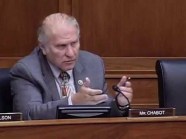
ChabotThe House Small Business Committee is leading off 2016 by continuing its
efforts to make federal contracting more accessible to small businesses. Committee Chair Steve Chabot’s (R-OH) legislation, Defending America’s Small Contractors Act of 2016, makes an array of changes to procurement policy.

Although impossible to summarize all of the changes in a few paragraphs, which is why we have the link to the bill above, here are the highlights. The bill tackles transparency by rewriting – in plain English – the requirements for small business procurements. Since getting past performance is an obstacle for contractors getting started in federal contracting, the bill establishes a pilot program that enables them to get a past performance rating by submitting a request to the contracting officer and prime contractor. Offices of Small and Disadvantaged Business Utilization (OSDBUs) will now have increased authority to recommend which small business set-aside programs are most appropriate for each contract at their agency. The Act even touches the Department of Defense (DOD) by requiring that Mentor-Protégé plans in DOD’s program be approved by SBA – an update aimed at adding consistency to Mentor-Protégé Programs government-wide – but controversial since the last time we looked the Defense Department does not generally defer to SBA.

If some of these changes sound familiar, it’s because Anne Crossman, a member of WIPP’s Leadership Advisory Council, proposed several of these improvements during a Subcommittee hearing last fall.  Specifically, Anne noted WIPP’s “if you list us, use us” policy for prime contractors’ subcontracting plans and in her testimony she advocated for prime contractors to be accountable to the subcontractors listed on their plans. This bill incorporates Anne’s recommendations by requiring commercial market representatives (CMRs) assist prime contractors in identifying small business subcontractors and assess the prime’s compliance with their subcontracting plans.

The intent of the legislation is to assist federal agencies in meeting their small business contracting goals. The goal for women owned companies of 5% has never been met. A continued push for data transparency surfaces in the bill as well, requiring agencies to do a better job of reporting the contracting dollars awarded to small businesses.

The Committee is expected to hold a markup to consider this legislation during the week of January 11.  The WIPP Government Relations team will continue to provide updates as the bill moves through Congress.

WIPP National Partner of the Month – October 2015: Lynlee Altman

Lynlee

WIPP National Partner of the Month – October 2015

LynLee Altman, President and Founder of Pinnacle Construction Development Group, Inc. – Cleveland, OH


We sat down with Lynlee to hear a little more about her company and her relationship with WIPP…


Tell us a little about your company and its mission.

Pinnacle Construction is a general contractor specializing in unique, complex, and safety-critical construction.  As a full-service design-build company, Pinnacle delivers one-of-a-kind projects nationwide, including anything from recreating the surface of Mars to blastproof access control points.  We have successfully tackled numerous high profile projects that would intimidate most other construction firms.  Accelerated timelines, hazardous environments, atypical engineering specifications, environmental sensitivities and historic preservation are all par for the course for Pinnacle, where failure is not an option.

Have you always been an entrepreneur?  If not, what, or who, inspired you to take this leap?

Unlike the typical entrepreneur who grew up with a lemonade stand or selling girl scout cookies, I would consider myself to be an accidental entrepreneur. I cut my teeth working for larger businesses and my small business began as more of a night-job.  Eventually, it became clear that my night job was really where my passion lied, and I made the decision to devote all of my time to Pinnacle.

What has been your biggest lesson learned in working with the Federal Government? 

Teaming with other businesses is the key to growth. I call it Co-op-etition, a combination of cooperating and competition.  Rather than viewing other companies as competitors, there is tremendous opportunity in building them up.  Pinnacle’s very first client is Pinnacle’s largest subcontractor today.   Over the years, we have built trust and a strong history of performance with our teaming partners, and that relationship has enabled us to complete things together that we didn’t have the capabilities to complete alone.

Do you have a contracting success story that you are proud of? 

As a firm believer in the capabilities of small business, I am most proud when Pinnacle competes against large businesses and triumphs.  The personal attention and true teaming nature that we can give to clients sets us apart from a large business working on hundreds of jobs across the country simultaneously.  Our clients understand that they have our full attention, and they are, at that moment, our most important project.   The clients and agencies that embrace that differentiating factor, are the people that we enjoy working with the most.

Tell us about your experience as a WIPP Member? What resources/value has WIPP provided that has been helpful to you and your company?

WIPP has been instrumental in introducing me to the right people.  In the federal marketplace, there are a select group of individuals who are committed to building small businesses. These amazing people, all of whom are known by WIPP, recognize the importance of small businesses to the health of our country and economic policies, and many of them have dedicated their lives to the cause.  These individuals have truly impacted the federal market place, and if you are willing to match their time and efforts, they will help you build a strong business.

Success: Sole Source Finalized

women_in_business

by Ann Sullivan, WIPP Government Relations 

When you’ve been working on a program for 15 years, it’s almost anti-climatic when you realize you won and it’s over. I suppose lawyers feel this way when they win a big case, or business owners when they close a major contract.

For me, the SBA announcement integrating a sole source component into the WOSB procurement program on October 14, 2015 marks the end of a long campaign by Women Impacting Public Policy (WIPP). First, we fought for eleven years to establish a program that gives a government buying preference to women-owned companies whose industries have been underrepresented. Not an easy fight – we had plenty of Congressional and White House opponents—it wasn’t until the Obama Administration came into power that the program was established. At the time, SBA Administrator Karen Mills made it her number one priority, which we will always be thankful for. We had strong Congressional proponents – Senators Cantwell and Shaheen and Representatives Speier and Graves.

Then, we had to make the program work. That required two major changes to the program in 2013 and 2014. The first change required lifting the award caps the law imposed on the program. The WOSB procurement program limited contract awards through the program to $4 million ($6.5 million for manufacturing). In 2013, Congress helped us get rid of those caps. The last big piece was the sole source piece—allowing contracting officers to award sole source contracts to women-owned companies through the program. This major change gives the program parity with other small business programs and again, required Congressional action. Effective October 14, agencies will be able to use this mechanism to award contracts to women whose companies offer innovative products and services.

As with all government programs, the rules are a little complicated and the ability to self-certify as a woman owned business will eventually have to change, due to Congressional direction in 2014. But for now, self-certification remains the law and women should be actively pursuing contracts through the WOSB procurement program whether or not they are self-certified or certified by a third party.

It is important to note that not all industries (NAICS codes) qualify for the program. You can find a list at http://www.SBA.gov/WOSB. We have developed a one pager that go through the rules of the sole source portion of the program and our GiveMe5 program has comprehensive information on the WOSB program. In addition, our ChallengeHER events are all over the country so that women can find out more about the program. The information can all be found at www.wipp.org.

The WOSB procurement program is in good hands. All the major pieces to make it successful are in place. When we started this effort in 2002, women received 2.7% of government contracts. Since the program has been in place, more than $500 million has been set-aside for women- owned companies. In fact, in 2014 the government awarded 4.7% of its contracts to WOSBs –a 75% increase since 2002. Now women business owners need to know how to use it with the help of SBA, the federal contracting community and organizations, such as WIPP.

Fifteen years seems like a long time, but when you are fighting for something—somehow it doesn’t seem that long. WIPP members and coalition partners were with us every step of the way. For this, I am exceedingly grateful.

September 2015 WIPP National Partner of the Month: Tracy Balazs

September 2015

WIPP National Partner of the Month: Tracy Balazs, President and CEO, Federal Staffing Resources, LLC dba FSR

We sat down with Tracy to hear more about her business and her relationship with WIPP:

Tracy Balazs

Tell us a little about your company and its mission.

FSR was started with the desire to help our wounded warriors heal and to provide healthcare personnel with the clinical expertise to our military treatment facilities and VA hospitals around the country.

Have you always been an entrepreneur?  If not, what, or who, inspired you to take this leap?

I was a Registered Nurse with 25 years of ICU and Trauma nursing experience. I had the opportunity to work at Walter Reed Army Medical Center as a government contractor.  This exposure provided me the ability to care for individuals who had sacrificed for our freedoms, hear their stories and meet their families. I was encouraged to start a business that could provide more than just my expertise at the bedside and also be an employer of best in class healthcare professionals that had the same passion as I did.

How has your background in Healthcare helped develop and grow your company?

As a RN, I understood the environment that I was placing our professionals in.  I could speak the same language, however, learning the business of government contracting was a challenge as my background was in patient care.  I was working nights as a RN at Walter Reed and during the day, I was focused getting business, writing proposals and learning about government contracting.

Do you have a contracting success story that you are proud of? 

There is not one contract that I am more proud of than the others, however, none came without sacrifices and hard work. Once you receive a Government contract, your goal is to exceed your customer’s expectations and  gain outstanding performance ratings. Having gotten my 8(a) certification within the same year as I started FSR (through a waiver), has helped me a great deal, although it took 18 months of hard work and complete dedication before I got my 1st Government contract.

Tell us about your experience as a WIPP Member? What resources/value has WIPP provided that has been helpful to you and your company?

WIPP has provided me with the education on policy and what is going on in government contracting  in a concise fashion.  There is a lot of material to read and learn about, however I can go to a single website and find out what is going on.  I was so excited that WIPP was so instrumental in getting sole source opportunities and specific set asides for WOSB!

August 2015 WIPP National Partner of the Month

Lynn Sutton

August WIPP National Partner of the Month: Lynn Sutton 

WIPP sat down with Lynn to hear a little bit more about her business and relationship with WIPP…


Tell us a little about your company and its mission.

Advantage Building Contractors, Inc. is a federal government contractor specializing in design build, general construction, and facilities support.  The company was founded by Patricia Summers and I in 2002 as a residential roofing specialty trades contractor. In 2010 Advantage made its way into the federal arena and within a year, Advantage was awarded the first WOSB set aside contract in construction. Like most other small businesses getting started with the federal government, Advantage faced the brutal challenges of developing business in the absence of no relevant past performance and, specific to construction, little bonding capacity. We were able to build our capabilities through sole source opportunities, teaming partners and relentless follow-up with agencies. Our Mission Statement is “We’re on a mission to make our customer’s job easier.”

Have you always been an entrepreneur?  If not, what, or who, inspired you to take this leap? 

I grew up in Philadelphia and was raised within a family who valued an intense work ethic and entrepreneurship. My grandfather was a shoemaker in the early 1900’s and my grandmother worked tirelessly at home raising seven children while instilling in them to pursue and achieve all of their dreams. My father played the single most influential role in inspiring me to be an entrepreneur. He had several businesses and influenced me to create my own opportunities. I began by selling greeting cards before the age of nine and shortly thereafter I worked for my Father who was an Amway Distributor until I was able to start my own Distributorship.


How are you engaged in your community (or state or national scene) in philanthropic or political causes?

Since I have experienced success in federal contracting, many other small business owners, especially women, have come to me looking for guidance. I am Editor of Hattie’s Hammer, a blog that serves as a resource to help women and disadvantaged groups navigate the federal market by providing information regarding current events, programs, opportunities, and legislation. Hattie’s Hammer is a local and national platform in which I contribute to the collective social conscience by promoting awareness of the need for small businesses to participate in federal contracting as a means to overcome many of the socioeconomic challenges women and disadvantaged businesses face on a daily basis. I must add all of us have the ability to engage by supporting organizations that are advocating on their behalf and respond to sources sought when possible.


Have you advocated for an issue or a cause important to you (for example:  called or written to your elected official, spoken publicly, or written an op-ed).

One of the most impactful highlights of my life was having the opportunity to represent WIPP by providing testimony to the US Senate in support of the Women’s Small Business Parity Act and Sole Source Authority in July 2014.

My first major cause was participating in a campaign to stop a Mayor from being elected in Philadelphia. Decades later, I was a community organizer for the National Organization for Women for the rally to support The Violence Against Women Act in Washington, DC. Prior to that I at the National Gay and Lesbian Task Force. We had many critical issues to tackle. I am humbled to have been a contributor to equal rights and marriage for LGBT couples. Trish and I have been partners for almost twenty years and we were finally able to get married on June 29, 2015.


What value/resources has WIPP brought you (training or education, member or political connections/access, awareness of policies that affect your business and its growth, etc.) that have been helpful to you?

One of the most incredible resources WIPP has brought to both me personally and my business, is the network of professionals that have provided support and information that has been invaluable. Through connections of WIPP members and Board Members, I have been able to meet with key agency decision makers, exponentially increase our bonding capacity, and enhance my company’s exposure to opportunities through multiple teaming partnerships. My life has changed with great relationships and role models that take my breath away. I’ll affirm for everyone that the value, resources, education, connections, or whatever you desire is happening for you right now. I am just starting on this path and look forward to contribute as I grow.


Click here to read Lynn’s full bio.


It’s Here! WIPP’s National Directory of Women Federal Contractors

WOSB Directory

WIPP is excited to announce the launch of its National Directory of Women-Owned Small Businesses (WOSB) in the federal contracting arena. This directory is a great resource, which allows you to find qualified women contractors across the US. In order to be listed, you must first be a WIPP member and complete the WIPP Federal Contracting Certificate Program, a step-by-step training program for women business owners ready to become more involved in federal contracting or are already an experienced contractor with past performance. If you are looking to fill contract opportunities or are seeking a teaming partner, WIPP’s National WOSB Directory can help you find the highly qualified WOSB contractors with credible past performance to fit all of your contracting needs.

The goal of this directory is to build and promote a list of qualified WOMEN contractors so that at least 5% of federal contracts will be going to women-owned businesses. There are currently over 110 women-owned small businesses in the federal contracting arena listed in the WIPP National Directory. Help us reach our goal and complete the Certificate Program or check out the list today.

Also don’t forget to check out WIPP’s other federal contracting education resources:

For more information about the WIPP Federal Contracting Certificate Program or WIPP’s National WOSB Directory please contact Lin Stuart, WIPP’s Procurement Manager at lstuart@wipp.org.

Share WIPP’s Directory on Twitter: WIPP Launches National WOSB Directory n the Federal Contracting Arena http://bit.ly/1FnlxKp #WOSB #WIPP #FederalContracting #WomeninBizBlog

Sole Source Marches Forward

by Ann Sullivan, WIPP Government Relations

Just a few days ago, the Small Business Administration announced a proposed regulation that puts in motion sole source authority for the WOSB procurement program.

SBA did a very wise thing—it separated out the sole source authority piece from the certification portions of the law. Why? Because sole source authority is standard language included in the HUBZone and Service-Disable Veterans programs. It is not a heavy lift to basically cut and paste the language into the WOSB program.

The certification piece, on the other hand, is not standard language. Each small business program administered by SBA has different certification requirements. The law also reads that SBA doesn’t have to put in place a certification program for WOSBs. SBA can choose to accept other federal agency, state certifications or 3rd party certifications. Or, SBA could establish its own certification for WOSBs if it so chooses.

This determination will require a thorough examination of resources SBA can devote to establishing and policing the certification and whether it could launch a program without significant delays as have been experienced in other programs.

Yet another consideration SBA will have to make is what to do with the tens of thousands of women who self-certified for the program. Without a proper transition, the program would be thrown into chaos.

For these reasons, the certification part of the law needs much more consideration and public comment than does the sole source portion of the law.

Now you need to take action. If you agree with SBA’s expeditious implementation of sole source, you need to let your voice be heard. Go to www.regulations.gov. Keyword: SBA. Click on the regulation and you will see the opportunity to comment. Let the SBA know that women business owners are waiting excitedly on this change.

In case you are not familiar with sole source authority, it allows contracting officers to award a sole source award through the WOSB procurement program, given the contracting officer does not have a reasonable expectation that two or more businesses will submit offers. Sole source contracts through the program are limited to $4-6.5 million depending on the industry.

SBA has taken the first step toward putting the WOSB procurement program on equal footing with other SBA programs. We expected no less.

National Women’s Business Council Releases 2014 Annual Report

NWBCThe dawn of the New Year provides an excellent opportunity to review the successes of 2014, and to assess areas of improvement for 2015. The National Women’s Business Council’s annual report, “Building Bridges: Leveraging Research and Relationships to Impact the Business Climate for Women” does exactly that, providing us with an overview of women entrepreneurship, including a summary of key research findings, policy recommendations and the Council’s agenda in the year ahead. The report rests on NWBC’s four pillar platform- access to capital, access to markets, job creation and growth, and data collection- and confirms what many of us already know, that the full economic participation of women is essential to economic growth in the U.S.

Access to capital remains a key issue for women business owners. In order to better understand the ways in which women business owners accessed capital, NWBC worked with the SBA to analyze loan data, partnered with Walker’s Legacy to host a round-table specific to women of color and access to capital, and commissioned new research on under-capitalization. The research shows a direct link between access to capital and revenue generation, with men starting their businesses with nearly twice as much capital as women, a disparity which increases among firms with high growth potential. The report highlights crowdfunding as an important new resource for women business owners seeking capital.
The NWBC also focused much research on access to markets for women business owners, using WIPP’s own ChallengeHER campaign as a building block for identifying best practices in government procurement. Thanks to the Women Owned Small Business Federal Contract Program, more and more federal contracts are being awarded to women owned small businesses. However, disparities still remain in regard to award amount between WOSBs and non-WOSBs, most likely as a result of different contract types.
In 2013, the Council called for an increase in the number of women owned or led firms in incubators and accelerators in an attempt to increase job creation and growth. In 2014, the Council honored this commitment, through championing the SBA’s Office of Investment and Innovation’s Growth Accelerator Fund Competition, convening a public meeting on STEM, entrepreneurship, and women, and commissioning new research on micro-businesses and accelerators and incubators. Research shows that women with dependent children are less likely to add additional employees, indicating that child care burdens are still a significant obstacle to the growth of women owned small businesses.
The report concludes with a number of different, concrete strategies for each pillar, building off of past success while also acknowledging areas for improvement. Among many other things, the NWBC recommends: tax credits for investors who finance women-owned and led firms; creating opportunities to align women business owners with government and corporate procurement officials; improvement of the availability and timeliness of government and private sector data on women owned small businesses; the implementation of the sole source authority for the Women-Owned Small Business Federal Contract Program (yay!).
The National Women’s Business Council is a crucial resource for women entrepreneurs and business owners. The research and recommendations they provide acts as a road map for the success of women entrepreneurs, success which is reached through hard work, partnerships and persistence. 2014 was a great year for women entrepreneurs, and 2015 looks just as promising.