Want Global Economic Growth? Hire a Woman

By Jennifer Bisceglie, WIPP Board Member & WIPP International President

According to the World Bank, the past four years have seen tepid economic growth, with global GDP growing at under 3% annually. While 2.5% growth is far better than the rate of -2.1% that was seen at the low point of the 2009 recession, it doesn’t begin to meet the rates of over 4% that was seen during the mid 1990s and 2000s. Economists have been saying for some time that we are looking at the new economic “normal”. But does that have to be the last word?

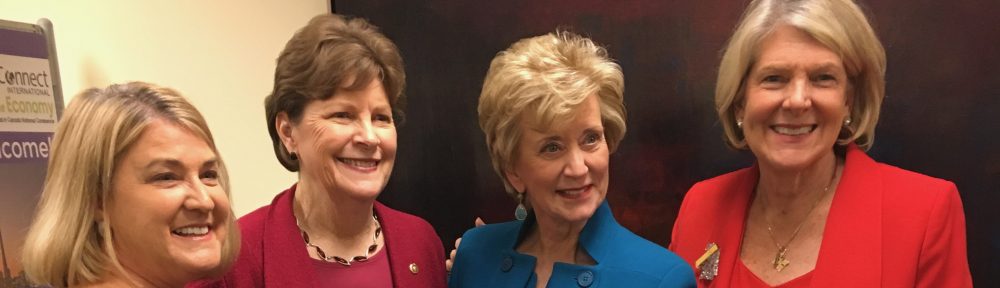
IMG_6573[1]Few weeks ago I traveled to São Paulo, Brazil and Ankara, Turkey where I had the opportunity to represent WIPP and WIPP International and our members in critical discussions about global economic development. At both events, leaders from governments, NGOs and the business world took the stage to reiterate the need for gender inclusive growth policies.

In São Paulo, the International Trade Center’s (ITC) Women and Trade Programme hosted the annual Women Vendors Exhibition and Forum (WVEF), which seeks to increase the participation of women owned businesses in global supply chains. According to the ITC, women globally own almost 10 million small and medium-sized enterprises (SMEs) which account for almost 80% of jobs around the world. It is well known that supporting an environment that encourages entrepreneurship spurs job growth.

At the event, ITC Executive Director Arancha González called on world leaders, governments, and the business community to develop economic and procurement policies that will create one million more women entrepreneurs by 2020. The call to action will impact local and global markets by stimulating job creation at record levels.

In Ankara, the G20 launched the Women-20 (W20), an engagement group focused on promoting gender-inclusive economic growth. The group’s mandate is to advance recent G20 commitments on: women’s full economic and social participation (Los Cabos Leaders’ Declaration, 2012); women’s financial inclusion and education (St Petersburg Leaders’ Declaration, 2013); and gap reduction in participation rates between men and women in G20 countries by 25 percent by 2025, taking into account national circumstances (Brisbane Leaders’ Declaration, 2014).

Turkish Prime Minister Ahmet Davutoğlu made an impassioned speech about the potential of the W20 to positively impact the global economy. Today, in the G20, male economic participation is 86%, but only 56% for women. He added that for every 1% rise in female participation, it is estimated the global economy will grow an additional $80 billion and a 10% rise would increase the global GDP by an amount equivalent to Turkey’s annual GDP today.

International Monetary Fund (IMF) Managing Director Christine Lagarde highlighted that data compiled by the World Bank indicates 90% of countries still have laws that discriminate against women. She admitted that the IMF in the past has not had a strong focus on women, but the impact to women and the potential of women in the economy is now considered in every IMF country visit. She added that words are important, but to echo Prime Minister Davutoğlu, it is what gets implemented and the outcomes that are achieved, which really matter.

The important takeaway from these meetings is not that gender inclusive growth policies are the moral or right thing to do, but that they are the smart economic thing to do. Increasing women’s participation in the global economy has the potential to add to the global GDP the economic equivalent of a new China or India. In a time when no one is quite happy with the “new normal” economy, isn’t this the smart thing to do for everyone, both men and women?

ChallengeHER 2015 Update … Fall Edition

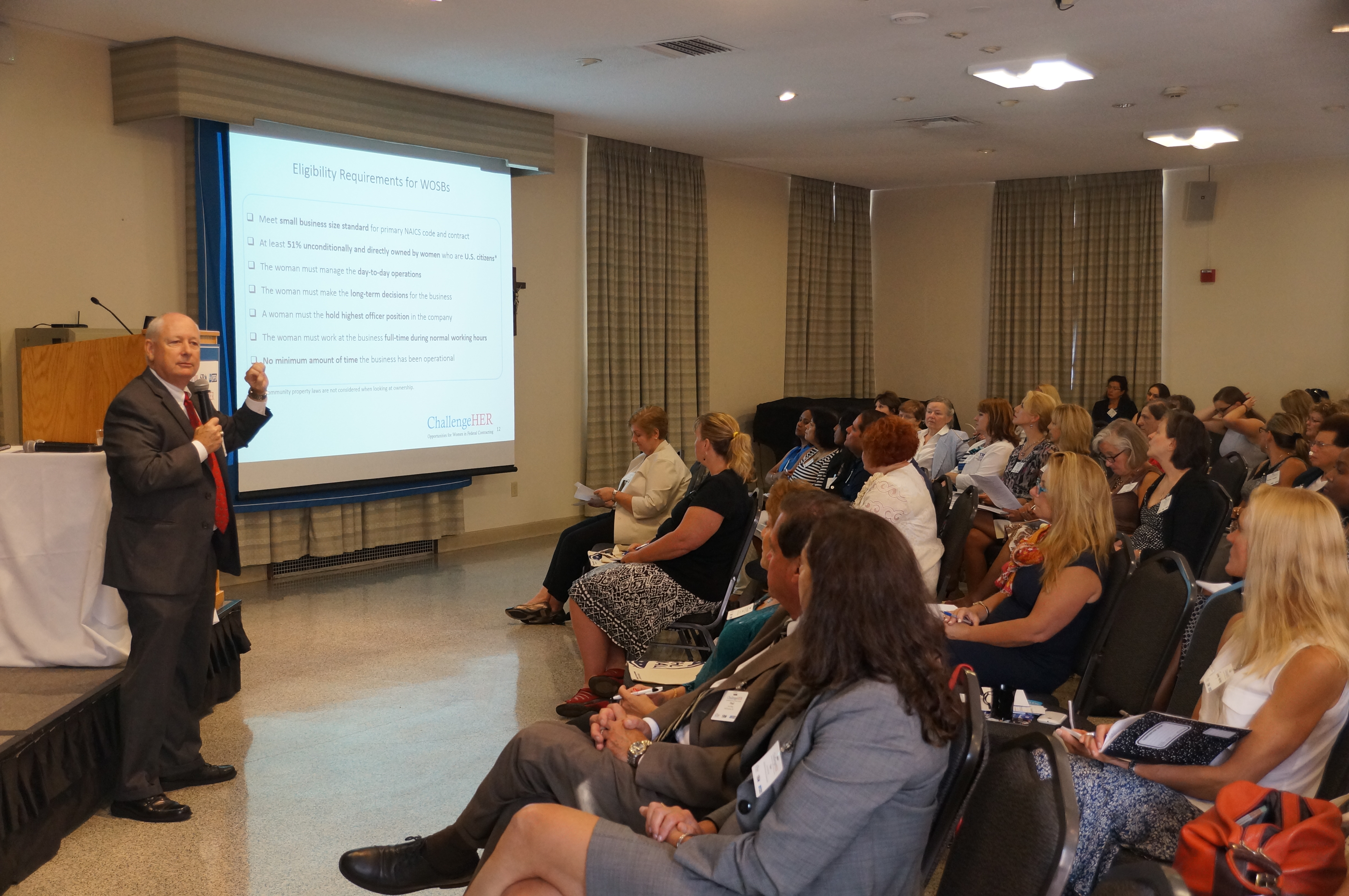
A substantial part of Women Impacting Public Policy’s (WIPP) Federal Procurement Programming lies undoubtedly with ChallengeHER. ChallengeHER is an educational program, which provides women business owners with the guidance to better compete for federal contracts under the Women-Owned Small Business (WOSB) Federal Contract Program.

CH-Transparent

In order to provide as much impact as possible and to get women business owners together with federal buyers, ChallengeHER events are being held in several cities and states throughout 2015. As the year is progressing toward the fall season, several events have already been held (e.g. Washington D.C., New York, Dallas, Atlanta, New Hampshire), but many more are still scheduled until the end of the year. And what can participants expect?

ChallengeHER provides women around the United States with the most important, standardized knowledge and guidance in the federal marketplace and an opportunity to:

  • Learn about the WOSB set aside program and how to market their business using this set aside.
  • Learn from experiences and best practices of successful WOSBs working as federal contractors.
  • Find out from federal buyers how to do business with their agency in Federal Buyer’s Panel.
  • Participate in one-on-one matchmaking sessions with federal buyers at most events.
  • Learn about the new Sole Source Authority rule! More information on SBA’s announcement integrating a sole source component into the WOSB procurement program starting October 14, 2015, can be found here.
  • Network with peer mentors and other WOSB and Economically Disadvantaged Women-Owned Small Business (EDWOSB) firms.

Some of the participants’ feedback:

BlogPost“I am glad I was able to attend ChallengeHER. The speakers were great and very informative.” – Attendee from New Hampshire event

“ChallengeHER provided me with pathway to applying for federal contracts and becoming a successful women business owner.” – Attendee from Atlanta event

“I truly appreciate the information shared. It provoked me to think differently about how I was running mBlogPosty business. I was so inspired I even recorded the speech.” – Attendee from Atlanta event

“As well as strong individual speakers, it was particularly helpful to have “panels” that provided different perspectives at once.” – Attendee from NYC event

Registration for upcoming events is available for:

More events to come will be held in Central New Jersey, Baltimore, Kansas City, and Orlando in Florida throughout November and early December 2015.

ChallengeHER aims not only to provide one time learning experience but also to build a standing long-term knowledge and support base for its participants. Therefore additional resources are available for attendees both before and after the event:

  1. To prepare and get ready for discussions and topics covered during the event by listening the following courses:
  2. To follow up on gained knowledge and sort out where to go from there, by following 10 Quick Steps for guidance to successful federal contracting.

For those of you, who are not familiar with the program, here is some basic information:

ChallengeHER, an initiative from the U. S. Small Business Administration (SBA), WIPP, and American Express OPEN (OPEN), is designed to strengthen and promote the Women-Owned Small Business (WOSB) Federal Contract Program. ChallengeHER offers women business owners important information to established and new businesses on working with the federal government. Further, these events enable more women business owners to take advantage of contracting opportunities so they can boost their businesses and help propel the success of the WOSB Procurement Program.

For more information on upcoming events and news visit our website and connect with us online on Twitter, Facebook or LinkedIn.

Patents, Trademarks, Copyrights … Protect Your Intellectual Property

A spark of an idea is often the start for building a business. Next steps that come to mind to most people are preparing a business plan, sales and distribution model, marketing strategy, plan for building customer base, etc. However one area that is not always as straightforward is protection of the business idea, business name, or an invention from competitors. Or actually protection of everything that is encompassed by one powerful term – Intellectual Property (IP).

We all know the term but what exactly does it incorporates? According to the World Intellectual Property Organization, “IP refers to creations of the mind, such as inventions, literary and artistic works, symbols, names, images, and designs used in commerce.” Globally IP is divided into 2 main groups – Industrial Property (patents, trademarks, industrial designs, and geographical indications) and Copyright that covers literary and artistic works such as novels, films, music, architectural designs and web pages.

USA accounts for the largest share of filed patents and trademarks applications worldwide with 28,7% and 13,8% respectively as reported by the World Intellectual Property Organization.

Screen Shot 2015-09-11 at 11.58.47 AMHowever due to complexity of IP processes small businesses account for only small proportion of the numbers. They are usually not properly protected and thus are more vulnerable to piracy, counterfeiting, and the theft of their intellectual property. Small business owners often simply don’t have access to the IP protection know-how that larger corporations do.

And according to statistics of Small Business Administration this is even truer for small businesses, which are exporting their products overseas. Only 15 percent of exporters realize that a U.S. patent only provides protection in the U.S.

Below are the basics to be followed for protecting IP overseas:

  • Overseas Patents – Almost every country has its own patent law with specific patent application process, which needs to be followed. More information about filing for an overseas patent can be found here .
  • International Trademarks – in certain countries (defined by the Madrid Protocol) trademark registration can be filed via a single application, if you are already a qualified owner of a trademark application pending before the U.S. Patent Office. If you want to protect your trademark overseas you’ll need to file for international trademark protection. More information is available here

And why is it so important to protect ones business intangibles?

Intellectual Property protection is a critical part of small business success and its current or future growth. According to the U.S. Patent and Trademark Office’s stopfakes.gov web site, companies that protect their intellectual property drive more economic growth in the U.S. than any other single sector. In general, IP rights reward creativity, that fuels progress, innovation, spurs economical growth and creates jobs in return.

There are many different resources, to help you gather information on where and how to protect your intellectual property, sba.gov or export.gov are a good start.

We have also a unique opportunity for you to learn more about it during our free webinar on September 21st, which will be led by expert in the IP field, Partner at Holland & Knight law firm, Thomas W. Brooke. Registration is free and open.

Millennials in the Workplace – What Are Your Thoughts?

Millennials are the largest workforce group since they surpassed Generation X this year and the U.S. Bureau of Labor Statistics preMillennialsdicts they will make up 75% of employees by 2030. Therefore it is no surprise that many reports and articles have been dedicated to the topic of how to get along with and manage this generation at work.

From hiring practices to benefit packages and work-life balance, expectations of this generation are widely different to the ones of Baby Boomers or Generation X.

Towan Isom is a President and CEO of Isom Global Strategies where millennials make up more than 50% of all employees in her company. Since she started the company 15 years ago in her basement, she has accumulated extensive experience and knowledge working with different generations of workers. She shares her insights and often speaks on how to be successful with this intergenerational workforce and on managing millennial employees.

In the end of September, Towan will speak at a conference on Millennials in the workplace, and she offers a unique opportunity to make your insights to be heard. By responding to the quick survey your professional opinion on working with millennials will be shared with her audience and presented in a case study afterwards. The conference will be also recorded and available on Isom Global Strategies website few weeks after the event.

Towan will also share outcomes and her professional views with us here in a guest blog after the conference.

More Innovative Ideas to Come – Presidential Innovation Fellows Program Made Permanent

pifPresident Obama signed an executive order this week making the Presidential Innovation Fellows Program permanent to keep attracting innovators and continue building modern, engaging and transparent government.

The main purpose of the program is to upgrade how Americans interact with government online and to encourage a culture of public service among tech entrepreneurs and innovators.

Since the program’s launch in 2012 it has recruited 96 innovative experts from all around the country and different industries. Greater access to electronic medical records, police departments making their data searchable online, and broader access to high-speed internet for students in their schools were the highlights of the program’s greatest achievements mentioned by President Obama in his speech introducing the executive order on Monday this week.

Fellows serve for 12 months as embedded entrepreneurs-in-residence teamed up with top federal employees on a variety of efforts from the three main portfolio projects – Good for Government (to overcome technology gaps across agencies), Presidential and Agency Priorities (to better serve citizens), and Technology Partnership (guidance to support technology changes).

All Americans with bold ideas are encouraged to apply here.

Babson and Other Business Schools Commit to White House to Create ‘Best Practices’ to Give New Opportunities for Women in Business

Graduation cap with coins.

Babson, along with 45 other business schools have committed to a set of best practices, shared with the White House, offering strategies for business schools to help women succeed during and after school. These business practices are designed to prepare female students for the challenges of the changing American workforce.

These best practices have four major area’s of focus:

  • Ensuring access to business schools and business careers;
  • Building a business school experience that prepares students for the workforce of tomorrow;
  • Ensuring career services that go beyond the needs of traditional students;
  • Exemplifying how organizations should be run.

To read more about the set of best practices, click here.

General Assembly Fellowship Opportunity

GA ATT blog

WIPP sponsor, AT&T, is partnering with General Assembly to support the General Assembly Opportunity Fund, a fellowship program aimed at providing hands-on education and career opportunities in technology to underrepresented groups across the globe. The Opportunity Fund specifically supports women, people of color, military veterans, and low-income individuals.  GA’s Opportunity Fund scholarship program will provide 20 youth and veterans an opportunity to take GA’s full-time, 12 week Web Development Immersive (WDI) and 10 week User Experience Design (UXDI) courses in San Francisco, Atlanta and Washington, D.C. and 50 scholarships for an online web design course. You can read more at CGI America here.

Deadline for all applications is August 15th.

Momentum of Women in Tech

Women in the tech industry is getting more and more coverage in last couple of weeks and days, from the #ILookLikeAnEngineer tweet storm to the White House Demo Day event resulting in tech giants announcing plans to hire more women and minorities. Intel went even further, offering their employees bigger referral bonuses when recommending a woman candidate.

mar_310_women_in_tech_sf

It is all part of a long-term public discussion about women in technology, or rather, addressing the fact that there is not enough women working in the technology sector. Despite high profile stories on successful women leading tech giants, the numbers are actually getting worse. In last two decades, there was a steady decline of women working in tech industry – from 35% in 1990 to just 26% in 2013. Some blame the pipeline, other the unfriendly “bro” culture or not favorable family policies that prevent women from building long-term careers in the tech industry. But the overall outcome is the same – 41% of women end up leaving tech jobs after couple of years.

Rachel Tomas provides deep insight into the topic in her latest story for medium.com. As a programmer, she discusses components of the tech culture which she states led her to leave her tech career, citing unconscious bias against women.

Ms. Tomas highlights several statistics from studies on gender disparities in the tech industry:

How can the tech industry make positive changes to be more inclusive of women? Ms. Tomas makes several recommendations:

  • More comprehensive training of managers, especially in fast growing companies where engineers are often being promoted without any training at all.
  • More formal hiring and promotion criteria to avoid decisions based on “gut feel” which is often unconsciously biased as learned from the above studies.
  • Strong leadership implementing concrete measures to support unbiased culture and diversity.
  • Regular audits on employee data such as comparison and evaluation of earnings, promotions, performance reviews, and attrition rates among genders.
  • Cease encouraging and rewarding employees to stay late at work which besides risk of burnouts leads to discrimination of people with families.
  • Create a collaborative environment instead of competitive one.
  • Offer adequate maternity leave without compromises as requiring participation on teleconferences during leave.

Read Rachel Tomas’s full piece here.

What We Can Learn from High Growth Women Owned Firms

By Annie Wilson, Intern

Last year Susan Coleman D.P.S. and Alicia Robb Ph. D published research prepared for the National Women’s Business Council examining the factors affecting access to capital for high-growth women-owned businesses. In their research, Coleman and Robb found that currently in the business community 30% of businesses were owned by women, however they are mostly small:

  • only 12% of women-owned small businesses (WOSBs) employ anyone other than the business owner;
  • 2% have 10 or more employees; and
  • only 2% have revenues in excess of $1 million.

NWBC Blog Image

This new data shows the need to engage and educate women owned businesses on growth strategies that can expand their businesses.

This report delves deeper into the issues relating to capital accessibility specifically for growth oriented firms, which comparative studies have yet to research thoroughly due to a lack of data.

According to the study, access to capital may be more challenging for women-owned firms than for men for a multitude of reasons:

  • In terms of financial capital, there are considerable gender gaps in the amounts of financing across firms. Men start firms with nearly double the amount of capital that women do and, of high growth firms, men use more than double of what women use. Men also indicated to have used six times the amount of financing that women do.
  • For startup capital, women were found to be more reliant on owner equity and insider financing as opposed to men who used outsider equity predominantly. For women owned firms, a very small fraction of startup capital came from outsider equity regardless of where the firm was on the size spectrum.
  • In terms of credit market experiences, women indicated to have similar loan application rates as men even though there are more unmet credit needs among women. Women were more likely to not apply for the necessary credit due to a fear of a denied loan application. Also, credit scores are generally lower for women.
  • While men and women are on par in terms of education levels, men exceed women in degrees in the STEM fields, which is the industry that experiences more growth.
  • By means of industry experience, as women tend to have lower levels of startup experience, team ownership and hours worked compared to men.
  • Women have higher rates of owning businesses that are home-based due to family commitments and research has indicated that being home based is negatively related to growth.

However, when comparing the top ranking female businesses by employment and growth potential, there are some considerable differentiations that set them aside.

  • They had a higher rate of employment from their startup year onwards.
  • They are more likely to be in tech industries.
  • They were more likely to offer services as opposed to products.
  • They were less likely to be based from the owner’s home.
  • They were more likely to be incorporated and as a result yield higher credit scores.

For leadership traits, women business owners of high growth firms also had some unique characteristics:

  • They were likely to have more years of industry experience and more likely to have more startup experience.
  • They started their businesses with much more capital (even more than the male owned firms overall.)
  • They used more outsider equity for startup capital. However, this was typically still less than their male counterparts.

Learning from these success measures, it is clear that increased capital for women entrepreneurs, specifically in the startup phase of their business, has an important correlation to the trajectory of women owned businesses. In order to foster a more successful environment for women, there must be changes in the business environment to give women the support and resources they need to turn this trend around.

It is clear that the financing gap between men and women business owners is a considerable detriment to the vitality of women-owned firms. In order to ensure stronger female entrepreneurship and make strides towards closing this gap, efforts must be made to strengthen the financial capabilities of women entrepreneurs and encourage accessibility to bank and equity financing. Also, providing more visibility and accessibility to successful female industry professionals and providing more opportunity for women to attain industry experience could help bolster the entrepreneurial confidence that women need to compete with their male competitors. Another important step forward would be an increased use of family-friendly policies, which could give women the flexibility to work outside of their homes and in an environment more conducive to entrepreneurial growth.

Take a look at WIPP’s recently launched Access to Capital platform to address funding gaps and the crisis of capital faced by women entrepreneurs.

To read the full report, click here.

August 2015 WIPP National Partner of the Month

Lynn Sutton

August WIPP National Partner of the Month: Lynn Sutton 

WIPP sat down with Lynn to hear a little bit more about her business and relationship with WIPP…


Tell us a little about your company and its mission.

Advantage Building Contractors, Inc. is a federal government contractor specializing in design build, general construction, and facilities support.  The company was founded by Patricia Summers and I in 2002 as a residential roofing specialty trades contractor. In 2010 Advantage made its way into the federal arena and within a year, Advantage was awarded the first WOSB set aside contract in construction. Like most other small businesses getting started with the federal government, Advantage faced the brutal challenges of developing business in the absence of no relevant past performance and, specific to construction, little bonding capacity. We were able to build our capabilities through sole source opportunities, teaming partners and relentless follow-up with agencies. Our Mission Statement is “We’re on a mission to make our customer’s job easier.”

Have you always been an entrepreneur?  If not, what, or who, inspired you to take this leap? 

I grew up in Philadelphia and was raised within a family who valued an intense work ethic and entrepreneurship. My grandfather was a shoemaker in the early 1900’s and my grandmother worked tirelessly at home raising seven children while instilling in them to pursue and achieve all of their dreams. My father played the single most influential role in inspiring me to be an entrepreneur. He had several businesses and influenced me to create my own opportunities. I began by selling greeting cards before the age of nine and shortly thereafter I worked for my Father who was an Amway Distributor until I was able to start my own Distributorship.


How are you engaged in your community (or state or national scene) in philanthropic or political causes?

Since I have experienced success in federal contracting, many other small business owners, especially women, have come to me looking for guidance. I am Editor of Hattie’s Hammer, a blog that serves as a resource to help women and disadvantaged groups navigate the federal market by providing information regarding current events, programs, opportunities, and legislation. Hattie’s Hammer is a local and national platform in which I contribute to the collective social conscience by promoting awareness of the need for small businesses to participate in federal contracting as a means to overcome many of the socioeconomic challenges women and disadvantaged businesses face on a daily basis. I must add all of us have the ability to engage by supporting organizations that are advocating on their behalf and respond to sources sought when possible.


Have you advocated for an issue or a cause important to you (for example:  called or written to your elected official, spoken publicly, or written an op-ed).

One of the most impactful highlights of my life was having the opportunity to represent WIPP by providing testimony to the US Senate in support of the Women’s Small Business Parity Act and Sole Source Authority in July 2014.

My first major cause was participating in a campaign to stop a Mayor from being elected in Philadelphia. Decades later, I was a community organizer for the National Organization for Women for the rally to support The Violence Against Women Act in Washington, DC. Prior to that I at the National Gay and Lesbian Task Force. We had many critical issues to tackle. I am humbled to have been a contributor to equal rights and marriage for LGBT couples. Trish and I have been partners for almost twenty years and we were finally able to get married on June 29, 2015.


What value/resources has WIPP brought you (training or education, member or political connections/access, awareness of policies that affect your business and its growth, etc.) that have been helpful to you?

One of the most incredible resources WIPP has brought to both me personally and my business, is the network of professionals that have provided support and information that has been invaluable. Through connections of WIPP members and Board Members, I have been able to meet with key agency decision makers, exponentially increase our bonding capacity, and enhance my company’s exposure to opportunities through multiple teaming partnerships. My life has changed with great relationships and role models that take my breath away. I’ll affirm for everyone that the value, resources, education, connections, or whatever you desire is happening for you right now. I am just starting on this path and look forward to contribute as I grow.


Click here to read Lynn’s full bio.