Women Business Centers Get A Boost

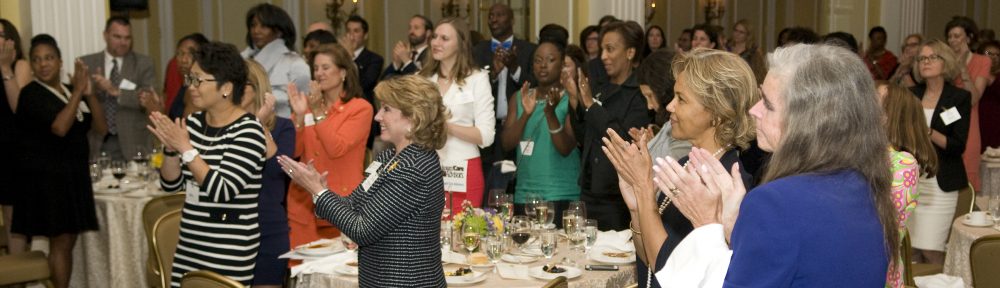
Annual Mtg 2014 - #7Early this month, the Senate Committee on Small Business and Entrepreneurship unanimously approved the Women’s Small Business Ownership Act of 2015, which reauthorizes the Women’s Business Center (WBC) program. Senators Maria Cantwell (D-WA), Chair David Vitter (R-LA) and Senator Jeanne Shaheen (D-NH) sponsored this landmark legislation and the bill  passed on a bipartisan, unanimous vote – a rare occurrence in Congress as of late.


Women entrepreneurs receive business training and counseling from more than 100 Women Business Centers (WBCs) throughout the country. Because of this bill, the WBC program will now be authorized $21.75M through FY2020, adding more Centers and providing additional support to existing Centers. WBCs can now receive grants up to $250,000, nearly double the previous maximum of $150,000. Funds above the $250,000 level will be made available to Centers that meet goals and wish to establish new projects. These updated funding levels will encourage growth in established Centers and allow WBCs to provide additional support to women entrepreneurs. The Act also requires important updates to the Women Business Center program.

Women’s Business Centers provide an invaluable resource for women entrepreneurs. Ten million women-owned businesses contribute to the nation’s economy by generating $1.6 trillion in revenue and employing nearly 9 million Americans. WBCs are an important partner for these 10 million women-owned businesses and this legislation will enhance their capabilities and build on their successes.

Learn more: http://awbc.org/news/

Find your Women Business Center: http://1.usa.gov/1MpMFWJ

Celebrating National Women’s Small Business Month

10mil

by AnnaKate Moeller, WIPP Programs Manager

This October we are particularly excited to celebrate National Women’s Small Business Month because of the release of the results of the 2012 Survey of Business Owners (SBO) and the SBA issuing the final rule on Sole Source Authority. It has been a big year for women in business to say the least.

The theme for this year’s National Small Business Month is “10 Million Strong” recognizing the 2012 SBO results of the nearly 10 million women-owned businesses currently in the United States. This is a 27.5% increase from 2007 survey results, showing that women-owned businesses are growing and in turn boosting the economy.

We also have cause to celebrate as the Small Business Administration issued the final rule improving access to federal contracting opportunities for women-owned small businesses with Sole Source Authority. This rule is expected to be effective and available for use by federal agencies on October 14, 2015.

As we celebrate 10 Million Strong this October, WIPP will be highlighting women business owners on our boards, throughout our member base and networks. Please check out our twitter, Facebook and blog throughout the month to hear the stories of these female leaders.

Millennials in the Workplace – What Are Your Thoughts?

Millennials are the largest workforce group since they surpassed Generation X this year and the U.S. Bureau of Labor Statistics preMillennialsdicts they will make up 75% of employees by 2030. Therefore it is no surprise that many reports and articles have been dedicated to the topic of how to get along with and manage this generation at work.

From hiring practices to benefit packages and work-life balance, expectations of this generation are widely different to the ones of Baby Boomers or Generation X.

Towan Isom is a President and CEO of Isom Global Strategies where millennials make up more than 50% of all employees in her company. Since she started the company 15 years ago in her basement, she has accumulated extensive experience and knowledge working with different generations of workers. She shares her insights and often speaks on how to be successful with this intergenerational workforce and on managing millennial employees.

In the end of September, Towan will speak at a conference on Millennials in the workplace, and she offers a unique opportunity to make your insights to be heard. By responding to the quick survey your professional opinion on working with millennials will be shared with her audience and presented in a case study afterwards. The conference will be also recorded and available on Isom Global Strategies website few weeks after the event.

Towan will also share outcomes and her professional views with us here in a guest blog after the conference.

SBA’s Announcement of the 2016 InnovateHER Challenge and Summit

FeatureInnovateHER

By Annie Wilson, Intern

On Tuesday, August 4th the Small Business Administration (SBA) announced the launch of the 2016 InnovateHER: Innovating for Women Business Challenge and Summit. In partnership with Microsoft, the 2016 InnovateHER includes the second round of the women’s business competition to feature new, innovative products and services that help to change and empower the lives of women and families. Last year, the SBA engaged over 100 organizations and reached 1000+ entrepreneurs around the country and this year they have expanded their challenge to include a women’s summit.

It is the SBA’s hope that through this summit they can unveil products or services that have a measurable impact on women and their families, fulfill a marketplace need and have potential for commercialization. The SBA recognizes that while women control 80% of the purchasing power in this country they only make up less than 5% of venture capitalists. The InnovateHER Challenge is an effort to bridge that economic standard for women and elevate commercial success for women entrepreneurs and products for women.

The InnovateHER event will kick off in the fall of 2015 in its initial round starting with competitions hosted by universities, accelerators, clusters, scale-up communities, resource partners and other organizations. The SBA is encouraging organizations all across the country to participate in this challenge to provide accessibility to an innovative space for women. A way in which organizations can help the InnovateHER challenge and women entrepreneurs within their community is to host a local business competition and submit the winner to the SBA no later than December 3rd, 2015 for the semi final rounds. The SBA will then select up to 10 semifinalists from their community nominations that will be sent to the final pitch competition. The 2016 InnovateHER and final pitch competition will be held March 16-17th, 2016 in Washington D.C. At the final competition, the remaining contestants will do one final marketing pitch and compete to be one of the top three winners to receive up to $70,000 in prize money.

Make sure to check out last year’s winners: LIA Diagnostics, the Shower Shirt, and Trusst.

If you’d like to learn more about the challenge rules or how to become a host organization, please click here.

If you’d like to learn more about the challenge itself, please click here.

What We Can Learn from High Growth Women Owned Firms

By Annie Wilson, Intern

Last year Susan Coleman D.P.S. and Alicia Robb Ph. D published research prepared for the National Women’s Business Council examining the factors affecting access to capital for high-growth women-owned businesses. In their research, Coleman and Robb found that currently in the business community 30% of businesses were owned by women, however they are mostly small:

  • only 12% of women-owned small businesses (WOSBs) employ anyone other than the business owner;
  • 2% have 10 or more employees; and
  • only 2% have revenues in excess of $1 million.

NWBC Blog Image

This new data shows the need to engage and educate women owned businesses on growth strategies that can expand their businesses.

This report delves deeper into the issues relating to capital accessibility specifically for growth oriented firms, which comparative studies have yet to research thoroughly due to a lack of data.

According to the study, access to capital may be more challenging for women-owned firms than for men for a multitude of reasons:

  • In terms of financial capital, there are considerable gender gaps in the amounts of financing across firms. Men start firms with nearly double the amount of capital that women do and, of high growth firms, men use more than double of what women use. Men also indicated to have used six times the amount of financing that women do.
  • For startup capital, women were found to be more reliant on owner equity and insider financing as opposed to men who used outsider equity predominantly. For women owned firms, a very small fraction of startup capital came from outsider equity regardless of where the firm was on the size spectrum.
  • In terms of credit market experiences, women indicated to have similar loan application rates as men even though there are more unmet credit needs among women. Women were more likely to not apply for the necessary credit due to a fear of a denied loan application. Also, credit scores are generally lower for women.
  • While men and women are on par in terms of education levels, men exceed women in degrees in the STEM fields, which is the industry that experiences more growth.
  • By means of industry experience, as women tend to have lower levels of startup experience, team ownership and hours worked compared to men.
  • Women have higher rates of owning businesses that are home-based due to family commitments and research has indicated that being home based is negatively related to growth.

However, when comparing the top ranking female businesses by employment and growth potential, there are some considerable differentiations that set them aside.

  • They had a higher rate of employment from their startup year onwards.
  • They are more likely to be in tech industries.
  • They were more likely to offer services as opposed to products.
  • They were less likely to be based from the owner’s home.
  • They were more likely to be incorporated and as a result yield higher credit scores.

For leadership traits, women business owners of high growth firms also had some unique characteristics:

  • They were likely to have more years of industry experience and more likely to have more startup experience.
  • They started their businesses with much more capital (even more than the male owned firms overall.)
  • They used more outsider equity for startup capital. However, this was typically still less than their male counterparts.

Learning from these success measures, it is clear that increased capital for women entrepreneurs, specifically in the startup phase of their business, has an important correlation to the trajectory of women owned businesses. In order to foster a more successful environment for women, there must be changes in the business environment to give women the support and resources they need to turn this trend around.

It is clear that the financing gap between men and women business owners is a considerable detriment to the vitality of women-owned firms. In order to ensure stronger female entrepreneurship and make strides towards closing this gap, efforts must be made to strengthen the financial capabilities of women entrepreneurs and encourage accessibility to bank and equity financing. Also, providing more visibility and accessibility to successful female industry professionals and providing more opportunity for women to attain industry experience could help bolster the entrepreneurial confidence that women need to compete with their male competitors. Another important step forward would be an increased use of family-friendly policies, which could give women the flexibility to work outside of their homes and in an environment more conducive to entrepreneurial growth.

Take a look at WIPP’s recently launched Access to Capital platform to address funding gaps and the crisis of capital faced by women entrepreneurs.

To read the full report, click here.

How to Boost Women’s Entrepreneurship

While numbers of women entering labor force are steadily increasing, their participation in entrepreneurship is less favorable. In fact, according to the Kauffman Foundation, an entrepreneurship think tank, women are only half as likely as men to start a business resulting in unrealized potential for their contributions to job creation, innovation, and ultimately economic growth.

UntitledKauffman Foundation released a new study claiming that women would make great entrepreneurs but they often fail to start their own business mostly due to following reasons:

  • Shortage of available mentors;
  • Perception of entrepreneurship as a masculine activity;
  • Additional hurdles maintaining a work-life balance due to parenthood.

However, we can address these barriers as Kauffman highlights 5 ways for policymakers on how to encourage women to start their own business.

  1. Provide more exact, gender based, data on entrepreneurship programs and initiatives to understand how they can better help women entrepreneurs. Collecting data based on gender will help them to make more accurate decisions in assisting women entrepreneurs.
  1. Increase the number of women leading entrepreneurship programs. Women can better lead and support other women entrepreneurs by using their networks for accessing mentors, financial capital, and creating women inclusive events that attract women entrepreneurs.
  1. Increase Small Business Innovation Research (SBIR) awards to women-owned businesses. Although federal agenciesparticipating in the SBIR Seed Fund are encouraging women to engage in federal research/Research and Development, only 15 percent of SBIR awards went to women-owned businesses in 2012. One of the ways to increase this number is to partner with women’s professional organizations and make better effort of reaching out to women entrepreneurs to participate in these programs.
  1. Share stories of successful women entrepreneurs. Celebrating accomplishments of women entrepreneurs will change the false perception that only men are successful entrepreneurs and encourage more women to follow successful women in business.
  1. Decrease the risk of becoming an entrepreneur. Pressure and risks that women as entrepreneurs are facing, especially with young families, can discourage them of starting in the first place. By exploring various policies such as subsidized childcare or preschool, can help alleviate the pressure and create a more favorable environment for women to start their own businesses.

Read the full study here.

It’s Here! WIPP’s National Directory of Women Federal Contractors

WOSB Directory

WIPP is excited to announce the launch of its National Directory of Women-Owned Small Businesses (WOSB) in the federal contracting arena. This directory is a great resource, which allows you to find qualified women contractors across the US. In order to be listed, you must first be a WIPP member and complete the WIPP Federal Contracting Certificate Program, a step-by-step training program for women business owners ready to become more involved in federal contracting or are already an experienced contractor with past performance. If you are looking to fill contract opportunities or are seeking a teaming partner, WIPP’s National WOSB Directory can help you find the highly qualified WOSB contractors with credible past performance to fit all of your contracting needs.

The goal of this directory is to build and promote a list of qualified WOMEN contractors so that at least 5% of federal contracts will be going to women-owned businesses. There are currently over 110 women-owned small businesses in the federal contracting arena listed in the WIPP National Directory. Help us reach our goal and complete the Certificate Program or check out the list today.

Also don’t forget to check out WIPP’s other federal contracting education resources:

For more information about the WIPP Federal Contracting Certificate Program or WIPP’s National WOSB Directory please contact Lin Stuart, WIPP’s Procurement Manager at lstuart@wipp.org.

Share WIPP’s Directory on Twitter: WIPP Launches National WOSB Directory n the Federal Contracting Arena http://bit.ly/1FnlxKp #WOSB #WIPP #FederalContracting #WomeninBizBlog

More Taxes? No Taxes? How About Fair Taxes

By John Stanford, WIPP Government Relations

WIPP recently submitted testimony to the House Small Business Committee on comprehensive tax reform. This blog gives an overview of WIPP’s advocacy efforts. For more details, I encourage you to read the testimony. Our government relations team strives to make official communications as easy-to-read as possible, but should you have questions please reach out to WIPP.   


Women entrepreneurs deserve a tax system that rewards the effort, tenacity, and risk it takes to start and grow a business. Moreover, they deserve a system of revenue collection (because that’s what taxes are) that is simple and fair.

In testimony submitted to the House Small Business Committee, WIPP said just that. Citing reports from the IRS National Taxpayer Advocate as well as the SBA Office of Advocacy, the testimony documents what women business owners already know: the tax system is broken, failing under the weight of complexity, uncertainty and outdated policies. But more importantly, the testimony addresses the impact of possible reforms – and the need for any overhaul to be comprehensive.

What does that mean? It means that the idea to lower the corporate tax rate, favored by the White House and some in Congress, must not happen independently of adjusting individual rates in a similar manner. This distinction matters because so many businesses, including almost 9 in 10 women-owned businesses, are structured as “pass-through” entities paying taxes as individuals (including S-Corps, Sole-proprietorships, partnerships, and LLCs).

Corporate-only reforms would be unfair to these businesses – and for that reason WIPP has always supported comprehensive (corporate + individual) reform. The testimony underscored this important point.

In addition, WIPP identified tax policies that, absent major reforms, would benefit women entrepreneurs. This includes making more small business tax credits and deductions permanent. In recent years, these tax “extenders” have been extended (hence their name) at the last minute, or even retroactively – not a good way for business owners to plan their budgets.

WIPP also asked Congress to consider tax credits that benefit new businesses, helping offset the costs of launching a new company. Another policy request was to avoid changing the Employee Stock Ownership Plan (ESOP) provisions in the tax code, as these have proven to be both popular and good tools to incentivize productivity and long-term business health.

In agreement with the idea that simple businesses (sales – costs = income) should have simple taxes, WIPP also supports simplifying the cash accounting method and expanding its optional use to more small businesses. Finally, with healthcare costs an always-growing burden on employers, WIPP continues its support of expanding the Small Business Health Care Tax Credit so more women entrepreneurs minimize the cost of providing healthcare to employees.

More ideas for reforming the tax system to incentivize entrepreneurship and innovation are out there. WIPP will continue working to identify policies that let women business owners focus more on their business and less on complex tax requirements. At the end of the day, all of these decisions should be made with the basic principles of simplicity and fairness in mind. And that’s exactly what we asked Congress to do.

Net Neutrality: The Solution Lies With Congress

Last spring, the World Wide Web turned 25.  And in its relatively short lifespan, Internet access has become vital to modern life.  Numerous broadband-enabled devices have been developed, and high-speed connectivity now delivers opportunities to us that we could only imagine not long ago.  This connectivity is an important resource for small businesses, professionals, and entrepreneurs, as well as for families, students, and diverse communities.

For women business owners, high speed Internet has enabled them to increase efficiency of business operations, improve customer service, reduce cost, and grow by reaching new customers and markets.  The most significant impact that high-speed connectivity has provided to women is flexibility, allowing them to start and grow their businesses regardless of whether they are working from an office, their home, or while on the go.

These advancements and innovations happened under a light-touch regulatory approach, which was wisely adopted and adhered to for many years.  This approach increased private investment in new technology and networks, allowed innovations to thrive, and helped increase high speed Internet adoption rates.  Unfortunately, we are now facing a radical change in course by the Federal Communications Commission (FCC), which regulates interstate and international communications by radio, television, wire, satellite and cable.

Later this month, the FCC is expected to pass burdensome net neutrality rules created in the 1930s that reclassify the Internet as a public utility. This approach is guaranteed to slow investment into our country’s networks and jeopardize high speed Internet adoption at a time when encouraging both is especially vital to the success of our economy, our small businesses, and our families.  Net neutrality must be preserved, but the proposed FCC rules will do more harm than good. They call for a drastically altered course, one that would sabotage the approach that has helped the Internet thrive from the beginning.

Fortunately, there’s another solution. Congress can design rules that will protect net neutrality and consumers.  By offering opportunities for bipartisanship, lawmakers can work together to eliminate real threats to the Internet and to establish clear legal guidelines for the FCC.  This solution can also ensure that we get the right level of regulation, more in line with the light-touch framework that has worked so well for the past few decades.

A light-touch legislative solution that prohibits blocking, throttling, and paid prioritization while also protecting consumers and avoiding legal limbo, will lead to even more innovation and investment in our country’s Internet infrastructure.  It will also ensure that that all Americans, such as the fastest growing segment of small businesses – women business owners – have access to high-quality Internet and the technology they need to continue to grow our economy.

Tell Congress We Need #NetLawNow!

Below is a piece by the Multicultural Media, Telecom & Internet Council (MMTC, formerly Minority Media and Telecommunications Council), a national nonprofit organization dedicated to promoting and preserving equal opportunity and civil rights in the mass media, telecommunications and broadband industries, and closing the digital divide. MMTC is generally recognized as the nation’s leading advocate for minority advancement in communications.


Bad Choices Can Make Today’s Internet Tomorrow’s Memory.  

Here’s what is happening right now to your Internet:  On Thursday, February 26, the Federal Communications Commission (FCC), the government’s independent agency that oversees the media and telecommunications industries, is about to deliver a groundbreaking decision that will affect your Internet.

Consumers need to speak up because the FCC’s actions can take away the benefits that we enjoy today and in the future.

Why Should YOU Care?

  • TODAY’S INTERNET GIVES YOU POWER. You choose from all kinds of plans and combinations, from low-cost pre-paid plans, all the way up to that family plan with the special music collection you like.  Tomorrow’s Internet could have all of these programs eliminated under new FCC rules.
  • TODAY’S INTERNET GIVES YOU ACCESS. We all move around the Web, accessing movies, photos, emails, and whatever we want on our smartphones and tablets. Tomorrow’s Internet could negatively impact where and how we use the Internet under new FCC rules.
  • TODAY’S INTERNET IS GETTING CHEAPER. Over the last few years, the price of broadband has been decreasing.  Tomorrow’s Internet costs may increase and make it harder for some of us to pay. New, unnecessary taxes and fees on services could also open up from Thursday’s FCC rules, hitting you and your family in the wallet.

Today’s Internet is OPEN, and after Thursday, consumers won’t get anything that they didn’t have – except more rules, less choice, and the possibility of higher costs.

We are running out of time, and we need everyone to join in on the conversation! Contact your Representative so we can all enjoy the benefits of the Internet today and tomorrow!

Tweet #NetLawNow and tell your Members of Congress that you want them to act now to keep the Internet open!

National Women’s Business Council Releases 2014 Annual Report

NWBCThe dawn of the New Year provides an excellent opportunity to review the successes of 2014, and to assess areas of improvement for 2015. The National Women’s Business Council’s annual report, “Building Bridges: Leveraging Research and Relationships to Impact the Business Climate for Women” does exactly that, providing us with an overview of women entrepreneurship, including a summary of key research findings, policy recommendations and the Council’s agenda in the year ahead. The report rests on NWBC’s four pillar platform- access to capital, access to markets, job creation and growth, and data collection- and confirms what many of us already know, that the full economic participation of women is essential to economic growth in the U.S.

Access to capital remains a key issue for women business owners. In order to better understand the ways in which women business owners accessed capital, NWBC worked with the SBA to analyze loan data, partnered with Walker’s Legacy to host a round-table specific to women of color and access to capital, and commissioned new research on under-capitalization. The research shows a direct link between access to capital and revenue generation, with men starting their businesses with nearly twice as much capital as women, a disparity which increases among firms with high growth potential. The report highlights crowdfunding as an important new resource for women business owners seeking capital.
The NWBC also focused much research on access to markets for women business owners, using WIPP’s own ChallengeHER campaign as a building block for identifying best practices in government procurement. Thanks to the Women Owned Small Business Federal Contract Program, more and more federal contracts are being awarded to women owned small businesses. However, disparities still remain in regard to award amount between WOSBs and non-WOSBs, most likely as a result of different contract types.
In 2013, the Council called for an increase in the number of women owned or led firms in incubators and accelerators in an attempt to increase job creation and growth. In 2014, the Council honored this commitment, through championing the SBA’s Office of Investment and Innovation’s Growth Accelerator Fund Competition, convening a public meeting on STEM, entrepreneurship, and women, and commissioning new research on micro-businesses and accelerators and incubators. Research shows that women with dependent children are less likely to add additional employees, indicating that child care burdens are still a significant obstacle to the growth of women owned small businesses.
The report concludes with a number of different, concrete strategies for each pillar, building off of past success while also acknowledging areas for improvement. Among many other things, the NWBC recommends: tax credits for investors who finance women-owned and led firms; creating opportunities to align women business owners with government and corporate procurement officials; improvement of the availability and timeliness of government and private sector data on women owned small businesses; the implementation of the sole source authority for the Women-Owned Small Business Federal Contract Program (yay!).
The National Women’s Business Council is a crucial resource for women entrepreneurs and business owners. The research and recommendations they provide acts as a road map for the success of women entrepreneurs, success which is reached through hard work, partnerships and persistence. 2014 was a great year for women entrepreneurs, and 2015 looks just as promising.