Small and Medium-Sized Companies in the Focus of Exporting News

Small and medium-sized exporting companies had several reasons for good spirit in the last couple of weeks – especially Trans-Pacific Partnership and Export-Import Bank supporters.

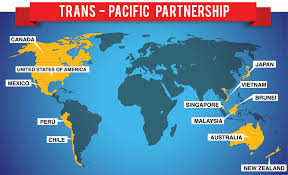
The final agreement on Trans-Pacific Partnership (TPP) got a substantial coverage across the news, as it is the largest regional trade accord in history. As covered a few weeks ago, it encompasses USA together with 11 Pacific Rim nations and addresses many complex issues – from reducing tariffs and quotas, to imposing rigorous environmental, labor and intellectual property standards on partners, easing cross-border data flows, establishing an investor-state dispute settlement mechanism, to free trade in services, and imposing competitive neutrality on state-operated businesses.

There is one particularly important area, which deserves a separate attention – focus of TPP on small and medium-sized enterprises (SMEs).

Last week, National Small Business Association hosted a webinar where Andrew Quin, Deputy Assistant U.S. Trade Representative for Southeast Asia and the Pacific, among other described new chapter of the TPP deal focused on SMEs. The chapter aims to tide together all different elements that benefit SMEs and he highlighted 2 major areas:

  1. Creation of dedicated website for SME exporters by every member country. The websites should pull out all provisions which are particularly relevant to SMEs such as customs, taxation or intellectual property protection topics to make it better understandable and easier to follow in day-to-day exporting trade deals.
  1. Creation of SME committee to continue consultations with SMEs and collect feedback on what works, if benefits are being generated, and on how to continue maximizing benefits to SMEs. The committee will consist of government representatives, however promises to take inputs from SMEs on private sector provisions.

All of the above claims to suggest that TPP is more beneficial to SMEs than any previous trade agreement. Mr. Quin also reassured that TPP will not have any impact on Minority-Owned Small Businesses set aside programs (including the one WOSB program for women).

Another topic that came out after few weeks is the reauthorization of Export-Import Bank (EXIM). As Mr. Quin stated, it is a separate initiative but important piece to allow a full benefit of TPP. EXIM is providing loans, guarantees, and insurance to U.S. exporters and has made SMEs exports the top category supported last year (source) when $10.7 billion of total $27.5 billion worth of U.S. exports went to U.S. small businesses.

EXIM

Many SMEs publicly supported EXIM reauthorization, and they all have now a hope that it might be successful after all. A rare procedural move brought EXIM to the House floor and got a surprising support in the 313-118 vote to renew, including from 127 Republicans.

However, now the supporters will have to secure passage in the Senate but they seem to have a chance through its attachment to another vehicle, such as legislation to renew highway funding (source).

Overall, current news seem to suggest that it is a good time to be an exporter and according to the latest annual report Profile of U.S. Importing and Exporting Companies released by Census Bureau, many SMEs have already realized that as they accounted for 98 percent of the number of U.S. exporters in 2013 and $471 billion in known value of goods exports.

New IRS Resource helps Employers Understand the Health Care Law

Healthcare taxThe new ACA Information Center for Applicable Large Employers page on IRS.gov features information and resources for employers of all sizes on how the health care law may affect them if they fit the definition of an applicable large employer (ALE).

Although the vast majority of employers will not be affected, you should determine if you are an applicable large employer.  If you averaged at least 50 full-time employees, including full-time equivalent employees, during 2014, you are most likely an ALE for 2015.  If you have fewer than 50 full-time employees, you may be considered an applicable large employer if you share a common ownership with other employers. As an applicable large employer, you should be taking steps now to prepare for the coming filing season.

The web page includes the following sections:

  • What’s Trending for ALEs,
  • How to Determine if You are an ALE,
  • Resources for Applicable Large Employers, and
  • Outreach Materials.

Visitors to the new page will find links to:

  • Detailed information about tax provisions including information reporting requirements for employers,
  • Questions and answers, and
  • Forms, instructions, publications, health care tax tips, flyers and videos.

In 2016, applicable large employers must file an annual information return – and provide a statement to each full-time employee – reporting whether they offered health insurance, and if so, what insurance they offered their employees. 

If you will file 250 or more information returns for 2015, you must file the returns electronically through the ACA Information Reports system.  You should review draft Publication 5165, Guide for Electronically Filing Affordable Care Act (ACA) Information Returns, now for information on the communication procedures, transmission formats, business rules and validation procedures for returns that you must transmit in 2016.

Visit the IRS’s new ACA Information Center for Applicable Large Employers resource page for more helpful information.

New Requirements for Credit Card Processing Requirements – How will they affect your business?

cc chip

Merchants of all sizes were required to upgrade their credit card processing technology to avoid liability for fraudulent charges by October 1st. The House Committee on Small Business held a two-part hearing series on implementation of new credit card technology designed to increase security and prevent fraud. This industry-led changeover will require all businesses to use the Europay – MasterCard – Visa (EMV) chip system to process credit card transactions. To affect this change, financial services providers will no longer be liable for instances of fraud if the merchant has not upgraded to the EMV chip system

The hearings offered interesting, and often contrasting, perspectives on this issue. At the first hearing, representatives from the financial industry praised the upgrades and highlighted the protections that the EMV chip system offers. The second hearing, featuring small business owners that need to implement these changes, revealed a much more complex situation. While witnesses at both hearings and the Committee members generally agreed that the EMV system offers more sophisticated fraud protections, implementing these modifications is a significant burden for small businesses.

Despite the outreach efforts of financial firms, small business owners are generally not aware of these changes. According to a recent study about preparedness for this changeover, less than half of small businesses were aware of the October 1st changeover deadline and liability shift.

Small businesses will have to purchase equipment to process sales using the new chips, but the required upgrades do not stop there. Integrating the new technology with point-of-sale terminals, inventory management tools, and other systems could exponentially inflate costs. Given integration, software upgrades, training, and ongoing maintenance, a quick and easy changeover is unlikely.

Please see the links below for several resources for small businesses to prepare them for the change:

http://www.businessnewsdaily.com/8264-credit-card-processing-changes.html

http://www.creditcards.com/credit-card-news/emv-faq-chip-cards-answers-1264.php

http://blogs.wsj.com/corporate-intelligence/2014/02/06/october-2015-the-end-of-the-swipe-and-sign-credit-card/

Sole Source Authority for the WOSB Program is Official Today!

sole sourceWIPP has reason to celebrate with all women business owners. As of today, contracting officers now have the authority to award sole-source contracts to women-owned small businesses. This authority will level the playing field in the federal marketplace and provide additional opportunities for women entrepreneurs to expand their businesses.

So how do you get a sole sourced contract? There are four questions to ask when considering if a contract can be awarded to a WOSB via sole source authority:

  1. Is the contract in a WOSB or EDWOSB eligible NAICS code?

The Women Owned Small Business (WOSB) Procurement program is unique in that it is only applicable to contracts in certain NAICS codes. In addition some NAICS codes are open to all WOSBs, while some are only available to Economically-Disadvantaged WOSBs (EDWOSBs). You can check if a contract’s NAICS codes are in the program on the SBA website www.sba.gov/wosb. Again, the NAICS code of the contract, not just your company, is important.

  1. Is the contract (including options) valued at $6.5 million or less for manufacturing contracts or $4 million or less for all other contracts?

Similar to other small business contracting programs, WOSB sole source contracts are limited to certain sizes. For manufacturing contracts (the 31-33 NAICS codes) that cap is $6.5 million, while all other contracts have a cap of $4 million. This is including all options on the contract.

  1. Can the contract be awarded to the WOSB or EDWOSB at a fair and reasonable price?

The law also requires that the contract can be awarded at a “fair and reasonable price.” This common term in federal contracting is described in the FAR – essentially the federal procurement rulebook.  Good news – if you are submitting pricing that is on the GSA schedule, it is already considered fair and reasonable.

  1. Lastly, in the determination of the contracting officer, is there a reasonable expectation that there is only one WOSB/EDWOSB that can perform?

The final requirement for a sole-sourced contract in the WOSB program is the contracting officer’s determination, through market research, that only one WOSB/EDWOSB can perform the requirement. Many people find this component especially difficult, however, it is important to note that agency-specific requirements may make your solution unique. Also, if it is determined that 2 or more WOSB/EDWOSBs can perform, the contract can be set-aside through the WOSB program.

If the answer to all four questions was yes – you have yourself a strong case for a WOSB sole source contract.

Keep an eye out for additional education from WIPP on sole source authority.  WIPP will be working with the SBA and OSDBU offices to help educate both women business owners and contract officers on sole source authority.

Don’t forget! If you are looking for federal contracting opportunities, make sure to get your business listed in WIPP’s National Directory of Women-Owned Small Businesses.

Women Business Centers Get A Boost

Annual Mtg 2014 - #7Early this month, the Senate Committee on Small Business and Entrepreneurship unanimously approved the Women’s Small Business Ownership Act of 2015, which reauthorizes the Women’s Business Center (WBC) program. Senators Maria Cantwell (D-WA), Chair David Vitter (R-LA) and Senator Jeanne Shaheen (D-NH) sponsored this landmark legislation and the bill  passed on a bipartisan, unanimous vote – a rare occurrence in Congress as of late.

Women entrepreneurs receive business training and counseling from more than 100 Women Business Centers (WBCs) throughout the country. Because of this bill, the WBC program will now be authorized $21.75M through FY2020, adding more Centers and providing additional support to existing Centers. WBCs can now receive grants up to $250,000, nearly double the previous maximum of $150,000. Funds above the $250,000 level will be made available to Centers that meet goals and wish to establish new projects. These updated funding levels will encourage growth in established Centers and allow WBCs to provide additional support to women entrepreneurs. The Act also requires important updates to the Women Business Center program.

Women’s Business Centers provide an invaluable resource for women entrepreneurs. Ten million women-owned businesses contribute to the nation’s economy by generating $1.6 trillion in revenue and employing nearly 9 million Americans. WBCs are an important partner for these 10 million women-owned businesses and this legislation will enhance their capabilities and build on their successes.

Learn more: http://awbc.org/news/

Find your Women Business Center: http://1.usa.gov/1MpMFWJ

The Trans-Pacific Partnership Trade Deal

TPPOctober 5, 2015 will be remembered as a day when the United States and other 11 Pacific Rim nations reached final agreement on the largest regional trade accord in history – the conclusion of the Trans-Pacific Partnership (TPP.) The countries form a group with an annual gross domestic product of nearly $28 trillion that represents roughly 40 percent of global G.D.P. and one-third of world trade, which reflects enormity of the deal.

TPP addresses many complex issues from reducing tariffs and quotas, to imposing rigorous Environmental, Labor and Intellectual Property Standards on partners, easing cross-border data flows, establishing an investor-state dispute settlement mechanism, to free trade in services, and imposing competitive neutrality on state-operated businesses.

Together with the U.S. members are Australia, Canada, Japan, Malaysia, Mexico, Peru, Vietnam, Chile, Brunei, Singapore, and New Zealand. Geography would suggest for China to be member as well but though it has expressed interest in talks, it is not among founding countries (causing different speculations and interpretations).

The deal now needs the approval of lawmakers in member countries, including the U.S. Congress where it is expected to be under thorough scrutiny. Public debate is also weighting all pros and cons. Supporters say it will unlock opportunities for exporters but opponents see the partnership as a continuous way of sending manufacturing jobs to low-wage nations.

Similarly to congressional battle in 1993 for NAFTA partnership passage (234 to 200 votes in the House, and 61 to 38 in the Senate), president Obama is expected to face challenges while making it one of his final goals in the office. Similar difficulties are expected in Canada while the process should be straightforward in Japan or Singapore.

TPP is written to ease adoption by additional Asian nations (South Korea is already pressing for swift acceptance), and to provide a potential template to other initiatives underway, like the Transatlantic Trade and Investment Partnership (source NY Times).

Tune to our special webinar with International Trade Administration on December 17 to find out more about the TPP and how it is targeting small businesses.

For additional information on TPP, continue here.

WIPP National Partner of the Month – October 2015: Lynlee Altman

Lynlee

WIPP National Partner of the Month – October 2015

LynLee Altman, President and Founder of Pinnacle Construction Development Group, Inc. – Cleveland, OH


We sat down with Lynlee to hear a little more about her company and her relationship with WIPP…


Tell us a little about your company and its mission.

Pinnacle Construction is a general contractor specializing in unique, complex, and safety-critical construction.  As a full-service design-build company, Pinnacle delivers one-of-a-kind projects nationwide, including anything from recreating the surface of Mars to blastproof access control points.  We have successfully tackled numerous high profile projects that would intimidate most other construction firms.  Accelerated timelines, hazardous environments, atypical engineering specifications, environmental sensitivities and historic preservation are all par for the course for Pinnacle, where failure is not an option.

Have you always been an entrepreneur?  If not, what, or who, inspired you to take this leap?

Unlike the typical entrepreneur who grew up with a lemonade stand or selling girl scout cookies, I would consider myself to be an accidental entrepreneur. I cut my teeth working for larger businesses and my small business began as more of a night-job.  Eventually, it became clear that my night job was really where my passion lied, and I made the decision to devote all of my time to Pinnacle.

What has been your biggest lesson learned in working with the Federal Government? 

Teaming with other businesses is the key to growth. I call it Co-op-etition, a combination of cooperating and competition.  Rather than viewing other companies as competitors, there is tremendous opportunity in building them up.  Pinnacle’s very first client is Pinnacle’s largest subcontractor today.   Over the years, we have built trust and a strong history of performance with our teaming partners, and that relationship has enabled us to complete things together that we didn’t have the capabilities to complete alone.

Do you have a contracting success story that you are proud of? 

As a firm believer in the capabilities of small business, I am most proud when Pinnacle competes against large businesses and triumphs.  The personal attention and true teaming nature that we can give to clients sets us apart from a large business working on hundreds of jobs across the country simultaneously.  Our clients understand that they have our full attention, and they are, at that moment, our most important project.   The clients and agencies that embrace that differentiating factor, are the people that we enjoy working with the most.

Tell us about your experience as a WIPP Member? What resources/value has WIPP provided that has been helpful to you and your company?

WIPP has been instrumental in introducing me to the right people.  In the federal marketplace, there are a select group of individuals who are committed to building small businesses. These amazing people, all of whom are known by WIPP, recognize the importance of small businesses to the health of our country and economic policies, and many of them have dedicated their lives to the cause.  These individuals have truly impacted the federal market place, and if you are willing to match their time and efforts, they will help you build a strong business.

Want Global Economic Growth? Hire a Woman

By Jennifer Bisceglie, WIPP Board Member & WIPP International President

According to the World Bank, the past four years have seen tepid economic growth, with global GDP growing at under 3% annually. While 2.5% growth is far better than the rate of -2.1% that was seen at the low point of the 2009 recession, it doesn’t begin to meet the rates of over 4% that was seen during the mid 1990s and 2000s. Economists have been saying for some time that we are looking at the new economic “normal”. But does that have to be the last word?

IMG_6573[1]Few weeks ago I traveled to São Paulo, Brazil and Ankara, Turkey where I had the opportunity to represent WIPP and WIPP International and our members in critical discussions about global economic development. At both events, leaders from governments, NGOs and the business world took the stage to reiterate the need for gender inclusive growth policies.

In São Paulo, the International Trade Center’s (ITC) Women and Trade Programme hosted the annual Women Vendors Exhibition and Forum (WVEF), which seeks to increase the participation of women owned businesses in global supply chains. According to the ITC, women globally own almost 10 million small and medium-sized enterprises (SMEs) which account for almost 80% of jobs around the world. It is well known that supporting an environment that encourages entrepreneurship spurs job growth.

At the event, ITC Executive Director Arancha González called on world leaders, governments, and the business community to develop economic and procurement policies that will create one million more women entrepreneurs by 2020. The call to action will impact local and global markets by stimulating job creation at record levels.

In Ankara, the G20 launched the Women-20 (W20), an engagement group focused on promoting gender-inclusive economic growth. The group’s mandate is to advance recent G20 commitments on: women’s full economic and social participation (Los Cabos Leaders’ Declaration, 2012); women’s financial inclusion and education (St Petersburg Leaders’ Declaration, 2013); and gap reduction in participation rates between men and women in G20 countries by 25 percent by 2025, taking into account national circumstances (Brisbane Leaders’ Declaration, 2014).

Turkish Prime Minister Ahmet Davutoğlu made an impassioned speech about the potential of the W20 to positively impact the global economy. Today, in the G20, male economic participation is 86%, but only 56% for women. He added that for every 1% rise in female participation, it is estimated the global economy will grow an additional $80 billion and a 10% rise would increase the global GDP by an amount equivalent to Turkey’s annual GDP today.

International Monetary Fund (IMF) Managing Director Christine Lagarde highlighted that data compiled by the World Bank indicates 90% of countries still have laws that discriminate against women. She admitted that the IMF in the past has not had a strong focus on women, but the impact to women and the potential of women in the economy is now considered in every IMF country visit. She added that words are important, but to echo Prime Minister Davutoğlu, it is what gets implemented and the outcomes that are achieved, which really matter.

The important takeaway from these meetings is not that gender inclusive growth policies are the moral or right thing to do, but that they are the smart economic thing to do. Increasing women’s participation in the global economy has the potential to add to the global GDP the economic equivalent of a new China or India. In a time when no one is quite happy with the “new normal” economy, isn’t this the smart thing to do for everyone, both men and women?

From the Hill: Contractors Face Additional Reporting Burdens

By: Jake Clabaugh, WIPP Government Relations

hillFederal contractors will now face a bevy of additional reporting requirements when seeking procurement opportunities. The House Small Business Committee held a hearing Tuesday to exam the Fair Pay and Safe Workplaces regulations. These new rules are expected to be finalized late this year or early next year and require federal contractors to document and report labor law and safety violations for their firm and all subcontractors when bidding for contracts above $500,000.

WIPP supports efforts to rid the contracting environment of businesses with a history of abusive and neglectful violations, but these new rules will be particularly burdensome for small contractors. The House Committee hearing focused on the increased administrative burden that small contractors will face and how opportunities for small and women-owned businesses to enter the federal contracting arena will be affected.

WIPP addressed many of these issues in its official comment, submitted earlier this summer. The hearing highlighted the likelihood that contractors may be “blacklisted” from contracting opportunities, a concern that WIPP expressed. The regulations require all violations to be reported, even infractions that have yet to be adjudicated. The contractor is not afforded the opportunity for explanation until the contract is likely to be awarded. The danger is that a contracting officer will simply pass over or “blacklist” a potential contractor rather than dig deeper into nature and validity of the reported infraction. This could leave many upstanding small and women-owned firms with unproven or minor violations unable to secure contracting opportunities.

The hearing also stressed the duplicative nature of these regulations. Several witnesses noted how suspension and debarment procedures already exist. In its comments, WIPP recommended incorporating safe workplaces into the well-established system of suspension and debarment as an alternative to creating this enormous reporting burden.

These reporting requirements will impose significant costs for small and women-owned firms. Not only will it require the business to submit excessive documentation, it will also require significant resources to research, gather, and report the necessary information for the small business and all of its potential subcontractors.

Far from leveling the playing field for the millions of businesses playing already by the rules, these regulations will add to the tremendous burden facing small and women-owned businesses.

Celebrating National Women’s Small Business Month

10mil

by AnnaKate Moeller, WIPP Programs Manager

This October we are particularly excited to celebrate National Women’s Small Business Month because of the release of the results of the 2012 Survey of Business Owners (SBO) and the SBA issuing the final rule on Sole Source Authority. It has been a big year for women in business to say the least.

The theme for this year’s National Small Business Month is “10 Million Strong” recognizing the 2012 SBO results of the nearly 10 million women-owned businesses currently in the United States. This is a 27.5% increase from 2007 survey results, showing that women-owned businesses are growing and in turn boosting the economy.

We also have cause to celebrate as the Small Business Administration issued the final rule improving access to federal contracting opportunities for women-owned small businesses with Sole Source Authority. This rule is expected to be effective and available for use by federal agencies on October 14, 2015.

As we celebrate 10 Million Strong this October, WIPP will be highlighting women business owners on our boards, throughout our member base and networks. Please check out our twitter, Facebook and blog throughout the month to hear the stories of these female leaders.