Unknown's avatar

About WIPP

Founded in 2001, Women Impacting Public Policy (WIPP) is a nonprofit organization advocating on behalf of its coalition of 4.7 million businesswomen, which includes over 78 business organizations. WIPP works to increase the economic power and public policy clout of women business owners by providing business education focused on growth strategies, leadership opportunities for business and personal advancement, and a seat at the table among policymakers in Washington, D.C. View archived blog posts between 2007-2014 here: http://blog.wipp.org

How PPACA Will Affect Your Business The Next 5 Years?

Tod Covert  By Todd Covert, Executive Vice President of ACA Track

The Patient Protection and Affordable Care Act (PPACA) – also known as the Affordable Care Act or ACA – is the landmark health reform legislation passed by the 111th Congress and signed into law by President Barack Obama in March 2010. The legislation includes a long list of health-related provisions that began taking effect in 2010 and will “continue to be rolled out over the next four years.” Key provisions are intended to extend coverage to millions of uninsured Americans, to implement measures that will lower health care costs and improve system efficiency, and to eliminate industry practices that include rescission and denial of coverage due to pre-existing.

What does it mean for business today?

Business With 50-99 Employees 2015

Key Point #1

Navigating through transition relief to determine the date you need to make sure you are in compliance.

Applicable large employers (ALEs) with fewer than 100 full-time employees, including full-time equivalent employees, may have until 2016 to offer health insurance to eligible employees and their dependents without facing penalties.

This transition relief is available to employers who can certify that they have not reduced their workforce to remain under the threshold and have not materially reduced or eliminated health coverage previously offered. This certification needs to be included with your filing under Section 6056 for 2015.

The IRS will still grant transition relief to employers who reduced their workforce for “bona fide” business reasons.

Key Point #2

If you are over 50 FTE (Full-Time Equivalents) or part of a control group (Parent Company) with more than 50 FTE than you MUST file the 1095-C and 1094-C even if you do not offer coverage.

Key Point #3

Don’t “expect” your payroll company to complete these 1094-C and 1095-C forms.

Why?  Most payroll companies don’t even track the information required to complete these new IRS forms—It is more a benefit enrollment and plan design function than payroll.

  1. Dates of hire and waiting periods determine when employees are in the limited assessment period. Partial months are treated uniquely differently than full months and the series coded will change. Most payroll vendors only track deductions.
  1. Termination, rehire dates and class changes impact offer of coverage and safe harbor designations. Employees with a number of changes during the year can see a variety of different codes appearing on form 1095. Not a payroll function
  1. Offer of coverage determines whether 70% (2015) and 95% (2016) levels are reached or significant penalties are to be paid. Not a payroll function
  1. Safe harbor designations and income drive affordability calculations. Not a payroll function
  1. Transition relief provides the ability to mitigate risk and avoid penalties altogether.  Not a payroll function

Key Point #4

Start balancing culture and cost now because the “Cadillac Tax” is on the horizon in 2018—It’s not a matter of “IF” we hit the Cadillac Tax it’s a matter of “When” we hit the Cadillac Tax.

If health insurance exceeds $10,200 in premiums for an individual or $27,500 for a family. The tax amounts to 40 percent of the cost above that threshold AND its Non-Tax Deductible.

Why do we say “When” we hit the Cadillac Tax?  The insurance cost threshold ($10,200 in premiums for an individual or $27,500 for a family) only increases at CPI each year which is about 3.1% and Healthcare inflation increases close to 8.0% thus the X & Y axis lines are eventually going to cross.

Please join us September 29th for Women Accessing Capital: 5 Things You Need to Know About the New 1094-C and 1095-C IRS Reporting. Register now! 

Overtime Rule is Over The Top

By John Stanford, WIPP Government RelationsOvertime pic

The Department of Labor, it would appear, is working overtime. Two weeks ago, WIPP responded to the agency’s proposal to require labor history for federal contractors. Now, WIPP is addressing a different proposed regulation – this one making changes to overtime pay. Both proposals were well intentioned, and both pose risks to women entrepreneurs.

Disclaimer: this blog is a brief summary, so if your business may be affected I encourage you to read WIPP’s comment in its entirety.

It all began last spring, when President Obama directed the Labor Department to update overtime regulations, saying the standards for some employees had “not kept up with the modern economy.” Specifically, the so-called white-collar exemption was out of date. The exemption allows employers to avoid paying overtime (required anytime an employee works more than 40 hours a week) for executive, administrative, and professional employees because they typically have better pay, benefits, and privileges.

The exemption has three criteria. First, the employee must be salaried. Second, the salary must be above a certain threshold. Third, the employee duties must meet certain criteria – basically, you cannot just give someone a manager’s title and exempt them; they must be acting as a manager.

To answer the President’s call for modernization, the Labor Department proposed to update the second piece, the salary threshold, from roughly $24,000 to $50,440 and index it to economic growth. Essentially, this qualifies white-collar employees who make less than $50,000 a year for overtime pay if they work more than forty hours a week.

WIPP agrees with the President that our regulations do not match a 21st century economy, and we should work on updating these requirements for a fair and modern workplace. Moreover, companies that are purposefully skirting the rules on overtime pay and cheating otherwise qualified employees should be held accountable.

Nonetheless, simply doubling the salary threshold goes too far and achieves too little. While large companies in large cities may be able to afford a $50,000 salary floor, the entrepreneurial community is left with bad options: possibly cut employees to afford a minimum salary for others, or restrict working hours and set up an hourly tracking system. Notably, the Labor Department estimated only a quarter of employees will likely see higher paychecks. Others may see reduced hours.

In the comment, WIPP highlighted concerns about the cost to implement the rule, difficulties in application of the rule, and the dangerous impact on employee wages and benefits.

The Labor Department predicted that simply implementing this change would cost small businesses, including the vast majority of the nearly ten million women-owned firms, between $130-$180 million in the first year alone. That does not include the more than $500 million in increased wages small businesses are expected to pay. The Labor Department itself mentions that business could cut hours and benefits to make up for this loss.

Moreover, to ensure compliance with these new regulations, businesses will begin closely monitoring and tracking their employees’ work hours. Tracking and monitoring employee hours is very difficult, if not impossible, given the evolving dynamics of the workforce. Many white collar employees have flexible schedules, work from home, check and answer emails from smartphones or tablets and are no longer restricted by a rigid 9-5 schedule.

It also isn’t just companies. Non-profits face the same requirements. An exception for them (as well as small businesses) is so narrowly crafted it may not cover many mission-oriented organizations or the smallest of businesses. Both are places where working above and beyond forty hours a week may be more about commitment to a cause than a bigger paycheck. For this reason, WIPP asked that the exception be broadened to actually apply to small businesses and non-profits.

The idea that our regulations need to be updated is not political – it’s common sense. But often the regulatory pendulum swings too far as it has here. As proposed, women entrepreneurs could face the arduous tasks of transitioning current employees from salaried to hourly workers and possibly cutting benefits to make payroll all while tracking and limiting employee hours. Talk about working overtime.

September 2015 WIPP National Partner of the Month: Tracy Balazs

September 2015

WIPP National Partner of the Month: Tracy Balazs, President and CEO, Federal Staffing Resources, LLC dba FSR

We sat down with Tracy to hear more about her business and her relationship with WIPP:

Tracy Balazs

Tell us a little about your company and its mission.

FSR was started with the desire to help our wounded warriors heal and to provide healthcare personnel with the clinical expertise to our military treatment facilities and VA hospitals around the country.

Have you always been an entrepreneur?  If not, what, or who, inspired you to take this leap?

I was a Registered Nurse with 25 years of ICU and Trauma nursing experience. I had the opportunity to work at Walter Reed Army Medical Center as a government contractor.  This exposure provided me the ability to care for individuals who had sacrificed for our freedoms, hear their stories and meet their families. I was encouraged to start a business that could provide more than just my expertise at the bedside and also be an employer of best in class healthcare professionals that had the same passion as I did.

How has your background in Healthcare helped develop and grow your company?

As a RN, I understood the environment that I was placing our professionals in.  I could speak the same language, however, learning the business of government contracting was a challenge as my background was in patient care.  I was working nights as a RN at Walter Reed and during the day, I was focused getting business, writing proposals and learning about government contracting.

Do you have a contracting success story that you are proud of? 

There is not one contract that I am more proud of than the others, however, none came without sacrifices and hard work. Once you receive a Government contract, your goal is to exceed your customer’s expectations and  gain outstanding performance ratings. Having gotten my 8(a) certification within the same year as I started FSR (through a waiver), has helped me a great deal, although it took 18 months of hard work and complete dedication before I got my 1st Government contract.

Tell us about your experience as a WIPP Member? What resources/value has WIPP provided that has been helpful to you and your company?

WIPP has provided me with the education on policy and what is going on in government contracting  in a concise fashion.  There is a lot of material to read and learn about, however I can go to a single website and find out what is going on.  I was so excited that WIPP was so instrumental in getting sole source opportunities and specific set asides for WOSB!

What is Spectrum and Why it Matters to Your Business?


How much do you use mobile technology in your business?  Smartphones, tablets, wireless internet…if you use any or all of these then spectrum will matter to you.

Learn more from this video from CTIA – the Wireless Association.

More information can be found at myWireless.org:

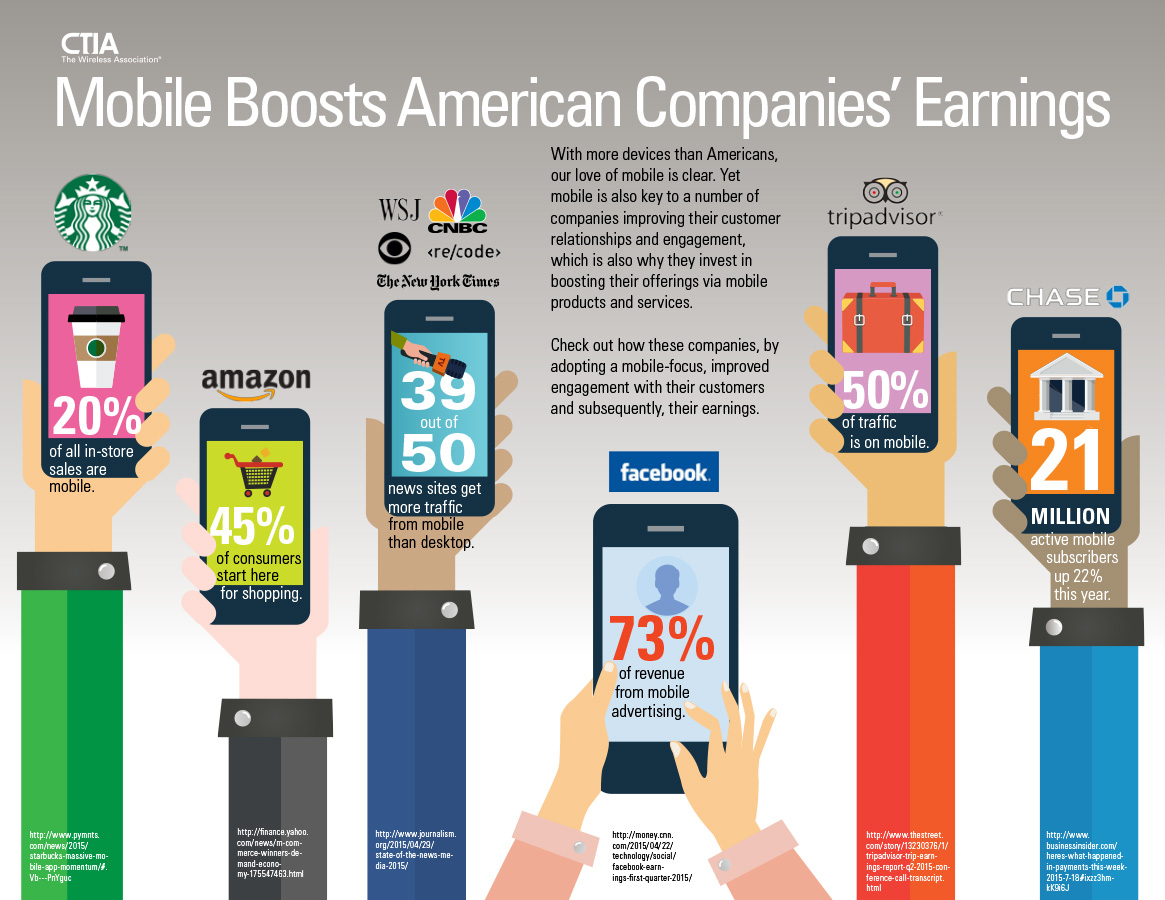
INFOGRAPHIC: Mobile Technology Boosts American Companies’ Earnings

Check out this infographic from CTIA – the Wireless Association on how mobile helps companies with their customer relationships and engagement, helping their bottom lines.

mobile-boosts-american-companies'-earnings

July 2015 WIPP National Partner of the Month: Juli Betwee

Julie B WIPP’s July 2015 National Partner of the Month: Juli Betwee

Managing Partner at Pivot Point Partners of San Francisco, CA

WIPP sat down with Juli to hear more about her company and relationship with WIPP.

I work with leaders of mid-sized companies to grow and scale their business.  The analogy I often use is:  Strategic planning is like a commitment to a gym membership.  The membership is the intention to set a goal and follow through.  Consistent follow-through is the tough part… when most people bail from their intention.  I work with companies for 2-3 years enabling them to compete in markets and with services, necessary for sustainable, profitable growth but not usually attainable if they keep doing what they have always done.

Tell us a little about your company and its mission. I am the Managing Partner at Pivot Point Partners. It is hard give you a short explanation so I have put together a little piece about Pivot Point.

Have you always been an entrepreneur?  If not, what, or who, inspired you to take this leap?  I have always been entrepreneurial. I often bring a fresh and different perspective to what I do. It is the advantage I bring to the people with whom I work.

How are you engaged in your community (or state or national scene) in philanthropic or political causes? I am on the board of The Center for Social Entrepreneurship at Santa Clara University. I have plans to teach an undergraduate business course in 2015-16. I am working with WIPP to develop their growth strategy and am on the board of The Women Presidents Organization. I contribute to GLIDE, as I believe in their model of social justice.

Have you advocated for an issue or a cause important to you? I advocate for issues that impact women in business.

What value/resources has WIPP brought you (training or education, member or political connections/access, awareness of policies that affect your business and its growth, etc.) that have been helpful to you?  Being Involved with WIPP has given me deeper insight into public policy and how it works. I am amazed at the work you accomplish and inroads you are making for women business leaders.

It’s Time to Lift America’s Ban On Crude Oil Exports

oilby Barbara Kasoff, WIPP President

Since the start of the year, a surprising amount of support on both sides of the aisle to remove the ban on crude oil exports has emerged. Is this a sign that we are entering into a new era of bipartisan collaboration, specifically to form an energy agenda that will improve the nation’s security and get our economy moving again? While that still may be a ways off, it is clear this is one issue that could lead to historic collaboration on energy policies that will benefit American economy.

The 4.7 million businesswomen across the country that our coalition represents believe we can help secure the nation’s economic future through sound energy policies. We believe exporting our abundant energy resources must be a key part of that future and supporting an update in our crude oil export policy is the correct course of action and would allow our country to prosper at its full potential.

According to a report released this week by Margo Thorning, senior vice president and chief economist for the American Council for Capital Formation (ACCF), and William Shughart a research director for the Independent Institute and J. Fish Smith Professor in Public Choice at the University of Utah, the economic advantages and geopolitical benefits to lifting the ban on crude are clear.

The paper titled, “The Economic Case for Lifting the Crude Oil Export Ban,” cites the findings from five different studies conducted by various institutions such as IHS, Brookings Institute, the Aspen Institute, ICF International, and Resources for the Future, all of which agree that the case to update this policy is strong. Notably, they all conclude the same three major impacts lifting the ban on crude oil exports would have on the economy and consumers, including: job creation, an increase in U.S. GDP, and a downward pressure on consumer fuel prices.

For example, one of the most recently released studies mentioned in the report – by IHS – estimated that lifting the ban on crude oil exports would generate 390,000-859,000 new jobs annually nationwide and increase U.S. GDP between $86 billion and $170 billion over the next fifteen years.

Senator Lisa Murkowski, Chairwoman of the Senate Committee on Energy and Natural Resources, who has been one of the biggest champions of an examination of various U.S. energy policies, including the ban on crude oil exports, also noted the economic “no brainer” we are facing, stating, ““the economics are clear… lifting the ban on crude oil exports will benefit consumers.”

In addition to the much need economic stimulus from removing the ban, revising the current energy exports policy specifically with regard to crude oil, also extends U.S. geopolitical influence by strengthening our international trade relationships. Foreign allies would gain access to a stable and abundant source of crude oil that would overall create a more secure market.

Women thought leaders like Dr. Margo Thorning and Chairwoman Lisa Murkowski understand that repealing the ban on crude represents a fiscally responsible strategy to allow the U.S. to utilize our growing energy abundance.  Simply put, to quote Murkowski herself, “It’s time to lift America’s ban on crude oil exports.”

Women in Media CAN Get Ahead

by Barbara Kasoff, WIPP President 

I like to kick off my mornings reading Kristen Bellstrom’s The Broadsheet, a daily published dish on the world’s most powerful women. The articles give you timely and thought provoking insight into what powerful women are doing to shape the world. Recently one in particular caught my eye that I thought would be worth sharing – although most of them are worth reading. This one offers tips women in the media – however the tips really extend far beyond the media industry sector: “A Message to Women in Media”.  First, the bad news: We women who work in the media make 83% of what our male counterparts earn. The good news? The author of the article and Morning Joe co-host, Mika Brzezinski has some tips on how to get ahead.
Related links:

House Passes Permanent Internet Tax Freedom Act – GUEST POST

by Rob Shrum, myWireless.org

Good news from the U.S. House of Representatives!

myWireless logoThe House voted to pass the Permanent Internet Tax Freedom Act (H.R. 235), which is strongly supported bipartisan legislation that permanently protects consumers from having to pay taxes on Internet access.

Now it’s time for the Senate to do the same. The Internet Tax Freedom Forever Act (S. 431), as it’s called in the Senate, is the companion to the bill passed by the House today.

The Internet Tax Freedom Act, as both bills are commonly known, was originally passed in 1998 to foster and encourage the continued expansion of Internet use in the U.S. As we all know, the Internet has revolutionized the way we are able to communicate, learn and do business. This legislation has been incrementally extended over the years, and is scheduled to expire October 1, 2015.

Please take a moment to write your Senators today and urge them to pass S. 431.

Let’s work together to make sure Internet access remains affordable and accessible to everyone, and tax-free forever!

See the original post at:  http://bit.ly/1NFX4DF


Bonds: An Important Weapon In Any Contractor’s Arsenal

It is vital that construction contractors, regardless of tier or trade, understand the basic principles of contract surety bonds. An understanding of how bonds are used in construction; and, importantly, how the surety company prequalifies the contractor is critical.   Surety Bonds are mandated by various federal, state and local laws, but may also be required by the private sector as well. Recently, as part of WIPP’s Give Me 5 webinar series, bonding specialist Ellen Neylan, along with construction counsel, Jennifer M. Horn and Maria Panichelli, discussed these issues in detail. Below are some highlights of the discussion.

The Performance Bond secures the contractor’s promise to perform the contract in accordance with its terms and conditions, at the agreed upon price, and within the time allowed. The Payment Bond protects certain laborers, material suppliers and subcontractors against nonpayment. Since mechanic’s liens cannot be placed against public property, the payment bond may be the only protection these claimants have if they are not paid for the goods and services they provide to the project.

In order to obtain a bond, the contractor must be prequalified. Sureties should not bond a contractor that does not meet their prequalification standards. The surety company’s pre-qualification process carefully analyzes the contractor’s entire business operation, much like a bank, because the surety is backing the promise that the contractor will perform the contract. The surety determines the contractor’s ability to meet current and future contract and financial obligations.

The parameters of bonding on a project are often dictated by the law. For example, the Federal Miller Act requires surety bonds for the “construction, alteration, or repair of any public building or public work of the United States for an amount greater than $100,000.” When filing surety claims against Miller Act bonds, subcontractors should be aware that timing is critical. Even though no notice is required, first tier subcontractors must wait 90 days from non-payment to give the bond principal a chance to make payments. In addition, all suits must be filed within one year of last work performed or materials supplied. It’s very important that the claim notice clearly state the amount being claimed, the name of the party to whom labor or supplies were provided, and that the subcontractor is making a formal claim against the bond principal.

The Surety will not pay claims without regard to their merits, but it should be expected to respond to claims promptly and, if denying a claim, offer an explanation. Finally, the Surety, with the aid of legal counsel, can assert all defenses of its bond principal, unless precluded by bond or contract language. Examples of defenses might include: breach of contract; recoupment/setoff; and failure to mitigate damages.

For more detailed information about this important topic, tune in to the recent webinar:

Give Me 5 Logo

Give Me 5: Construction Unit – Bonding and Liens 

As a federal contractor in the construction industry, it is imperative that you obtain proper bonding – but this is a highly complicated subject that could end up costing you an incredible amount of money if you don’t fully understand the nuances and ramifications. This webinar unravels the most important aspects of bonding and liens providing you with important guidelines for success.

Course Instructors: Jennifer Horn, Partner, Cohen Seglias Pallas Greenhall & Furman PC & Maria Panichelli, Associate, Cohen Seglias Pallas Greenhall & Furman PC and Special Guest: Ellen Neylan, Founder, Surety Bonds Associates

Listen to the Podcast | View the Presentation