
FAR Council Embraces Sole Source

By: Jake Clabaugh, WIPP Government Relations

Women Impacting Public Policy (WIPP) recently submitted comments on the interim rule implementing sole source authority into the Federal Acquisition Regulation (FAR).  For more details please read WIPP’s full comment here.

FB Cover photo

WIPP’s 15-year effort to expand contracting opportunities for women entrepreneurs cleared an important hurdle with sole source authority finalized in the government’s contracting rulebook. The Federal Acquisition Regulation (FAR) is the government’s official source for rules when it comes to awarding contracts. Implementing sole source authority into the FAR means that women entrepreneurs wll now be competing on a level playing with other small business contracting programs.

WIPP’s comment on this rule acknowledged the FAR Council for recognizing the “urgent and compelling need” to grant contracting officers this authority. Their recognition is the culmination of years of hard work and advocacy to bring parity for women-owned contracting firms.

Although the Small Business Administration (SBA) published sole source rules last fall, some contracting officers had been waiting for official language to be put into the FAR before they would use sole source authority.  WIPP members have experienced this inconsistency firsthand and WIPP’s comment highlighted how important it is for the FAR to eliminate the conflict.

The FAR Council’s rule became effective on December 31, 2015 – a great way to start the New Year. Contracting officers now have official instructions to award sole source contracts through the WOSB Procurement Program. We encourage women business owners to comment on this important victory for our community. If you wish to echo WIPP’s comments, you can submit them electronically using Regulations.gov and search for “FAR Case 2015-032.” Please use the “Comment Now” option, which will provide instructions for uploading your document and ensure that your voice is heard.


House Committee Passes Bipartisan Federal Contractor Changes

By: Ann Sullivan, WIPP Government Relations


In its first major action of 2016, the House Small Business Committee approved changes to federal contracting which affect small companies who do business with the federal government. Acting in a bipartisan manner is relatively rare in Congress these days, but the Committee unanimously adopted the legislation, The Defending America’s Small Contractors Act of 2016, with over two-thirds of the Committee contributing content to the bill.


For the last three years, the House Small Business Committee has pushed for changes to the government’s buying rules and this week’s legislation was no exception. In our view, the following changes in the bill will prove to be significant to small contractors. One attacks an age-old problem – showing past performance without a government contract. The bill establishes a pilot program that enables contractors to receive a past performance rating by submitting a request to the contracting officer and/or prime contractor.  Second, the bill strengthens agency small business offices to recommend which small business set-aside programs should be used for each contract at their agency.

Anne CrossmanThird, WIPP’s recommendations were incorporated in the legislation, including one made by Anne Crossman, a member of WIPP’s Leadership Advisory Council, in her testimony before the Committee. Anne took the opportunity to highlight WIPP’s “if you list us, use us” policy for prime contractors’ subcontracting plans. This bill incorporates WIPP’s recommendations to clarify the role of commercial market representatives (CMRs) in encouraging prime contractors to work with small businesses. Lastly, the bill takes the first step toward getting a better handle on the actual amount set aside for small businesses by requiring agencies to divulge awards counted toward multiple small business goals.

An amendment offered by Rep. Takai scored a victory for women entrepreneurs by allowing Women’s Business Centers (WBCs) to provide procurement assistance to women participating in the DOD mentor-protégé program. Rep. Takai’s statement on the amendment is available here and includes WIPP’s statement of support.

These improvements set the stage for a productive year of improvements for small contractors. The bill, which passed unanimously, will now be considered by the full House of Representatives. The House Small Business Committee is off to a great start. We can’t wait to see what they do next.

Did You Really Mean That FCC?


This week, the House Energy and Commerce Committee held a hearing on a bill, HR 2666, which would prevent the FCC from regulating broadband rates. In fact, the FCC’s Chairman Tom Wheeler is quoted as saying “Let me be clear, the FCC will not impose ‘utility style’ regulation…” when
issuing the Commission’s decision to subject broadband service providers to regulations that govern telecommunications services – Title II of the Communications Act.


That begs the question, why pass a bill that reiterates what the Chairman promised? There are a couple of reasons why. First, FCC Commissioners do not have permanent appointments—they arinternet.jpge appointed by the President and serve five-year terms. While we doubt anyone questions Chairman Wheeler’s integrity, the next set of Commissioners may not hold the same view. Second, regulating rates in utility- style fashion does not really fit the fast moving technological changes that come with the industry providing internet services. Third, talk about a damper on investment – subjecting broadband networks to the government’s slow ratemaking process would surely have a negative effect.
 

As we understand this issue, no one is purporting to restrict the FCC’s ability to protect the consumer with respect to broadband access or technology companies who rely on an open internet to conduct business. Women-owned businesses have much to lose if the government does not properly balance internet access with regulation.


We are keenly aware that according to the SBA Office of Advocacy, “Small businesses, defined as firms employing fewer than 20 employees, bear the largest burden of federal regulations. As of 2008, small businesses face an annual regulatory cost of $10,585 per employee, which is 36 percent higher than the regulatory cost facing large firms (defined as firms with 500 or more employees).” Small businesses are usually the losers when it comes to more regulation.


The Congress ought to pass this bill. Broadband access is a critical lifeline to all businesses. Business certainty resonates throughout our economy—especially small companies. Putting the FCC intent into law with respect to broadband rate regulation is a good idea.

National Women’s Business Council Releases its Annual Report

NWBC
The National Women’s Business Council has released its Annual Report, “10 Million Strong – The Tipping Point for Women’s Entrepreneurship,“ and the number of women looking to be entrepreneurs is at an all time high. Women ‘s entrepreneurship has gone from being a trend to a huge growth factor to the economy of this country. According to the report, women-led businesses are predicted to increase by more than 50% over the next five years – women are launching roughly 1,200 new businesses per day.


Better resources and opportunities have created an opening for women to grow their brands and build larger networks to support their products and businesses, crowdfunding being one of the best resources. Though women are still far behind men in financing their businesses, they are receiving more funds today than ever before.


In 2016 the Council is looking to keep the growth momentum going and will continue to research and support women business owners. Click here to view the full report online.

From the Hill: Small Contractors Make Big Gains in New Legislation

By: Jake Clabaugh WIPP Government Relations


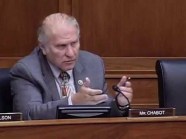
ChabotThe House Small Business Committee is leading off 2016 by continuing its
efforts to make federal contracting more accessible to small businesses. Committee Chair Steve Chabot’s (R-OH) legislation, Defending America’s Small Contractors Act of 2016, makes an array of changes to procurement policy.

Although impossible to summarize all of the changes in a few paragraphs, which is why we have the link to the bill above, here are the highlights. The bill tackles transparency by rewriting – in plain English – the requirements for small business procurements. Since getting past performance is an obstacle for contractors getting started in federal contracting, the bill establishes a pilot program that enables them to get a past performance rating by submitting a request to the contracting officer and prime contractor. Offices of Small and Disadvantaged Business Utilization (OSDBUs) will now have increased authority to recommend which small business set-aside programs are most appropriate for each contract at their agency. The Act even touches the Department of Defense (DOD) by requiring that Mentor-Protégé plans in DOD’s program be approved by SBA – an update aimed at adding consistency to Mentor-Protégé Programs government-wide – but controversial since the last time we looked the Defense Department does not generally defer to SBA.

If some of these changes sound familiar, it’s because Anne Crossman, a member of WIPP’s Leadership Advisory Council, proposed several of these improvements during a Subcommittee hearing last fall.  Specifically, Anne noted WIPP’s “if you list us, use us” policy for prime contractors’ subcontracting plans and in her testimony she advocated for prime contractors to be accountable to the subcontractors listed on their plans. This bill incorporates Anne’s recommendations by requiring commercial market representatives (CMRs) assist prime contractors in identifying small business subcontractors and assess the prime’s compliance with their subcontracting plans.

The intent of the legislation is to assist federal agencies in meeting their small business contracting goals. The goal for women owned companies of 5% has never been met. A continued push for data transparency surfaces in the bill as well, requiring agencies to do a better job of reporting the contracting dollars awarded to small businesses.

The Committee is expected to hold a markup to consider this legislation during the week of January 11.  The WIPP Government Relations team will continue to provide updates as the bill moves through Congress.

AT&T Announces Plans to Connect Everything We Own to Everywhere We Go

By Lynn Bunim, WIPP Membership & Special Programs Director

ATTAt its Developer Conference running in Las Vegas parallel to the Consumer Electronics Showcase, AT&T spent time talking up the potential of reaching its 132 million wireless customers and 45 million video customers. The change in the tenor, from showing off its newest phones or touting the latest upgrade that speeds up its wireless network, speaks to how AT&T plans to be a part of its customers new, more connected life. The carrier recognizes it is no longer enough to power your smartphone or home DSL connection. It wants to be the link that connects your car, the health devices that monitor your body and even the infrastructure in your city.

“This is a new AT&T,” Ralph de la Vega, CEO of the company’s mobility and enterprise business, said in his keynote address. The push is part of the Internet of Things trend. The idea is that every device — whether it’s a refrigerator or glucose monitor — talks to each other to better serve you, with AT&T angling to become the bridge between things. Those connections are going in everywhere, including coolers built by Red Bull that enable the company to track their location, state and temperature.

AT&T offered new information about its smart cities initiative, through which it promises to bring everything from traffic monitoring to electric grid management to gunfire detection into one comprehensive ecosystem. The program’s initial cities will be Atlanta, Dallas, and Chicago, and it involves a huge range of partnerships, with giants including Cisco, Ericsson, GE, IBM, and Qualcomm. “We are going to go up the stack,” says AT&T Mobility CEO Glenn Lurie. “We are going to bring things that are complete solutions.”

WIPP’s membership and WIPP’s Coalition Partners comprise thousands of entrepreneurs and women owned small businesses, all of whom are on the move all the time.  Improved connectivity could bring improved productivity for this important segment of the business community.

Resources:


WOSB Sole Source Takes Final Step

sole sourceThe contracting rulebook used by most federal agencies embraced the new sole source authority for women entrepreneurs. In the final step of a multi-year effort – with WIPP at the helm – the government gave the final green light for contracting officers to award sole source contracts to women business owners.


 

Deciding that finalizing the sole source authority of the WOSB program was an urgent and compelling need, the FAR Council issued an interim rule on December 31, 2015, to immediately allow contracting officers to award sole source contracts in the WOSB program. While the Small Business Administration (SBA) already finalized their rules for WOSB sole source on September 14, 2015, the FAR Council needed to issue guidance to contracting officers on how to use the program. This rule provides that guidance and is effective immediately. Notably, the FAR Council determined that sole source applies to acquisitions at or below the acquisition threshold.


As a reminder, sole source contracts are allowed in the WOSB program when four conditions are met:


  1. Contract falls in a NAICS code approved for the WOSB program.
  2. The value of the contract, including options, is under $4 million ($6.5 million for manufacturing contracts).
  3. The contract can be awarded at a fair or reasonable price.
  4. The contracting officer does not have a reasonable expectation that two or more WOSBs/EDWOSBs will submit offers at a fair and reasonable price.


The interim rule is available here, with comment due February 29, 2016. While a final rule will ultimately be issued, this rule makes sole source effective in the FAR as of December 31, 2015.

More Than Cheer In Congressional Stocking

stocking

Women business owners enter the holiday season with a gift from Congress — more money for important women’s entrepreneurship programs.

Just when it seemed like Members of Congress would have to delay their Holiday break, the House and Senate passed two key bills to conclude the legislative year. After funding the government with stopgap measures for over two months, Congress agreed on a spending bill thru September 2016. Accompanying the yearlong spending bill is a bipartisan agreement to extend expiring tax rules for businesses and families. Both bills give women-owned businesses reason to celebrate during the Holiday season.

The $1.1 trillion funding bill sets spending levels for all government programs through September 30, 2016. Congress increased funding for many of the Small Business Administration’s (SBA) lending and entrepreneurial development programs. The chart below highlights WIPP’s priorities and the programs import to women entrepreneurs:

  FY2016 WIPP’s Request FY2015
Women’s Business Centers $17 million $16 million $15 million
National Women’s Business Council $1.5 million $1 million $1 million
Microloan Program Lending $35 million $35 million $25 million
Microloan Program Technical Assistance $25 million $25 million $22.3 million
PRIME Program $5 million $5 million $5 million
Office of Advocacy $9.1 million $9.1 million $8.45 million

WIPP advocated throughout 2015 on behalf of women-owned businesses and entrepreneurs and WIPP’s efforts culminated in full and increased funding levels for vital programs. Congress gave a huge boost to the microloan program- a primary capital access vehicle for women-owned businesses – by expanding lending authority by 40% to $35 million. Women’s business Centers (WBCs) will receive an increase of $2 million, which will enable the WBC program to provide additional grants for entrepreneurial development training for women entrepreneurs. Not only did WIPP advocate for increased funding for the WBC program, WIPP supported The Women’s Small Business Ownership Act of 2015. This bill would increase the WBC program’s authorization to $21.75 million, increase awards to Centers from $150,000 to $250,000, and provide modernizations to the program’s granting and approval process.

Congress’ tax “extenders” bill, an annual extension of certain tax credits and deductions, provides certainty for businesses and valuable incentives for research and investment. The Protecting Americans from Tax Hikes Act will expand and make permanent small business expensing rules and the Research and Development (R&D) Tax Credit. Lawmakers permanently extended the small business expensing limitation of $500,000 that was in effect from 2010 to 2014.  Had this rule not been extended, businesses would only have been allowed to deduct a maximum of $200,000 for machinery and equipment investments.

The bill also makes permanent the R&D credit, making it easier for start-ups and small businesses to receive tax deductions for innovative projects. According to WIPP’s 2015 Survey of Women Business Owners, tax burdens were the prime concern of women-owned firms. Specifically, women business owners cited uncertainty in tax credits and deductions as an annual concern. This bill helps alleviate some of the uncertainty.

As we wrap up 2015, Congress’s end of the year legislation provides full funding and certainty for programs important to women entrepreneurs.  We are looking forward to a productive and successful 2016.

Shop Small This Holiday Season and Through the Year

Shop Small Graphic - Get Connected CP Newsletter - 10-30-14We hope you all were able to participate in Small Business Saturday on November 28th, and support your local small businesses by doing some holiday shopping.

Small Business Saturday was founded with a simple goal, to help small businesses by providing what they need most — more customers — and with a simple purpose — when small business thrive, communities thrive.  Since 2011 Women Impacting Public Policy (WIPP) has been proud to lead the Small Business Saturday Coalition, and this year’s results tell an amazing success story:

  • According to the Small Business Saturday Consumer Insights Survey, total spending among U.S. consumers who were aware of Small Business Saturday reached $16.2 billion at independent retailers and restaurants on the day, an increase of 14 percent from $14.3 billion in 2014. 
  • Among those who shopped on Small Business Saturday, 31 percent attended a community event on the day and 81 percent encouraged family and friends to support their local small businesses.
  • There were 85 million social media engagements in support of Small Business Saturday.

WIPP’s work with the Coalition provides the foundation for Small Business Saturday.  Our efforts resulted in the following:

  • Engaging over 425 organizations and community groups in supporting and amplifying the message;
  • In rallying over 275 Congressional and Administration officials — including President Obama;
  • In helping coordinate over 4,100 community events;
  • Over 80 city economic development offices;
  • 551 Mayoral offices in issuing proclamations;
  • The U.S. Senate unanimously passed a resolution designating November 28th, 2015 as Small Business Saturday; and
  • 14 Public Service Announcements encouraging the public to “Shop Small” were recorded by government officials across the nation.

Please take a moment to watch and share the 2015 Small Business Saturday video shot with WIPP’s San Francisco office team: https://youtu.be/3W-8dsb-LuM

We could not be more proud of WIPP’s role in leading the Small Business Saturday Coalition and the hard work of WIPP’s team in their dedicated effort to make the day a success.  A special thank you goes to our partners, members and friends for their support of Small Business Saturday and local business.

As we enter December and 2016, we encourage everyone to Shop Small this holiday season and into the coming year.  In addition, we ask that you seek out other women-owned firms to partner with and do business with in the year ahead.  So add to your new year’s resolutions that this year you will make an extra effort to seek out other women-owned small business because “when women support each other, incredible things can happen.”

December 2015 WIPP National Partner of the Month: Cindy Towers

C. Towers
WIPP National Partner of the Month

December 2015

Cindy Towers, Co-Founder and CEO of JURISolutions


We sat down with Cindy to ask her a little more about her company and relationship with WIPP…


Tell us a little about your company and its mission.

JURISolutions is a company dedicated to delivering innovative and value-driven legal solutions to corporations, law firms and government entities across the country.   We sit in the space between in-house legal departments and outside law firms.  We provide a number of outsourcing and insourcing offerings including highly skilled project attorneys and subject matter experts, full-service legal staff augmentation, end-to-end litigation support and government support services.   Our corporate mission is to take a very client-centric approach to the design and delivery of legal services to increase efficiency within our client’s legal operations.  We also have an executive search arm as well.  The company’s secret sauce across all verticals is our unparalleled recruiting and vetting processes that enable us to find the best legal talent for each specific initiative.


Have you always been an entrepreneur?  If not, what, or who, inspired you to take this leap?

Although the nature vs. nurture verdict may still be out,  I can tell you that entrepreneurship is definitely a family trait.  My father was a child of the depression with the odds of success firmly stacked against him.  Despite very limited education and financial resources, he and my mother were able to build a very successful auto parts company.  After spending summers counting mufflers and spark plugs, I thought getting professional degrees would be more satisfying than owning my own business.  I was wrong.  It took me 10 years to figure out what my father had always known and was trying to teach me.   Being an entrepreneur is so much more than just being your own boss.   It is about having the authority and control to make a difference in the lives of others!


What has been your biggest lesson learned in working with the Federal Government?

To remain agile. Being mindful of all the moving parts and levels of urgency – from end user, to program and contracting offices each has a problem to solve within a certain timeframe – we get to know our customer closely and stay in alignment with each group in order to move the needle efficiently.


Do you have a contracting success story that you are proud of?

This year we were awarded a large contract with the CFPB.  We are particularly proud of this contract because it was the result of a very strategic process.   In 2013, I had attended an event where leadership from CFPB was a speaker.  In learning about the agency, it became apparent that their volume of legal work was very large and that they  likely had problems we would be able to successfully solve for them.  We set out to get to know as much about the agency as we could.  I personally attended their outreach events, met stakeholders and read every news alert published.   When the contract eventually went out to bid, we were invited to compete and won.


Tell us about your experience as a WIPP Member? What resources/value has WIPP provided that has been helpful to you and your company?

WIPP has been very instrumental in helping us grown within the government space.  The resources offered are incredible: speakers, webinars, legislative updates, sources sought blasts and much more.   I have also been given amazing opportunities to be a speaker at a ChallengeHER event, which afforded me amazing exposure to stakeholders in the government, SBA and corporate primes.


Click here to view Cindy’s Bio.