By: Ann Sullivan, WIPP’s Chief Advocate
 Is it just me or are the candidates ignoring economic issues that are business women’s bread and butter? The election so far has largely centered on social issues and impossible promises such as free college. What about taxes, healthcare costs, employee issues, access to capital and access to markets? And what about a positive message? Business owners are optimists – if they didn’t believe America was great, they wouldn’t take the risk of investing in a business. Someone out there thinks America is still the land of opportunity—to the tune of 10 million women business owners.
In all my years of working with Congress and Administrations, Republican or Democrat, WIPP has always taken the view that women who are business owners are influencers in their communities and a trusted source of information. Their focus is on results, sensible regulations and an investment in small businesses. Therefore, they have the obligation and privilege to make a difference in elections and policy platforms.
Hence, the launch of WE Decide 2016, a collaboration with Personal BlackBox (PBB). WIPP has provided a platform for women entrepreneurs to have their voices heard during the 2016 elections. WE Decide 2016 engages women business owners and women entrepreneurs to focus our message. The opinions shared through this initiative will culminate in a policy platform, which will be shared with the candidates at both national conventions.
WE Decide 2016 utilizes an interactive online platform to conduct polling and outreach to women business owners on the issues that affect our lives and businesses everyday. Through quick polls and issue surveys, we will be able to ascertain women business owners’ views in a timely manner and we will share the results with the media.
What makes WE Decide 2016 different from all the other avenues to share your opinion? Thanks to our partner, Personal BlackBox, WE Decide 2016 gives women control of their personal data and a safe place to express opinions privately with peers. Unlike current Presidential polls run by CNN, the DNC and RNC and even Facebook, the information you share with WE Decide 2016 will never be sold to anyone.
So, let’s get started. First step: go to WE Decide 2016 and register. We need an initial number of 1000 registrants to do credible polls. Step Two: ask all of your friends and networks to join the effort. Since we are 10 million strong and an economic force, women business owners are in a unique position to shape the conversation around issues and approaches that resonate with us.
Act now. Our businesses and our future depend on it.
 WIPP submitted comments today to the SBA Office of Policy, Planning and Liaison on the SBA Advanced Notice of Proposed Rulemaking (ANPRM) regarding certification in the WOSB Program that was issued on December 18, 2015. The WOSB Program is extremely important in assisting women entrepreneurs entering the federal contracting marketplace. WIPP highlighted the following principles to guide the SBA in their implementation of the changes to the certification process.
 Budgets are usually just about the numbers, but, every so often, they take respite from tables, spreadsheets, and account balances to acknowledge successful partnerships. Anyone taking a look at the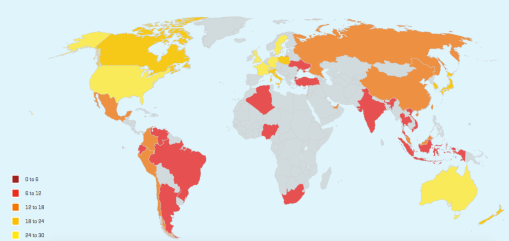
 Last week the Small Business Administration published the first report in a series of trends in entrepreneurship by the Office of Advocacy’s Office of Economic Research, “The Missing Millennial Entrepreneurs” by Daniel Wilmoth, PhD. The report’s focus was on how Millennials reported less self-employment than prior generations. This 6-page report analyzes important trends amongst Millennial entrepreneurs, comparing them to Generation X and Baby Boomers – ultimately suggesting that entrepreneurship among Millennials will continue to be relatively low for decades.
 The Internet has revolutionized the way we communicate, learn, innovate and for business owners, it has been a game changer in their ability to manage and grow their businesses. The Internet’s success and rapid growth is due in large part to a current law, the Internet Tax Freedom Act (ITFA), which has kept Internet access free from state and local taxes and fees since 1998.



 Women in Biz Blog