Why Women Business Owners Need Better Access to Capital

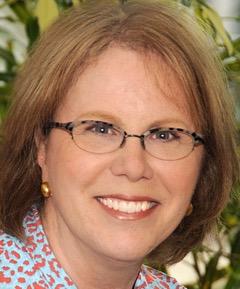
dimenco-emilia-picBy Emilia DiMenco, President & CEO, Women’s Business Development Center

As a retired banker and now President and CEO of the Women’s Business Development Center, I have focused my entire professional career on helping small business owners access capital for growth. As any business owner will tell you, financing is critical to business growth.

Traditional bank financing is attractive because of its typically low interest rates. Yet women business owners – who generate more than $1 trillion annually in receipts, and are growing at 1.5 times the rate of average businesses – are consistently denied bank loans. In 2013, less than one in three loan applications for women-owned firms were approved.

A 2014 report issued by the Senate Committee on Small Business & Entrepreneurship on barriers to women’s entrepreneurship found that women receive only 16 percent of conventional small business loans. This amounts to 4.4 percent of the total dollar value of all small business loans, leaving women-owned firms with only $1 out of every $23 that is being loaned to small businesses.

WBDC observes this problem firsthand when a fast-growing female entrepreneur wins a corporate or government contract, then has trouble getting the capital she needs to fill the order. If she’s denied loans, she has a couple of options: she either turns to unregulated, predatory merchant cash-advance lenders or other high-interest sources of capital, or her business stagnates.

The real solution lies in the hands of federal policymakers who have a responsibility to make changes which will help women get capital at a fair interest rate. As a start, policymakers must improve the SBA 7A program’s standards to allow sales from new and prospective contracts to be taken into consideration when approving a loan — not simply a company’s historic cash flow. Next, they must Increase funding for non-profit alternative lenders such as Community Development Financial Institutions and micro-lenders. Finally, they must provide transparency and disclosure for small business lending so that small businesses are informed upfront of interest rates, fees, and other terms.

New measures are desperately needed now to remove the barriers to financing that most women entrepreneurs face. Until that happens, woman-owned businesses won’t grow at the speed and to the levels they could. Sadly, that will impact all of us.

Emilia DiMenco is president and CEO of the Womens Business Development Center, a Chicago-based economic empowerment organization serving a nine-state Midwest region, which provides programs and services to prospective, emerging and established women business owners. For more information, visit www.wbdc.org.

Share your view on Access to Capital and its impact on your business by taking quick poll.

Bringing Water to the Women’s Capital Desert

chadwell-tracy-picTracy Killoren Chadwell, Founder and Partner of 1843 Capital, WIPP Friend

Water makes things grow. Capital makes companies grow. Companies grow jobs.

If job growth is a priority for the U.S. government, then investing in women led startups should be a priority. Women led startups are one of the highest growing categories for job growth. Women start 1,000 businesses every day. Women have added 1,290,245 jobs over the last 10 years. They contribute $1.4 Trillion dollars in receipts annually to the U.S. economy. According to BusinessDynamics Statistics (U.S. Census) existing companies are net job killers (1 million per year) and startups are net job growers (more than 3 million per year). Women are the gardeners and women are starting companies at 1.5 times the average rate.

Women founded companies are seeing a tremendous amount of support at the seed stage. Women focused incubators, accelerators, grant programs, mentors, seed investors and grant programs are in place. They are doing a great job of getting the seeds planted and the companies’ roots to take hold. However, there is a big component missing. The capital is lacking to take the companies from seed stage to a place where they can achieve profitability. Companies reach a place where they are finding traction, gaining customers and hiring people and they are left to wither for lack of funding. Venture capital, the traditional source of capital to grow, goes disproportionately to companies that have all male teams. According to the Diana report, women led companies only receive 3% of total venture capital dollars. 97% goes to male teams. Researchers at the MIT Sloan School, Harvard Business School, and Wharton Business School found that, given the same pitch, men were 40 percent more likely to receive funding than a woman presenting the same pitch. Some may argue that the companies led by men are somehow “better.” We finally have great data that says that isn’t true. A study by First Round Capital, of 300 of it’s portfolio companies, shows that a company with at least one female founder on the team outperformed the traditional all male companies by 63%. A study by Stamford University shows that female led venture backed companies out perform by 35% and have 12% more revenues.

The story on the debt side isn’t any better. Women led businesses received 4% of commercial loans. Loan approval rates for women owed companies are 15-20% lower than for companies with traditional all male teams. When they do get access to loans, they are often subject to higher interest rates.

Amazingly enough, high growth women led companies are not all technology based (although a wise woman once said “all businesses are technology businesses”). They are health care, service, manufacturing and consumer products, every garden variety.

The solutions to this problem are readily accessible. We can empower more female fund managers with capital. We can expand business education and counseling for women. We can change the way credit is created and monitored. We can support and expand small business lending. Women traditionally have achieved so much more with less. On average, women grow their businesses with less than half the capital than men. A little water will yield a bumper crop of new jobs.

Uncle Sam, Mrs. American Startup is here to rescue you. All we need is a little water for the desert.

Tracy Killoren Chadwell is the Founder and Partner of 1843 Capital, an early stage venture capital fund focused on women led companies. 1843 was the year Ada Lovelace (the only legitimate daughter of Lord Byron) wrote the first computer program. http://www.1843capital.com

Share your view on Access to Capital and its impact on your business by taking quick poll.

Access to Capital – Critical for Business

mullins-thompson-sallie-picSallie Mullins-Thompson, Principal, Sallie Mullins Thompson CPA PLLC, WIPP Member

Over the past 20+ years, while conducting my accounting, tax preparation, financial planning, and business management consulting practice, I have had the opportunity and pleasure to work with and mentor the owners of many small businesses – the majority of which have been women.

Time and time again, I find that even though women business owners are fabulous entrepreneurs with high levels of skills, education, and experience in their profession or industry, they are not always given the same chances, as compared to male business owners, particularly in the area of access to capital. The statistics in this area are quite disheartening; for example in 2013, less than 1 in 3 loan applications for women-owned firms were approved and resulting in only 4.4% of the total dollar value of all small business loans.  That’s $1 out of every $23 being loaned to small businesses.

I wonder why that is, given that women-owned small businesses (WOSBs) constitute close to 40% of all small businesses, generate over $1.6 trillion in gross revenues, are growing at four times the rate of men-owned business, and employ approximately 9 million people. Thus, these WOSBs have a huge impact on the economy, especially as it continues to recover from the 2008 recession.

Having capital to start or grow a business is extremely critical. As a matter of fact, not having enough cash is the major reason small businesses fail or are unable to move to the next level. So, as many agree, since small businesses are the economic engine of the economy and WOSBs represent over 1/3 of that population, then I think that the major federal candidates running for office in the upcoming 2016 election need to be talking about the access to capital for women entrepreneurs.

After all women generally vote in higher numbers than men, with the increase growing larger in each election cycle. Plus, women currently make up a majority of the electorate at 51%. Therefore, women are a constituency that these candidates should want to hear from. And, it’s up to us to make sure they do!

WIPP has put together a most impressive program of action in its Economic Blueprint. Check out the Access to Capital Principles section to learn more about these comprehensive policy solutions. Then, let’s see if we can begin the process of changing the conversation of the 2016 candidates as Election Day draws nearer.

Share your view on Access to Capital and its impact on your business by taking quick poll.

Access to Capital – Cut the Red Tape

Coins and plant, isolated on white background

Concept of a plant and a lot of golden coins isolated on white background

By Jeanette Prenger, President, EccoSelect, WIPP Board Member

Twenty years ago I founded my company in a way that a lot of entrepreneurs do when entering the service industry; I created a business plan to provide services in a field that I had a lot of experience in – IT. Growing up as a software engineer and earning promotions into management gave me the confidence that I could offer the same type of service as more expensive firms supplying contractors in technology. I was my first billable contractor and did not quit my ‘day job’ until I had the security of knowing I would still have a paycheck coming into our household. By paying myself a salary similar to what I was earning in corporate America and saving the profits, I was able to self-fund a dozen contractors over the next year.

Fast forward twenty years later. We have several million dollars available in a line of credit. I still own 100% of my company but I have a dilemma. In order to accelerate into the next level, I need to look at funding mechanisms other than my line of credit. Those dollars are already spoken for by our accounts receivable.

So what’s the problem? Banks are hesitant to provide traditional loans to grow businesses if the business can get funding elsewhere. The SBA provides loans, of which I leveraged after 9/11, but the price was high. The interest was over 7%, the paperwork extremely time consuming and required outside assistance to help make sure that we could get a loan needed to cover losses incurred by bad receivables.

I’ve seen other companies similar to flourish with a couple of observations. One, they had investor money put into the company and the culture was driven by a quick ROI back to the investors. Ownership was diluted but the investments allowed the company to hire the type of expertise needed to grow the business. Secondly, the businesses had executives who understood how to access capita including what was needed was preparation, where to go and what the risk / rewards could be.

As a woman and a minority, my education did not prepare me to go the route of seeking investors. Nor, do I really understand how to navigate through all the red tape that banks have discussed with me if I want to borrow money to acquire another business similar to mine. Education, especially to small business owners and to disadvantaged businesses (minority, women, vets….) through the SBA, local banks, and community banks on how we can grow businesses with shared risk would be a tool that many businesses would welcome. Banks and traditional lenders were already risk adverse prior to the new regulations and oversight that have caused them to decrease loans to small businesses for growth. They are hesitant to assist in providing education to actually gain capital and yet banks, and the government, bail out big businesses.

Our elected officials need to look at the stimulus they could facilitate if small businesses and disadvantaged businesses had access to capital. If incentives were given to lenders to educate businesses about loans, the types that work best for their companies and actually provided the capital needed.

If small business is truly the ‘engine of our country’ let’s provide some fuel!

Share your view on Access to Capital and its impact on your business by taking quick poll.

Keep It Simple, Silly

By John Stanford, WIPP Government Relations


hc - wippIt’s a favorite phrase of my boss – and WIPP’s Chief Advocate – Ann Sullivan. The idea is nothing new: a simple solution is usually the best. That is why, for years, women business owners used the simplest possible idea for providing health benefits – you (employee) go out and get your own insurance and I (employer) will reimburse you. Simple, right?

They are called Healthcare Reimbursement Arrangements, or HRAs, and bringing them back (for the second time) is one of WIPP’s top healthcare priorities. We are making great progress. The House Ways and Means Committee approved legislation that would allow HRAs to be used for firms with fewer than 50 employees. The House as a whole is expected to vote on the bill next week.

The bill would allow employers to reimburse employees for qualified medical expenses like premiums and out-of-pocket costs. Importantly, employers must offer it to all eligible employees and cannot offer a separate group plan. The reimbursement is capped at around $5,000 for an individual and $10,000 for families and does not count as employee income (meaning no taxes!).

Again, the idea is simple. Employers select an amount to reimburse employees, instead of locking in an insurance plan that may not fit their employees or their budget. But why did we lose HRAs in the first place? That is not so simple.

The Affordable Care Act eliminated caps on health insurance plans—an undoubtedly good thing for when disaster or disease strikes. But, in the opinion of the IRS, these HRAs, by definition, had a cap (however much the employer contributed). So they were outlawed in 2013 or 2014.

2013 or 2014 is a strange way to describe when the IRS banned a certain healthcare plan. But that is what it was – the IRS notices on the issue were so confusing they had to issue additional regulations three times. Policy wonks, insurers, and healthcare consultants were unsure – let alone business owners – about whether they were allowed. And making a mistake on this carries severe penalties; offering a non-conforming plan can trigger a penalty of $100 per day per employee –more than $350,000 a year for a company with 10 employees.

Because of this confusion, WIPP stepped in asking Secretary Burwell to intervene on behalf of women business owners. She did and HRAs were allowed through June 2015. Legislation is needed to bring them back permanently and WIPP is optimistic Democrats and Republicans can work together, as they already have, to get this done. After all, ten million women business owners and their nearly nine million employees are pretty active voters.

It’s pretty simple.

More on how WIPP is working with Congress and the Administration to bring competitively-priced and accessible health options to women business owners is in our blog, Making the Affordable Care Act Work.


WIPP National Partner of the Month – June 2016

Karen C

WIPP National Partner of the Month – June 2016

Karen Caruso, President/CEO of Mind Your Business Inc. – Hendersonville, NC

We sat down with Karen to hear a little bit more about her business and her relationship with WIPP.


Tell us a little about your company and its mission. 

My Company’s mission to provide accurate background screening information that empowers employers in making informed hiring decisions.

Have you always been an entrepreneur? If not, what inspired you to take the leap? 

No, I didn’t leap into the entrepreneurship until my late 20’s.  The “Oprah Winfery Show” inspired me to start my business.  After watching episode on “Nightmare Nannies” The episode opened my eyes and my heart to the fact that families/working mothers were not conducting background checks on the centers or the individuals they were entrusting the safety of their children with. Having a work history in security and protection, I had my “Aha” moment watching a mother sharing her gut wrenching story of how her 10 month old was just murdered by the nanny she hired to care for her son.  I founded my business, Mind Your Business, Inc. two month later with  $2000 a personal computer and a passion in my soul to stand up and be the voice for the groups in our society that can’t speak for themselves, our babies and our children.    We are celebrating our 20th year in business this year!  We have grown from providing background checks to families and nanny agencies to providing background checks to the large corporations, local, State and Federal Government Agencies.

What is your biggest lesson learned working with the Federal Government? 

The biggest lesson learned for me was: Not being afraid to ask for a contract!  A company can have years of past performance in the commercial space, have all the government certifications that give them a competitive advantage, but you have to ask for the contract!  If you want Federal Contracts “you have to get up and get them yourself”.

Do you have a success story that you are particularly proud of? Tell us about it! 

I have many, but I’ll take a more resent one to share.  My company was recently selected for a background-screening contract with ARMY.  This particular contract was passed over by several members of my procurement staff as “not in our wheelhouse of capabilities”.   I took the RFP (Request for proposal) home with me and stayed up all night reading and re-reading the contract.  I admit it was a bit confusing but certainly in our capabilities! Along with my technical writers I decided to spearhead this contract response myself.  Every spare second I had was spent writing the response.  Were we awarded the contract with the ARMY, additionally I asked the contracting officer to consider setting the contract aside as an 8a direct award contract to our company and she did.

Tell us about your experience as a WIPP member? What resources/value has WIPP provided that has been helpful to you and your company? 

Being a member of WIPP has provided me with a vast network of like-minded women.  The Webinars have given me the opportunity to take my Federal Government Contracting knowledge to the next level proving me with direct information I can and do use in my company.  The value of up to date is easy to access Federal Procurement information is invaluable for me and my limited time available to keep updated.


Trade Agreements: Path to Prosperity


 Mergen_Ashley


By Ashley E. Mergen
Senior Manager, International IP Policy
Global Intellectual Property Center | U.S. Chamber of Commerce


With the all the hysteria flying left and right in this election cycle, it’s no wonder folks are second-guessing why the U.S. even pursues free trade agreements. But the overheated rhetoric of presidential campaigns is obfuscating what really is at stake- American competitiveness.

The United States is already among the most open markets in the world – and has been since the end of World War II. That openness has honed the edge of American competitiveness and helped stem the price inflation that fuels inequality. Trade agreements are a tool to ensure that U.S. products and services have the same fair and non-discriminatory access to international markets.

As the leader of the free world, the U.S. has worked to shape the rules of the road in the international economy. Free trade agreements are one of the most effective mechanisms for doing so. The alternative to U.S. free trade agreements is a global economy shaped by others who don’t have America’s interests at heart.  The world is not sitting still: The World Trade Organization counts 419 trade agreements in force around the world, while the United States is party to only 20.

It’s true that 21st century trade deals like the Trans-Pacific Partnership (TPP) Agreement and Transatlantic Trade and Investment Partnership (TTIP) are growing even more complex, especially as they tackle emerging and critical issues like intellectual property rights in digital trade or biopharmaceuticals.

But knowledge-intensive trade isn’t limited to big corporations or scientists curing cancer. It is also providing a significant platform for entrepreneurial women to connect with previously untapped markets.Take Lolita Healy, who after obtaining her first copyright at the age of 12 built a multi-million dollar empire painting designs on glassware, eventually selling 14 million products around the world. Lolita is just one example of the 40 million Americans who are employed by the creative and knowledge-intensive industries. The U.S. Department of Commerce has found that they represent over a quarter of all jobs in the economy, driving 60% of total U.S. exports.

The best part is, there are Lolita’s everywhere- from Michigan to Malaysia or Pennsylvania to Peru. This year’s International IP Index from the U.S. Chamber of Commerce estimated that economies which espouse meaningful and robust IP rights also enjoy more access to venture capital, more foreign direct investment, more R&D expenditure, more growth in high-value jobs, the list goes on…

Trade agreements like the TPP and TTIP continue this path to prosperity by ensuring innovation — the very cornerstone of the business community — remains protected as we expand markets abroad. So before you buy into the hype, take a look behind the curtain and see how trade really puts our innovators front and center on the world’s stage.

WIPP Members Speak Out on Minimum Wage

WE-Decide-2016_Landscape_edited

WE Decide 2016, Powered by Women Impacting Public Policy (WIPP) and Personal BlackBox, is uniting women in business across the country to raise their voices and engage in the 2016 presidential election to educate the candidates, the media and voters on the issues of importance to women entrepreneurs.

This week we focusing on the minimum wage and its impact on women-owned small businesses and their workers.  We have a guest blog post by Ceil McCloy and Brenda Barwick, two women business owners and WIPP members with differing viewpoints on the minimum wage.

Share your thoughts on this topic, and many other that impact women in business, by taking our poll:  http://wedecide2016.org/get-involved/todays-quick-poll/

Ceil McCloy

Raising the Minimum Wage Stabilizes Workforce  

By Ceil McCloy, CEO / President, Integrated Science Solutions, Inc.


President Franklin Delano Roosevelt signed the Fair Labor Standards Act of 1938 which among other provisions established a minimum wage.  Roosevelt, when he sent the bill to Congress in 1937 stated “all our able-bodied men and women should be able to have a fair day’s pay for a fair day’s work.  In the more than 75 years since Congress first enacted a federal minimum wage, at 25 cents an hour,  lawmakers have increased it many times, reaching the current level of $7.25 an hour in 2009. And with every increase the same objections have been raised.  It will increase unemployment.  It will hurt small businesses and put them out of business. It will slow the economy. These doomsday predictions have never come to fruition.

Employers are recognizing that an increase in minimum wage is good for business. Workers earning low wages tend to be less committed to their jobs than better paid workers and are less likely to stay at their jobs. The accommodations and food services sector, with a majority of minimum wage workers, has an annual turnover rate of nearly 63 percent, while “limited service restaurants” (fast food restaurants such as McDonald’s) have a turnover rate of well over 100%. The retail trade, which employs cashiers, customer service representatives, stock clerks and other low-wage workers, has a turnover rate of nearly 50 percent.  Employee turnover forces businesses to constantly find and train new workers, costing firms significant amounts of money and time. In the fast food industry, the cost of turnover is approximately $4,700 each time a worker leaves his or her job. Studies show that higher wages can substantially reduce turnover and the costs associated with replacing lost workers. The benefit from lower turnover explains why large companies as well as many small businesses have chosen to invest in higher wages as part of a highly competitive business strategy.

Job loss is often stated as a reason not to increase the minimum wage.  This is simply not true.  As Goldman Sachs analysts (2016) recently noted, citing a 2010 study by University of California economists that examined job-growth patterns across every border in the U.S. where one county had a higher wage than a neighboring county, “the economic literature has typically found no effect on employment” from recent U.S. minimum-wage increases.  This report’s findings mirror decades of more sophisticated academic research, providing simple confirmation that opponents’ predictions of job losses when minimum-wage increases are not rooted in facts.

Can raising the minimum wage help the economy? Yes!  Research has shown that raising the minimum wage boosts consumer spending, increasing the demand that drives economic growth. A 2011 study by the Chicago Federal Reserve Bank found that minimum wage increases raise incomes and increase consumer spending.  The authors examined 23 years of household spending data and found that for every dollar increase for a minimum wage worker results in $2,800 in new consumer spending by his or her household over the following year. A 2009 study by the Economic Policy Institute estimates that President Obama’s campaign to raise the minimum wage to $9.50 by 2011 would inject $60 billion in additional spending into the economy.

We should enact legislation to increase the federal minimum wage and peg increases to the annual inflation rate.


brenda jones


Econ 101: Free Markets Raise Wages, Not Government

By Brenda Barwick, APR, President of Jones PR and Oklahoma Chair of Maggie’s List.


One of the biggest misconceptions about conservatives on the issue of minimum wage is that we want the lowest wage, when in fact we want to pay our people as high as possible.  One of the principles that makes America unique from almost all other countries is that our economy was founded on a free market system, or simply, supply and demand.

An economy with minimal government regulation allows for businesses to grow and prosper naturally, which results in wage growth.  For examples of where market forces have dramatically increased base wages, look no further than some of America’s cities that have strategically replaced traditional low-paying industry jobs by recruiting high-tech and health-sciences companies with higher wage positions, resulting in greater prosperity and transformational change.

Federal mandates prohibit the free market from functioning properly as intended.  Government interference is particularly disruptive and harmful to small business owner’s ability to make the best decisions for her employees.  Business owners and managers know their business better than anyone else and are naturally incentivized to see their employees succeed.  There should be a floor for common decency and respect, but it is all together different to mandate high wages that business owners cannot meet.

Now that it is summer, most of us reading this blog cannot make up for a $15 mandatory increase when we have budgeted $8 or $10 for a summer position.  We all remember the joy and excitement of our first job in high school or college where we learned basic job skills.  We need to ensure teens and young adults have the same opportunities we enjoyed and inspired us to strive beyond entry-level jobs so we can make a living wage for our families.  By taking this opportunity away from young ambitious Americans by pricing them out of the marketplace, America’s future could be comprised of a workforce who never learned basic job skills before they arrive at their first real job.

The most prosperous path forward for all Americans of any age is to allow the free market to work properly. This system provides boundless opportunities for all Americans who desire to work and contribute to our society.  Give our young people the same opportunities that benefited and prepared us for prosperous careers.


Let us know what you think! Take WE Decide 2016’s minimum wage quick poll here:

http://wedecide2016.org/get-involved/todays-quick-poll/ 

Facts About Recent Changes to Overtime

The Administration’s final overtime rule, published on May 18th, will make an estimated 4.2 million new workers eligible for overtime pay. Salaried workers, making up to $47,476 annually, will get time-and-a-half payments for work over 40 hours in a week. The effective date is December 1, 2016.

Background

obamatime-state-mapOn March 13, 2014, President Obama signed a Presidential Memorandum directing the Department of Labor (DOL) to “propose revisions to modernize and streamline the existing overtime regulations.” Specifically, the President cited the exemption for executive, administrative and professional employees as having “not kept up with the modern economy.”

In response to the President’s memorandum, Department of Labor issued the proposed rule on July 6, 2015. The final rule was issued on May 18, 2016 and can be found here.

How The Overtime Rule Works

The Fair Labor Standards Act (FLSA) guarantees workers a minimum wage and overtime pay for hours worked above 40 hours in a week. However, some employees are exempted from the overtime pay requirement if:

(1) the employee makes a pre-determined and fixed salary;

(2) the salary is above $47,476 annually;

(3) the employee’s job duties primarily involve executive, administrative, or professional (EAP) tasks.

Since 2004, that salary threshold was set at $23,660 per year. The new rule more than doubles the threshold to $47,476 per year. Employees in executive, administrative, or professional positions making less than the increased salary threshold will not meet this exemption and thus must receive overtime pay. Furthermore, the salary threshold will automatically update every 3 years beginning on January 1, 2020.

WIPP’s Comments and Concerns

The 508-page rule addresses many of the more than 270,000 comments received including specific comments made by WIPP. WIPP advocated for an exemption for small businesses. The DOL recognized WIPP’s concerns, but concluded that their final salary threshold would “provide relief” as it is slightly lower than the $50,440 that was originally proposed. While the salary threshold is lower than estimated, it is still double the current threshold.

DOL also recognized WIPP’s concern of a loss of workplace flexibility. WIPP’s comment noted that many employees perform some of their work remotely and outside of normal business hours, such as working from home. The DOL responded that it “does not believe that workers will incur the significant change in flexibility.” The rule went on to state that, “Employers should be able to trust such valued employees to follow the employers’ instructions regarding when, where, and for how many hours they may work and to accurately record their hours worked.”

WIPP’s also commented on the difficulty of tracking employee hours to ensure compliance. This comment was also recognized by DOL, but they did not address this concern in their final rule.

The Fair Labor Standards Act, which governs the overtime rules, includes a carve-out for businesses that have less than $500,000 in annual revenue and do not engage in interstate commerce. However, DOL guidance suggests that the interstate commerce requirement is likely met by most businesses.

DOL has published additional information on these changes here. Please reach out to WIPP’s Government Relations team at advocacy@wipp.org with any questions.


New Overtime Regulations to Take Effect December 1, 2016

By Marina Burton Blickley, Esq., Centre Law & Consulting LLC

A draft of the Department of Labor’s final revised regulations covering white collar exemptions was just released and is set to become effective December 1, 2016 – right after elections.  The final rule sets the new salary threshold for exempt executive, administrative, and professional employees at $47,476 annually and $134,004 for exempt highly-compensated employees.  This is a dramatic increase from the prior levels of $23,660 and $100,000.  Now that the final salary levels are known companies should be reviewing their employee classifications and making adjustments where necessary to be prepared to be in compliance come December 1, 2016.  Government contractors with contracts covered by the Service Contract Labor Standards (formally Service Contract Act) should also perform an analysis to ensure employees performing services on those contracts are being provided appropriate wages and health and welfare benefits since the FLSA overtime exemptions are used to determine coverage under that Act.

There have been a number of recent updates to the employment laws governing employers generally and, in particular, government contractors.  WIPP’s Give Me 5 recently hosted a webinar covering these and other changes.  To learn more, please listen to the podcast available here –


Give Me 5: Where Human Resources and Government Contracts Intersect

Guest Speakers:  Barbara Kinosky, President and Managing Partner, Centre Law & Consulting and Marina Blickley, Associate, Centre Law & Consulting

Federal contractors are subject to a unique set of rules, laws and regulations.    Many of these laws and regulations also apply to subcontractors.   This session covers the more complicated areas where HR and government contracts intersect.  Topics include:

  • OFCCP – latest news on increased HR compliance requirements
  • Executive Order actions and recent regulatory changes
  • Common challenges to complying with the Service Contract Labor Standards/Service Contract Act
  • Tips for handling whistleblower and relator complaints
  • Handling mandatory disclosures
  • Changes to implement now

Listen to the Podcast View the Presentation