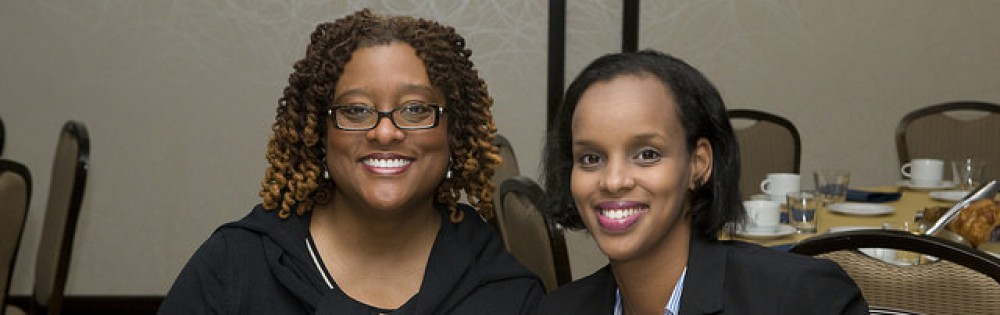
WIPP National Partner of the Month – August 2016

Faye's Headshot_DSC_0024 (disc b).JPG-2.5 megWIPP National Partner of the Month – August 2016

Faye Coleman, Principal of FEC Enterprises, LLC.

We sat down with Faye to hear a little bit more about her business and her relationship with WIPP.


Tell us a little about your company and its mission.
After selling my former government contracting company of 31 years in March of 2015, I started my current consulting practice, FEC Enterprises, LLC., a multifaceted executive coaching, diversity training and leadership development organization that helps owners/executives of small-to-mid-size businesses and non-profit organizations achieve the success they seek through intuitive problem solving and focused action planning.

Our mission is to inspire business executives, entrepreneurs, and professionals in transition to unlock their full potential, and realize the success they seek.  Along with executive and transition coaching, we offer our clients a range of additional human capital enhancement services, such as leadership and diversity training, organizational change management and retreat facilitation.

Have you always been an entrepreneur? If not, what inspired you to take the leap?
I started my first company, Westover Consultants, Inc., in 1984, after several years of working in senior management positions in various government contracting firms in the Washington DC area.  Over time, I realized that working for myself was the only way that I could truly ensure that the projects I spent my time on would always reflect my personal values.  Over the course of 3 decades, Westover Consultants grew to become one of the most highly regarded professional services firms of its size in the DC metropolitan area, and developed a reputation for improving the human condition with each undertaking.

What is your biggest lesson learned working with the Federal Government?
In government contracting, there are certain attributes that every business owner must master in order to be successful in this unpredictable and often politically volatile field. Chief among them are (1) integrity, (2) flexibility, and (3) resilience.

Do you have a success story that you are particularly proud of? Tell us about it!
High on my list of success stories is the work Westover Consultants did providing emergency, disaster mental health counseling services to the survivors of Hurricane Katrina who were scattered throughout the Gulf States.  After identifying and screening over 1,600 counselor applicants within a 2-week turn-around time, we staffed nearly 1,245 two-week deployments of clinicians to shelters, clinics, hospitals, and outreach facilities across the Gulf Coast over an 18-month period, in 2005 and 2006. Our teams were comprised of licensed psychiatrists, psychologists, clinical social workers; substance abuse and pastoral counselors, nurses and other mental health professionals with expertise across multiple, complementary disciplines. Our government client, the Substance Abuse and Mental Health Services Administration (SAMHSA), acknowledged the life-saving work of our staff and clinicians with the “Spirit of Recovery Award”, which they presented to Westover Consultants at the conclusion of the contract.

Tell us about your experience as a WIPP member? What resources/value has WIPP provided that has been helpful to you and your company?
I have been an active member of WIPP since 2005, and in 2007, I was the recipient of WIPP’s Diversity Leadership Award”.  As a current WIPP board member, I can personally attest to the difference that WIPP makes for women business owners. Through WIPP’s unparalleled advocacy on behalf of women business owners, my company, and countless others, continue to benefit from expanded federal procurement opportunities, training and technical assistance in business development, increased knowledge about and access to business capital resources, and enhanced credibility with congressional leaders and decision makers of both parties.

Real Experience and Tips from Transition Music and Media on Federal Contracting

Interview with Donna Ross Jones, Founder and CEO of Transition Music and Media Corporation

Donna Ross Jones1. Tell us a little about your company and its mission.

Music is the heartbeat of our culture and our hand is forever on the pulse. We are passionate about music and the people who create it. Transition Music was originally formed with the mission to create new opportunities for artists, songwriters and composers. This became especially important when technology hit the industry, causing a massive music industry decline.

Today Transition is one of the top 100 music publishers in the world, with more than 1 million music performances globally each year. We unite music with some of the most watched content on the planet. We own a global music library and have a staff of award winning music creators and executives working daily to provide music and manage music process’s for all forms of visual media, from TV series, feature films to corporate productions to webisodes. Our first national production for the National Center for Missing and Exploited Children went viral and ignited a global conversation increasing awareness about wandering and the dangers facing children with autism.

2. Have you always planned on doing business with federal government?

No we had not always planned on doing business with federal government. In our continual goal of expansion and creating more opportunities for music creators, we routinely look at new markets. Knowing that the Federal Government is the largest purchaser of goods and services in the US we began exploring how and if there was an opportunity for us.

3. How have you proceeded with pursuing Federal Contracts?

We decided to invest in educating ourselves as to how and if the federal market place was a match for us. I began going back and forth to DC, working with the SBA and the Department of Commerce to understand the market and how Transition could be successful. We decided to invest the time and resources needed to obtain certifications when we learned Transition Music Corporation was the only WOSB music library of our size and scope, who was also an MBE and an 8a. We saw an opportunity to bring our “Hollywood” brand of expertise to the federal government through music and visual content creation, while assisting them in reaching their diversity goals.

How has this shaped your business?

It is still shaping our business. I keep going back to our mission “to create new opportunities for our creative community”. Pursuing business opportunities outside of mainstream entertainment creates new revenue streams making it possible for producers, writers, musicians, artists and so on to make a living using their gifts and doing what they love.

4. How do you think can ChallengeHER and Women Owned Small Business (WOSB) program help women-business owners in the process?

Working in the government space, like working any other market sector, is about investing time learning, making new contacts and building relationships. ChallengeHER and the Women Owned Small Business (WOSB) program give women the opportunity to make contacts and connect to resources to get the information needed to make informed decisions on all aspects of their business.

How has it helped your business?

Our efforts have resulted in contracts to produce marketing videos, and PSA’s for government agencies. Our music library is competing for music contract in multiple federal agencies and awards in recognition of our work, including Transition Music and Media being named the Minority Media Firm of the Year for the City of Los Angeles, by the Department of Commerce and the MBDA.

5. Could you share the key takeaways you took from the event?

I’ve attended several ChallengeHER and Women Owned Small Business (WOSB) events, and the key takeaways are always the same; come prepared knowing
who you want to talk to and why. Listen, you never know who you will learn from.

6. If you have won contracts under WOSB would you be willing to share size of the award? How has it impacted/grown you business? Hired new employees?

Transition holds multiple certifications; 8a, WOSB, and WMBE. Our contracts to date have been based on our 8a certification, however being a WOSB has been a part of every conversation, and people are probably checking that box too!

7. What percentage of your revenue comes from government contracts?

For YE 2016 we have forecasted 15%.

8. What contracts are you currently working on?

We are currently in production on 5 videos for the MBDA a division of the Department of Commerce. The videos being produced will tell the Minority Business Development Agency (MBDA) story, and educate the public, employees and stakeholders on MBDA products and services.

9. What have you worked on in the past?

More than 26 television series & 6 networks rely on Transition Music as their exclusive source for “ALL” things music; from composers, to production music, to licensing, to new artist, music supervision & building music revenue streams. Specifically, in the federal market Transition Music and Media has provided video production services and music for the SBA, MBDA, Center of Exploited and Missing Children (Funded by the DOJ).

10. What would you recommend other WOSBs doing business with federal government?

Do your research to determine the feasibility of opportunities, their size and scope and how long it typically takes to get a contract awarded to an incumbent. Over and over business owners say the certifications did not work for them and they wasted their time. It is critical to know that with our without any certifications, the federal government consists of people and people buy from who they like, so if you go into this with an expectation that the certifications will get you on a list, and the list will bring business opportunities to you, you will be disappointed and waste your company time and resources.

Government Contracting – Starting, Sustaining, and Scaling

By Sonja N. Hines–President, H&S Resources Corporation and Member of the Women Presidents’ Organization.

The federal government purchases products and services from just about every industry. Key points to consider when doing business with the government are starting, sustaining and scaling. Many rules and administrative regulations require implementation before business can be done.

Starting

  • In order to do business with the government, you must first register your company in the System for Award Management Database (SAMS). SAM registration incorporates all government contractor information into one system. Contractors and vendors can register, file representations and certifications, and then search for contracting opportunities. A contractor enters information once, which reduces the risk of duplicating or entering conflicting information.
  • Determine your North American Industry Classification System (NAICS) codes. These ID codes which identify business establishments by category are to government contractors what Social Security numbers are to individuals.
  • Establish an account with the Federal Business Opportunity Database (FEDBIZOPPS) website, an internet data source about contracting opportunities & purchases the US government needs to make. It is one of some sources that post the government contracts.
  • Meet with the Office of Small and Disadvantaged Business Utilization (OSDBU) representatives at Federal Agencies to introduce your company and learn how the agency procurement cycle works.

Sustaining

  • Establish a pipeline to identify ongoing business opportunities. There are a number of products, websites and companies that are helpful. For example, our company uses GovWin which is an online government intelligence portal providing contacts, information and resources needed to create and award successful solicitations. These companies, as well as other free government resources, help you find opportunities ahead of time, have information and market analysis needed to strategically pursue an opportunity and make sure you compete in the markets that represent the best fit and increase your probability of a win.
  • Review FEDBIZOPPS and other opportunity databases on an ongoing basis.
  • Market your services to the appropriate agency. To increase the U.S. Department of Labor’s utilization of all types of small businesses, the Department’s Office of Small and Disadvantaged Business Utilization (OSDBU) sponsors Small Business Vendor Outreach Sessions (VOS). These sessions offer small businesses the opportunity to market their capabilities directly to OSDBU and agency program officials and learn about potential Department procurement opportunities. The OSDBU develops and implements appropriate outreach programs aimed at heightening the awareness of the small business community to the contracting opportunities available within the Department. Outreach efforts include activities such as sponsoring small business fairs and procurement conferences, as well as participating in trade group seminars, conventions, and other forums that promote the utilization of small business as contractors.

Scaling

  • Establish a process to search for opportunities across all agencies on a regular basis.
  • Be proactive: look at agency forecasts so you can contact the buyer before an opportunity/solicitation is released for bid.
  • Set up a meeting with potential contracting officers.
  • Participate in appropriate opportunities and submit a bid.

Tips

  • Remember that persistence is the key.
  • Form strategic partnerships with other firms enables you to go after work you would not ordinarily be able to pursue to increase your reach and scope.
  • Make sure you thoroughly understand your company’s financials and have the appropriate back office infrastructure in place to be able to grow.
  • Participate in the agency procurement cycles.
  • Be sure you have enough money set aside to continue normal business operations; the average payout by the government is 45 days.

Diversify your business mix to include government and commercial work.

Regulatory Race to the Finish

By Debbie Kobrin, WIPP Government Relations

173414-425x283-government_regulationsWith the party conventions right around the corner, and a few months to a new President, you might think the current administration would be slowing down. But things are moving in the opposite direction. The Administration is churning out plenty of new contracting rules, and shows no signs of stopping anytime.
In June, SBA finalized a new subcontracting rule which will help WOSBs with subcontracting requirements, by easing the “50 percent rule” to allow a WOSB to do less than 50 percent of the work on a contract, as long as the WOSB subcontracts to other WOSBs. The rule also shifts the limitations on subcontracting from requiring a prime to perform at least 50 percent of the labor on the contract, to requiring a prime perform at least 50 percent of the dollar amount of the contract. The rule also contains changes to subcontracting plans, roles for Procurement Center Representatives (PCR), Joint Ventures and more.

Also last month,  the GSA finalized a new regulation requiring contractors to report transaction or task order level data on goods and services to GSA. Under the transactional data rule, businesses are required to tell GSA what federal agencies purchase through GSA. This rule applies to GSA contracts including the Federal Supply Schedule (FSS) and Government-wide Acquisition Contracts (GWAC).

Last week, the FAR Council finalized a rule strengthening subcontracting regulations by finalizing the “ list us, use us” requiring for prime contractors to make a good faith effort to utilize small subcontractors to the same degree as listed in the bid or proposal. WIPP has supported this change for a number of years, and testified on its value to women business owners. The rule also requires prime contractors to assign NAICS codes to subcontracts, and restricts prime contractors from prohibiting a subcontractor from discussing payment issues with the contracting officer.

In addition to what we have seen over the past several months, SBA is expected to release a new Mentor-Protégé Program for all-small-businesses any day now. The SBA is also expected to work on rules associated with lower-tier subcontracting credit, WOSB certification, and the WBC program.

The FAR Council continues to work through its back-log and plans to release new rules that include creating a government-wide definition for consolidation and bundling, providing subcontractors with additional payment protections, and implementing the Department of Labor Fair Pay, Safe Workplaces Executive Order.

As we enter the home stretch of the Obama Administration, there is a clear impetus to do as much as possible over the next several months. As new information about rules becomes available, WIPP is committed to keeping you informed.

 Let us know what you think about Regulations by taking We Decide 2016 Quick Poll.

Are Regulations Discouraging Entrepreneurship?

By: Jake Clabaugh, WIPP Government Relations

Is the federal regulatory process stacked against entrepreneurs? The Joint Economic Committee sought to answer this question during a hearing entitled “Encouraging Entrepreneurship: Building Business, Not Bureaucracy.” The Committee’s Vice-Chair, Pat Tiberi (R-OH) opened the hearing with this direct question to witnesses: Is the thicket of government bureaucracy strangling private initiative?

Before taking on the Vice-Chair’s question, the witnesses began by framing the landscape. Entrepreneurship – the birth of new firms – has been trending downward since President Jimmy Carter’s Administration in the 1970’s. Dr. Tim Kane, a Research Fellow at Stanford University’s Hoover Institution, highlighted the decline in the number of startup firms from 16% of total firms in the U.S. in 1977 to just 8% today.

Despite the decline in overall start-ups, National Women’s Business Council (NWBC) Chair Carla Harris lauded the growth in women-owned businesses. Since 2002, the number of women-owned firms has leaped from 6.5 million to 10 million. Women are creating businesses at 2 -1/2 times the national average. The progress made by women business owners provided a bright spot in otherwise gloomy testimony on the outlook for entrepreneurs.

When the witnesses were asked what regulations were causing the most headaches, the Affordable Care Act (ACA) was the most commonly cited culprit. Specifically, the ACA defines a full-time employee as an individual working thirty hours a week instead of the traditional forty. This definition determines whether a business is exempt from the employer mandate. The witnesses echoed the experiences of many WIPP members who have found the thirty-hour workweek definition detrimental.

To tackle this and other regulatory challenges, WIPP partnered with the National Association of Manufacturers, Small Business & Entrepreneurship Council and International Franchise Association to launch Rethink Red Tape.  As part of this initiative, WIPP will be calling on policymakers to produce better, fairer rules. In the opinion of the Joint Economic Committee and WIPP Members alike, regulatory reform will be a win for entrepreneurship.

Federal Contractor, The Boeing Company, Shares Tips with WIPP on Subcontracting

Interview with Boeing Supplier Diversity Manager, Champagne Bell.

  1. Tell us a little about The Boeing Company.

Champagne Bell: Boeing is the world’s largest aerospace company and leading manufacturer of commercial jetliners and defense, space, and security systems. As a top U.S. exporter, Boeing supports airlines and provides products and services support to customers in 150 countries. We have global footprint and continue to expand it.

Boeing products and tailored services include commercial and military aircraft, satellites, weapons, electronic and defense systems, launch systems, advanced information and communication systems, and performance-based logistics and training.

  1. How does Boeing work with small businesses?

Champagne Bell: Boeing has contracts with 21,500 suppliers and partners globally and we focus on partnering worldwide for mutual growth and prosperity. Currently, we contribute over $5B to small and diverse businesses annually and Boeing is a part of the Billion Dollar Roundtable (note: an organization that brings together major corporations that make meaningful and measurable contributions to the economic growth of woman-owned and minority-owned companies).

  1. Do you have a supplier diversity program? Can you tell us little more about it?

Champagne Bell: Since 1951, Boeing has had a Supplier Diversity Program in place. In addition, we have also targeted initiatives and one of them focuses on women-owned enterprises.

Our commitment to small and diverse business enables us to manage our businesses and deliver value and solutions where our suppliers, Boeing, and customers win.

We are proud that our Supplier Diversity Program has demonstrated results including:

  • Highest rating from Government customer.
  • Received national industry awards.
  • Dedicated enterprise Supplier Diversity team.
  • Boeing has received recognition from our external and industry partners for its supplier diversity work.
  1. What role do subcontractors play in your government business?

Champagne Bell: Our subcontractors play a critical role on our business and help support our commitment to adhering to DOD Statutory Contracting and Subcontracting Goals.

  1. Do you have any programs to target women owned businesses for subcontracting?

Champagne Bell: Yes. One of our Strategic Initiatives focuses on enhancing relationships with eligible women-owned small businesses to ensure we maintain a viable supply chain of WOSBs to support our businesses.

  1. What are the key qualifications you are looking for among your suppliers/subcontractors?

Champagne Bell: Boeing is looking for suppliers who:

  • Do their homework to fully understand how their products and services can directly benefit Boeing and the solutions we offer our customers.
  • Share our commitment to performance excellence in terms of cost, quality, and delivery.
  • Are financially healthy and are continuously focused on improving affordability and efficiency through Lean operations.
  • Will share their knowledge for how we can all better manage our businesses and deliver value and solutions where our suppliers, Boeing, and customers win.
  • We need suppliers who are looking toward the future with us, applying what we learn together as we continue to invest in technologies that will help us deliver the critical products and services that our customers will demand. We are looking for long-term partnerships.
  1. What would you recommend to WOSBs looking for subcontracting opportunities?

Champagne Bell: To summarize it:

  1. How do you think can ChallengeHER and WOSB program help women-business owners to get into the federal procurement?

Champagne Bell: As mentioned above, we have a strategic initiative which focuses on WOSB suppliers and we believe that the programs like ChallengeHER are helping a lot to encourage women to enter the federal procurement business. It also helps us, the Boeing Company, to find diversified suppliers that we are looking for.

Other general advice is:

  • Understand the procurement practices and requirements.
  • Understand quality requirements.
  • Small business owners are admired for their ingenuity and aggressiveness so embrace that mindset to find your customers and know their business.
  • Leverage engagement with large primes to understand business needs.

FCC Set Top Box Hearing – Move Towards Good Direction

This week, WIPP kept a close eye on the House Energy and Commerce Committee’s oversight hearing of the Federal Communications Commission.  The hearing had a major focus on the Commission’s proposal to regulate set-top boxes which has received much criticism from since its release earlier this year.

More than 190 Members of Congress from both sides of the aisle and several advocacy groups and industry leaders have spoken out against how the proposal could negatively affect media diversity and consumer privacy. We at WIPP expressed our own concerns about how the proposal could specifically harm women and minority programmers in the media marketplace.

Under the FCC’s proposal, the playing field would be stacked against minority programmers in tilted in favor of tech giants.  These large companies would be able to take content from independent and minority programmers and redistribute it without having to pay the content creator.  As a result, these programmers would lose revenue that is necessary to maintaining and funding the creation of new quality content for their audiences.

This past February, 18 independent programmers and content creators wrote a letter to Congress expressing concern about the “devastating and lasting harm” the proposed regulations could have on media diversity and their businesses.  They stated that “It’s clear that the independent programming landscape would quickly become a ‘race to the bottom’ if this rule were to pass.

Fortunately, the video industry recently came up with an alternative to the FCC’s proposal that would protect the copyrights of programmers’ original content. Under this plan, pay-TV providers would offer apps that can be used on third-party boxes or streaming devices.  This way, content creators remain in control of how their programming is distributed and consumers are able to access their favorite shows on the device of their choice.

It seems that after months of debate, the Commission is moving forward in a positive direction.  During this week’s House hearing, Rep. Marsha Blackburn asked the FCC Commissioners if they believe their original proposal to regulate set-top boxes is flawed.  All Commissioners acknowledged that the original proposal needs improvement and that the video industry’s proposal is potentially a better approach.

Commissioner Jessica Rosenworcel and Commissioner Mignon Clyburn further stated that the Copyright Office voiced concerns with the FCC’s proposal and that copyright security and privacy must be put in place.

We strongly encourage the FCC to move forward with this apps approach.  This alternative offers a constructive solution for all content creators, especially women and minority businesses enabling them to continue doing what they do best: providing consumers the diverse content they demand.

5 Ways To Be An Active WIPP Member/Friend

WIPP logo final copy

We wouldn’t be where we are without you, your participation is important to us! Whether you are a WIPP member or not there is a way for you to participate. Here are 5 ways you can get started:

  1. Follow WIPP online. Stay up to date by following one of our social media channels.

Facebook: https://www.facebook.com/WIPPWeDecide/

Twitter: @WIPPWeDecide

LinkedIn: https://www.linkedin.com/groups/1808377

Blog: http://WomenInBizBlog.org

  1. Participate in WE Decide 2016 polls. Who knows better than you how policy affects your businesses and your families? As an important voting bloc, women need to be the voice of reason. Now you can make a difference. You can have your voice heard through We Decide 2016.  Learn more about WE Decide 2016 and take the latest quick poll: http://wedecide2016.org/get-involved/todays-quick-poll/
  1. Go to a ChallengeHER event. These events are designed to assist you in competing for government contracts by reducing the competition utilizing the WOSB Set Aside Program. The ChallengeHER events have sessions for those who are just beginning the process of becoming a federal contractor, and for those who have federal experience but looking for higher level content. Read more about the program and register for an event near you: http://www.wipp.org/?ChallengeHER
  1. Become a WIPP Member. WIPP has a wide range of membership levels and benefits. Check them out here and join today: http://bit.ly/1EpjHDm
  1. Join a WIPP Issue Committee. Already a WIPP member but want to do more? Join one of our Issue Committees and be the first to hear about policy issues affecting your business: http://bit.ly/1L8YNxm


Access to Capital: It’s Time to Aggressively Reduce the Gap for Women Owned Businesses

By JeFreda R Brown, CEO, Goshen Business Group LLC, WIPP National Partner

JeFreda BrownAs a woman who owns a business and has clients that are women owned businesses, I have personal experience with the issues that we face in accessing capital. Several of my female clients have had this fear of seeking capital for their business because of the strict requirements by banks and other financial institutions. There are so many other companies coming to the forefront to offer capital to businesses. However, some of their requirements may not be the best for business owners. The interest rates and repayment options may not be the most favorable for businesses.

In a report prepared for the National Women’s Business Council (NWBC), it was stated that women owned business owners raise small amounts of capital to fund their companies and therefore are more reliant on personal sources of financing. It also stated that because of this, it diminishes their prospects of growing their companies. This is because we know that it takes money to make money. The NWBC also reported that there is a gender gap in equity financing. Men owned companies have received .4% of venture capital funding whereas women owned companies have only received .1% of venture capital funding. The NWBC also reported that only 5.5% of women owned companies use loans from banks or other financial institutions in comparison to 11.4% of men owned companies.

We can clearly see that women owned companies are the fastest growing segment of all businesses. So why is there such a problem with these women obtaining capital for their businesses? What needs to be done to reduce some of the restrictions that exist and cause barriers for women owned businesses? It’s time to reduce this gap for women entrepreneurs.

It is not discussed much as I can see, but from personal experience in dealing with women entrepreneurs directly, past financial hardships are big barrier that causes some women to fear even trying to obtain funding. Things like personal bankruptcy makes it basically impossible to obtain capital for a business. Many women have gone through divorce, loss of job, medical issues, and more, and these life changes have caused financial hardship. Some women have had to file bankruptcy or have had credit issues from these financial hardships. As these women have worked hard to turn things around, something like a bankruptcy automatically denies them for financing. In my discussions with women entrepreneurs that have experienced these things, it would be very encouraging to have programs in place that will help these women obtain funding and help them rebuild their credit at the same time. The programs would provide some type of micro loans that also include financial literacy education and steps that the borrowers would have to take to progress in the program. With mortgage loans, some lenders require borrowers to take homebuyer education courses before being approved for a mortgage loan. Something similar to this would be great for women entrepreneurs who have had some credit challenges.

Another barrier for women entrepreneurs to obtain capital has been the restrictions placed on home based businesses. It’s quite obvious that if these women could obtain the capital they need to efficiently operate their companies, they would more than likely have brick and mortar offices for their businesses. A home based business basically has next to none overhead expenses. It’s the easiest way for someone to begin a business. However, being home based shouldn’t be a punishment and be a barrier to obtain funding. Data exists to show that more women entrepreneurs have home based businesses than men.

Another issue that seems to be a barrier for women entrepreneurs in obtaining capital is the industry the business is in. Studies have shown that businesses in high tech industries tend to obtain more capital. There are specialized types of funding that exist for technology and innovative products and services. There seems to be restrictions on service based companies that have varying revenues each month. These restrictions need to be removed. Supply and demand does dictate how consumers will purchase goods and services, however; there should be no restrictions on funding based on the type of industry a business is in.

We know that small businesses are the backbone of America. Many of the large companies that exist today started out as a small business. The federal Government needs to address the issues that women entrepreneurs face in obtaining capital more. It seems only logical that with women owned businesses being the fasted growing segment that there should be more support for us in obtaining capital. The success of our businesses is very crucial for the American economy. When a woman owned business is able to grow, it can put dollars into the economy and stimulate the economy. It can also provide jobs and reduce the unemployment rate.

We implore the presidential candidates to make this issue a major part of their platforms. We implore members of Congress to make this issue a major part of discussions and plans going forward. There needs to be more education available to women who want to start a business. This education needs to be strategic with the focus on financial and business compliance. Right now, there is not enough of this. Companies like mine provide this type of consulting. I believe the federal Government should also partner with companies like mine and other subject matter experts in developing solutions to this issue in obtaining capital. Talking to those of us who are out here in the struggle is the only way to understand the problems that exist and develop suitable solutions for all women owned entrepreneurs. Another way the Government can get involved is to work with larger women owned businesses that have been successful to start a mentor protégé program to help smaller women owned businesses develop. The program has been successful for federal contracting. I believe it would be a huge help for smaller women owned businesses and at the same time help the large businesses in having additional capabilities to provide to their customers and clients. It’s time to be more assertive in reducing and eventually removing the gap for women entrepreneurs in obtaining capital.

Share your view on Access to Capital and its impact on your business by taking quick poll.

Momentum and Capital

magdalah-silva-11By Magdalah R. Silva

If money is the momentum that makes the world go round, and women represent approximately 40% of the global labor market, control over $20 trillion of total consumer spending globally, and are starting businesses at twice the rate of male owned businesses, then where is the capital momentum for women? In this decisive election cycle, we should definitely be keeping our eye on which candidates will drive momentum. Let’s first agree on some basic fundamentals on the women’s entrepreneurship ecosystem. 1) The growth of women businesses is good for the economy, 2) Unconscious bias plays a significant role in accessing capital, and, 3) The control and disbursement of capital is not in the hands of women. To balance this ecosystem and create momentum candidates need to agree first and foremost that getting money in the hands of women business owners is not a “women’s issue”, it is an American competitiveness issue and that capital remains among the highest predictors of a company success.

  • Growth of women’s business is good for the economy. That’s where all of us come in. Whether you are a policy expert, journalist or blogger we can heavily influence the priorities of a new administration. If the conversation about supporting the growth of women businesses is stimulated in public conversation than it is highly likely that the markets will also see it as a strategy for economic growth, and job creation. This branding concept can result in exponential growth of new business, a greater appreciation by investors of the women’s market and establishment of new policies aimed at the support of women’s entrepreneurship.
  • Unconscious bias plays a significant role in accessing capital. Gender bias, including gender discrimination, conscious and unconscious, is real. Many studies have revealed that unconscious beliefs about women and their business capabilities have manifested itself in various phases of the American culture specifically in raising venture capital. These biases make assumptions relative to capabilities and types of businesses men and women launch resulting in types of investments they ultimately receive. The good news is, according to a study by Babson College, “Venture capital firms with women partners are twice as likely to invest in companies with a woman on the management team (34% of firms with a woman partner versus 13% of firms without a woman partner).” We need programs aimed at preparing more women to be VC’s!
  • The control and disbursement of capital is not currently in the hands of women. Though this is currently true, there is a shift taking place where technology is having a significant impact on the ability to access capital in many forms such as mobile banking, global peer-to-peer lending and trusted transactions conducted on the web through blockchain. The advent of blockchain, where two or more people don’t need to know each other to conduct a trusted business transaction will be revolutionary. This technology is behind digital currencies such as Bitcoin, and will disrupt the current models we have today. This will allow for breakthrough applications that run without banks while cutting cost and saving transaction time. It will ultimately change the dynamic between companies and their consumers while allowing new entrants into the lending business. The system will be built on social and economic capital controlled by individuals rather than intermediaries. If the women’s market makes a shift in that direction it could have a significant impact on how traditional lending is currently done.

So how about some fun facts to close off my blog to encourage the rise of a Momentum Capital Movement for Women, here you go:

  • The average ROE of companies with at least one woman on the board over a six-year period is 16%; ROE of companies with no female board representation over the same period is 12%. Source: Credit Suisse
  • Women entrepreneurs have an estimated credit gap of between $285 billion and $320 billion, depending on geography, and an estimated 70 percent of women-led SMEs are either unserved or underserved financially. – International Finance Corporation (IFC)
  • Women control over $20 trillion of total consumer spending globally. Women make or influence up to 80 percent of buying decisions worldwide, on everything from appliances to cars to medical services. – Dalberg
  • When women earn income, they reinvest 90 percent of it in their families, as compared to men who invest only 30 to 40 percent. This ‘multiplier effect’ boosts social and economic outcomes for entire communities. – Half the Sky

Share your view on Access to Capital and its impact on your business by taking quick poll.