National Small Business Week is Coming!

Spring is upon us and with spring comes … National Small Business Week!

SBA Administrator Linda McMahon announced that this year’s National Small Business Week will be held from April 29-May 5. Every year since 1963, the country spends a week recognizing the critical contributions of our small business owners. More than half of Americans either own or work for a small business, and small businesses create about two out of every three new jobs each year. And, of course, women business owners are a significant part of that small business story—growing at a rate four times faster than their male counterparts!

This year’s events kick off in Washington, D.C., where the administrator will recognize and award outstanding small business owners and resource partners from around the country. It will continue with a bus road show stopping in various cities, where Administrator McMahon and SBA staff will meet with small business owners and hold roundtable discussions. Read more here.

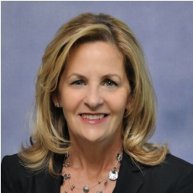
Speaking of small business owners who really contribute, we want to give you the opportunity to get to know WIPP’s board better. This month, we’re featuring Board Vice Chair Angela Dingle, owner of Ex Nihilo Management. Read on for a short Q&A with Angela

Q. Why did you join Women Impacting Public Policy?

Angela Dingle

Angela Dingle, WIPP Vice Board Chair

A. I joined WIPP because I was and continue to be impressed with its non-partisan approach to advocacy. The issues that are being discussed on Capitol Hill are important to me as a woman business owner and membership in WIPP means I have a seat at the policy table during the discussions. Someone once said to me, “get into politics or get out of business.” Well, I jumped in with both feet and haven’t let up yet.

Q. What about WIPP is most beneficial for your business?

A. Thanks to my WIPP membership, I’ve testified before policymakers, received help navigating federal contracting and benefitted from networking opportunities and media exposure. Being a part of WIPP makes me feel connected to issues affecting women entrepreneurs and women in the workforce.

ChallengeHER Success Story In Progress: Carolyn A. Schultz Marketing & Communications Gets Involved

By Carolyn A. Schultz

Starting and maintaining a business by yourself is an overwhelming process. I’m not afraid to admit it, because I know that’s a normal feeling and many of us have been there.

CAROLYN SHULTZ.jpgAs a longtime marketer and writer, but a recent newcomer to the women entrepreneurs “club,” I’ve been inspired to get involved in ChallengeHER and WIPP, and I appreciate this opportunity to introduce myself with a thank you message and a plan.


I am a marketing consultant and writer, and started my own business in 2015, after 15+ years putting small businesses and nonprofits on the map. With Carolyn A. Schultz Marketing & Communications, I provide personalized services from start to finish for articles, proposals, brochures and other winning marketing materials.


While I have helped numerous other businesses navigate and win multi-million-dollar project proposal processes and contracting with local, state and federal governments, and I look forward to continuing helping others, I am also determined to help myself and my own business grow. Starting everything from scratch on your own is tough, but doable with the right support system and guidelines that work for you and your goals.  


That’s where ChallengeHER and WIPP come in. ChallengeHER’s program in New York in November was a helpful, inspiring call to action that jumpstarted idea development for my business, and introduced me to a new powerful network of government resources and fellow women entrepreneurs in a variety of fields. The “Give Me Five” webinar program with WIPP has also been extremely helpful, as I’ve discovered recently. Wherever you are, you can hear words of wisdom from experienced experts during hour-long presentations that help us divide and conquer the many steps needed to win work and grow our businesses.


During my 15+ year career and during the first two years of my business, one of the most important marketing lessons I’ve learned is that new opportunities don’t always come to you automatically. While chance and good luck certainly play key roles, success is usually something you have to work for, as you make your own opportunities. That’s a big reason why networking and learning through ChallengeHER and WIPP have become key strategies for growing my business.


I look forward to seeing you at an upcoming event soon, and continuing our journey together as women entrepreneurs building our businesses!

WIPP and WBENC Join Forces to Further Support Women Entrepreneurs, New WIPP President Announced!

Today, Women Impacting Public Policy (WIPP) and the Women’s Business Enterprise National Council (WBENC) are announcing a new partnership that will enable both organizations to strengthen their education and advocacy efforts to support women business owners across the country and at the public policy table.

Candace Waterman

Candace Waterman

WIPP and WBENC have forged a National Partner Organization agreement that will make WIPP’s public policy advocacy and federal procurement education programs a key part of the benefits that WBENC’s 14 Regional Partner Organizations offer to their members. In return, WBENC will add the voices of its 14,000 certified women-owned businesses to WIPP’s national advocacy work in Washington.

“WIPP’s legislative and regulatory successes directly impact the success of women business owners. Our presence in Washington is enhanced by WBENC’s powerful network of women businesses beyond the Beltway. WIPP’s education and advocacy tools will strengthen the fastest growing business sector of our nation’s economy,” said WIPP Board Chair Lisa Firestone.

WBENC is the largest third-party certifier of businesses owned, controlled, and operated by women in the United States. WBENC provides business development opportunities for member corporations, government agencies and more than 14,000 certified women-owned businesses at events and other forums.

“I am so excited about this new partnership opportunity and strengthening our relationship with WIPP,” says Pamela Prince-Eason, president and CEO of WBENC. “I have no doubt this will have a positive impact on our network of women-owned businesses and those who support them.”

In addition, Candace Waterman, WBENC’s vice president of certification and program operations, will join WIPP as its President on May 1, 2018. Waterman’s tenure at WBENC ensured a world-class certification standard now relied upon by thousands of corporations and government agencies, and that leadership experience in the development of women-owned businesses will provide immediate value to WIPP.

“Through its tireless advocacy efforts and valuable educational offerings, WIPP has been a true leader in the effort to give women entrepreneurs a seat at the table. I’m thrilled to be joining an organization that has accomplished somuch,” Waterman said. “I look forward to building on those accomplishments and working to ensure women’s entrepreneurship continues on an upward trajectory of growth and success.”

“Candace has proven herself a fierce advocate for women business owners over the years,” Firestone said. “The breadth of expertise and experience she will bring to WIPP is invaluable and we’re honored to have her join our team.”

WIPP Works in Washington: The Complicated Business of Changing Investment Behavior

I don’t know if you watch the Oscars, or like me, go to a party having barely seen any of the movies. I am usually pretty bored with the thank-you speeches from the winners, but this year one acceptance speech got my attention. It was the speech from the winner of

Anne Sullivan

Ann Sullivan, WIPP Chief Advocate

Best Actress, Frances McDormand, for her role in “Three Billboards Outside Ebbing, Missouri.” Referencing women in the audience who “had stories to tell and projects to finance,” she said, “don’t talk to us at the parties tonight, invite us to your office in a couple of days…and we’ll tell you all about them.” She asked the women to stand and told Meryl Streep, “if you do it they’ll all do it.”

The speech caught my attention because women entrepreneurs in all industries including Hollywood share the same vexing problem—access to capital. A damning statistic, women only receive 4% of all commercial loan dollars and 2% of venture capital, shows women entrepreneurs struggle with obtaining adequate capital. Yet, over 36% of businesses are women-owned and are growing at four times the rate of businesses owned by men, so it appears there is no shortage of women seeking operating or investment capital.

Asked why women get so little VC money in Fortune article, Julie Wainwright, founder and CEO of a consignment website The RealReal, thinks it comes down to the lack of female VCs. “When you have different businesses that aren’t proven that may appeal more to a female [customer], a female investor is going to be able to evaluate that” better than a male investor could, she says. “I think in general, most VCs are trying to do their jobs, but there are a lot of unconscious biases.”

A study from Harvard Business Review also points to an additional reason for this deficit—male and female entrepreneurs are asked different questions by VCs, which in turn affects the level of funding they receive. According to the study, when investors asked male entrepreneurs questions they used a promotion orientation, meaning they focused on their hopes and achievements. Alternatively, when questioning women entrepreneurs, they mostly used a prevention orientation, which focused on questions regarding responsibility, security and vigilance. Researchers found that this has a substantial impact on funding outcomes, thus helping to explain the large disparity in VC funding for women entrepreneurs.

Given these barriers, why are so many women starting businesses? It seems to boil down to two reasons: they were either inspired or frustrated. Inspired because they had a good idea, built a better “mousetrap” or decided to create wealth for their families by taking the risk of entrepreneurship. Frustrated because they weren’t getting equal pay for equal work, were tired of a hostile work environment or saw no ability to advance.

A case study by the National Women’s Business Council highlights both of these. The study examined reasons why women become necessity entrepreneurs and of the nine women interviewed, eight cited gender-specific issues, thus making entrepreneurship a necessity. The study also highlights the financial need as the driver to start businesses. “I can relate to many of these women because I’m a prime example of a necessity entrepreneur,” said Kari Warberg Block, NWBC council member and founder and CEO of EarthKind®. “I was fresh out of alternatives with no job options, and I had to do something, anything, to take care of my family. I had an idea to create a safe, natural option for pest control, and 10 years later that has turned into a $20 million-dollar business.”

What are some of the solutions to this vexing problem? Unfortunately, there is no silver bullet but rather a host of solutions necessary to turn this tide. For starters, investors and lenders can start asking the right questions and including women in their review process. Women who sit on the boards of these companies can monitor lending/investing in women-owned companies. And on the policy front, WIPP’s Economic Blueprint suggests a host of policy changes that will help.  They include understanding the data from lending institutions with respect to lending to women, freeing up a regulatory environment that discourages smaller banks from lending to small businesses and developing a track for women to become investors through government backed programs like the Small Business Investment Companies. Lastly, Congress should require a comprehensive review of the Small Business Innovation Research program, which awards only 16% to women.

Even though access to capital for women business owners requires changing cultural biases and policies, all of us can start by educating those around us. If one of us stands up, everyone will stand.
SBA: Tell us Which Regulations Bother You

SBA Office of Adocacy.jpg

The SBA Office of Advocacy is continuing to host small business roundtables to hear firsthand from small businesses how they are facing regulatory burdens. WIPP encourages you to consider which regulations are problematic for your business and share them with the Office of Advocacy. The best way to do that is to attend one of their meetings!

Roundtables:

Detroit, MI – March 13 – Register HERE

Milwaukee, WI – March 16 – Register HERE

San Antonio, TX – March 19 – Register HERE

Houston, TX – March 20 – Register HERE

Philadelphia, PA – March 22 – Register HERE

Atlanta, GA – April 10 – Register HERE

March Policy Update

Image

Policy Upate Graphic.pngSCOTUS Punts on DACA (For Now)

Last week, the Supreme Court sent the Trump Administration’s appeal on the President’s order to cancel DACA back to the 9th Circuit Court of Appeals, leaving the program’s March 5 expiration moot. Dreamers will remain protected from deportation until the Court of Appeals renders a decision, which could take months.

Breaking the Bank: WIPP Weighs in on Access to Capital

The Senate continues working through amendments to bipartisan lending legislation today that would lighten regulations imposed on small and mid-sized banks through Dodd-Frank. WIPP has advocated for ending the “one-size-fits-all” approach by calling on Congress to enact legislation to address the regulatory relief needed for smaller lending institutions, thus freeing up capital for small businesses.

Read the Economic Growth, Regulatory Relief, and Consumer Protection Act here. Read WIPP’s Breaking the Bank platform here.

WIPP Urges Expansion of Association Health Plans

In January, the Department of Labor issued a proposed rule that would expand participation in Association Health Plans for small businesses and the self-employed. WIPP urged the department to implement a program that maximizes the number of businesses that can participate in the plans, so that women business owners can provide more choices for affordable health insurance.

Read WIPP’s comments here.

NLRB Reverses Joint Employer Standard

Obama’s legal standard for determining whether joint employers could be held liable for an intertwined business’s workplace issues is back due to a conflict of interest of a board member who did not recuse himself from the case. NLRB granted the parties in the original case the ability to appeal and could rehear the case later this year.

Read the NLRB’s press release here.

This Women’s History Month, Show the Power of Women Business Owners

Happy International Women’s Day—let’s celebrate by showing our might online! March is Women’s History Month, and throughout the month WIPP will be coordinating a Twitter campaign that highlights those who make the women’s business community an economic powerhouse. Join us in demonstrating how important women business owners are by tweeting about women business owners you find inspiring, either from history or the modern day, and tagging @WIPPWeDecide. We’ll amplify your post with our audience. Keep an eye on Twitter as WIPP members discuss the women they find inspiring. There are sure to be some great stories!

Speaking of inspiring women, we want to give you the opportunity to get to know WIPP’s board better. We’re starting with Board Chair Lisa Firestone. Here is a short Q&A with Lisa.

Lisa_Firestone.jpg

Lisa Firestone, WIPP Board Chair

Q. How long have you been a member of WIPP?

A. I have been a member of WIPP since 2009.

Q. Why did you join WIPP?

A. In 2005, my company Managed Care Advisors, won its first government contract and it quickly became very clear that contracting with the federal government was incredibly complex—from understanding its culture to navigating its regulations and best practices. After receiving certification through WBENC, I was told WIPP was “the organization to belong to if you were interested in government contracting.” I went to my first WIPP annual meeting and was immediately impressed with the speakers, the caliber of women who attended, and resources that are available. I knew that if I had time to get involved with one organization, WIPP was it!

Q. What about WIPP is most beneficial for your business?

A. When I first joined, I needed to get educated in federal contracting. WIPP provided me with educational resources, access to technical experts and introductions to other women business owners who were experienced contractors and willing to mentor, educate and guide me. In addition to becoming well-versed in government contracting, I had the opportunity to work with WIPP members with expertise in cyber security, contracting law and government relations. They all played significant roles in the continued growth and maturity of my company. Personally, WIPP has also given me the opportunity to do things that I would have never dreamed possible—testifying on Capitol Hill, meeting legislators, and mentoring other entrepreneurs.

WIPP has not only supported the growth of my company, it has supported my growth and confidence as a leader. This organization is special—its culture is supportive, positive and uplifting and one of advocating on behalf of ALL women entrepreneurs. At WIPP, you are among people who you truly enjoy and trust and you are in an environment where you will celebrate each other’s success.

Department of Health and Human Services Proposes to Extend Short Term Health Insurance

In response to an Executive Order, HHS proposed a change to the maximum duration of short-term health insurance from three months to 12 months. Short-term, limited-duration health insurance is designed to fill temporary gaps in coverage when an individual is transitioning from one plan to another form of coverage, for example, when a person is in between jobs. This type of coverage does not qualify under the Affordable Care Act (ACA), so ACA protections, like for pre-existing conditions do not apply. HHS invites comments on the rule through April 20.

View the proposed rule here.

House Small Business Committee Releases Funding Recommendations for FY18

The House Small Business Committee has released its 2018 Views and Estimates for FY2019 SBA funding. The Committee recommends zero appropriations for SBA pilot programs, and requests funds needed to cover additional costs to the Entrepreneurial Development Program imposed by SBA pilot programs come from the SBA’s general salaries and expenses account. It defers to the White House Budget Request for the Capital Access Program and will work with the SBA to improve the agency’s information technology (IT) systems, and implement reforms to the HUBZone Program included in the FY2018 National Defense Authorization Act (NDAA).

View the Committee’s 2018 Views and Estimates here.

President Trump Releases Details on Infrastructure Plan

President Trump released his 53-page infrastructure plan that outlines his vision for generating $1.5 trillion for infrastructure over the next 10 years. The plan depends on funding from multiple sources, including state and local governments and private investment. Federal spending over this period totals $200 billion, while the remainder would come from state/local at a 4:1 ratio. The breakdown of the $200 billion is as follows:

  • $100B – Incentives to local government entities to give non-federal funds (to reach the $1.5T Trump promised on the campaign trail)
  • $20B – Set aside to advance “major infrastructure projects”
  • $50B – Earmarked for rural block grants, which will be given to states based on the amount of rural area and population
  • $20B – ‘Infrastructure related undertakings’
  • $10B – Federal Capital Financing Fund

View the President’s full plan here.