
This week, WIPP kept a close eye on the House Energy and Commerce Committee’s oversight hearing of the Federal Communications Commission. The hearing had a major focus on the Commission’s proposal to regulate set-top boxes which has received much criticism from since its release earlier this year.
More than 190 Members of Congress from both sides of the aisle and several advocacy groups and industry leaders have spoken out against how the proposal could negatively affect media diversity and consumer privacy. We at WIPP expressed our own concerns about how the proposal could specifically harm women and minority programmers in the media marketplace.
Under the FCC’s proposal, the playing field would be stacked against minority programmers in tilted in favor of tech giants. These large companies would be able to take content from independent and minority programmers and redistribute it without having to pay the content creator. As a result, these programmers would lose revenue that is necessary to maintaining and funding the creation of new quality content for their audiences.
This past February, 18 independent programmers and content creators wrote a letter to Congress expressing concern about the “devastating and lasting harm” the proposed regulations could have on media diversity and their businesses. They stated that “It’s clear that the independent programming landscape would quickly become a ‘race to the bottom’ if this rule were to pass.
Fortunately, the video industry recently came up with an alternative to the FCC’s proposal that would protect the copyrights of programmers’ original content. Under this plan, pay-TV providers would offer apps that can be used on third-party boxes or streaming devices. This way, content creators remain in control of how their programming is distributed and consumers are able to access their favorite shows on the device of their choice.
It seems that after months of debate, the Commission is moving forward in a positive direction. During this week’s House hearing, Rep. Marsha Blackburn asked the FCC Commissioners if they believe their original proposal to regulate set-top boxes is flawed. All Commissioners acknowledged that the original proposal needs improvement and that the video industry’s proposal is potentially a better approach.
Commissioner Jessica Rosenworcel and Commissioner Mignon Clyburn further stated that the Copyright Office voiced concerns with the FCC’s proposal and that copyright security and privacy must be put in place.
We strongly encourage the FCC to move forward with this apps approach. This alternative offers a constructive solution for all content creators, especially women and minority businesses enabling them to continue doing what they do best: providing consumers the diverse content they demand.
 e appointed by the President and serve five-year terms. While we doubt anyone questions Chairman Wheeler’s integrity, the next set of Commissioners may not hold the same view. Second, regulating rates in utility- style fashion does not really fit the fast moving technological changes that come with the industry providing internet services. Third, talk about a damper on investment – subjecting broadband networks to the government’s slow ratemaking process would surely have a negative effect.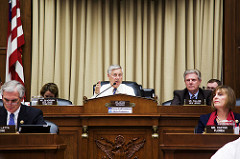
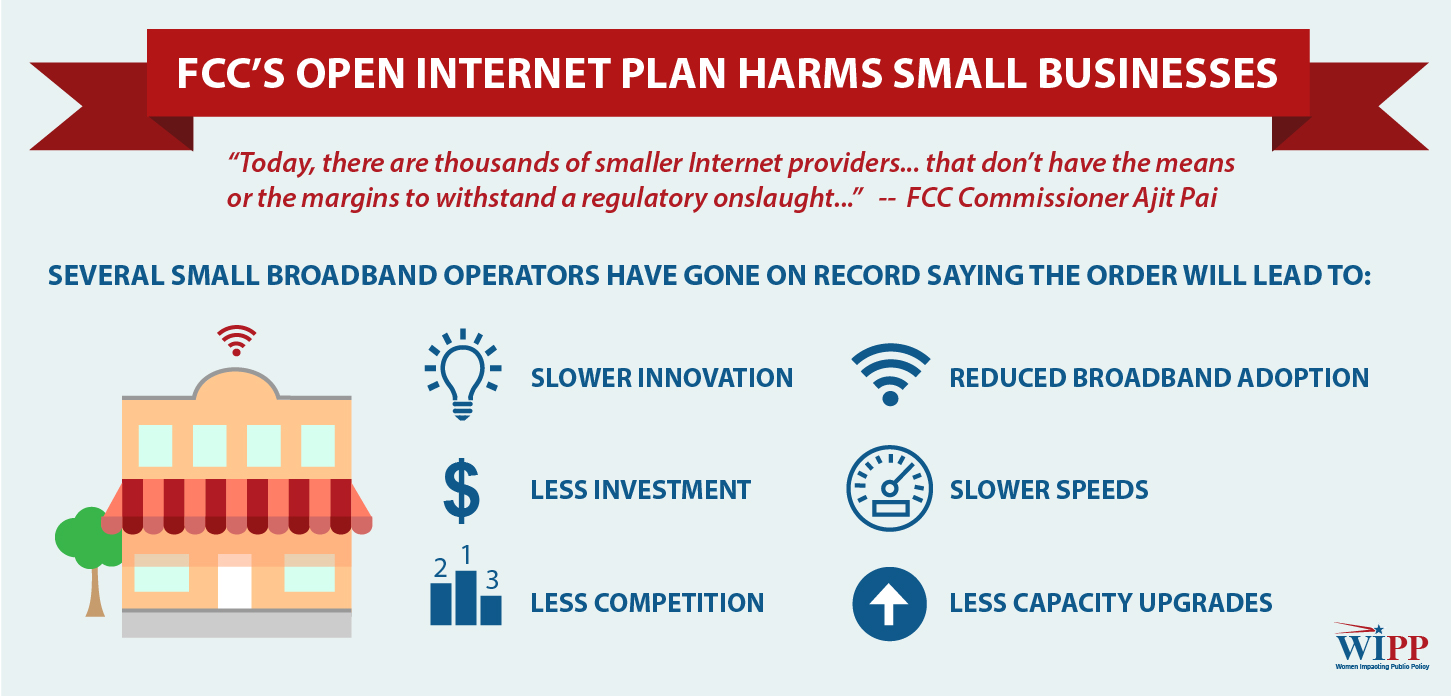
 r this year, the FCC voted to adopt overbearing “Title II” regulations that have already led to legal battles which will likely extend for the next several years. What is Title II? Title II of the Communications Act of 1934 would grant the FCC additional regulatory authority; this is the authority they utilize over telecommunications services currently. Plenty of experts and economists, as well as the small business community, warned against the consequences of applying outdated Title II regulations on our country’s Internet infrastructure. For small telecom providers especially, it’s quickly becoming clear that Title II is detrimental to growth and investment in their businesses.
 Women in Biz Blog